


Our Routes of the Camino de Santiago from Tui
-
 7 days / 6 nights
 - 6 days / 5 nights
- 7 days / 6 nights
- 6 days / 5 nights
- 7 days / 6 nights
- 6 days / 5 nights
Services we offer on our trips
Included in all our routes
-
Accommodation booking selected according to your budget (5, 6, or 7 nights).
-
Baggage transport between stages.
-
Practical information about the Camino in a detailed guide.
-
Route assistance for any questions or issues we are by your side.
-
Travel insurance with extensive coverage.
On group routes
-
Accompanying guides professionals throughout the Camino.
-
Support vehicle available during the stages.
Optional services
-
Meals and diets , with the option to add breakfasts or half board.
-
Private transfers from/to the point you need.
-
Bike rental (MTB, E-Bike).
-
Excursions in Galicia and extra nights at the end of your trip.
How to do the Camino de Santiago from Tui
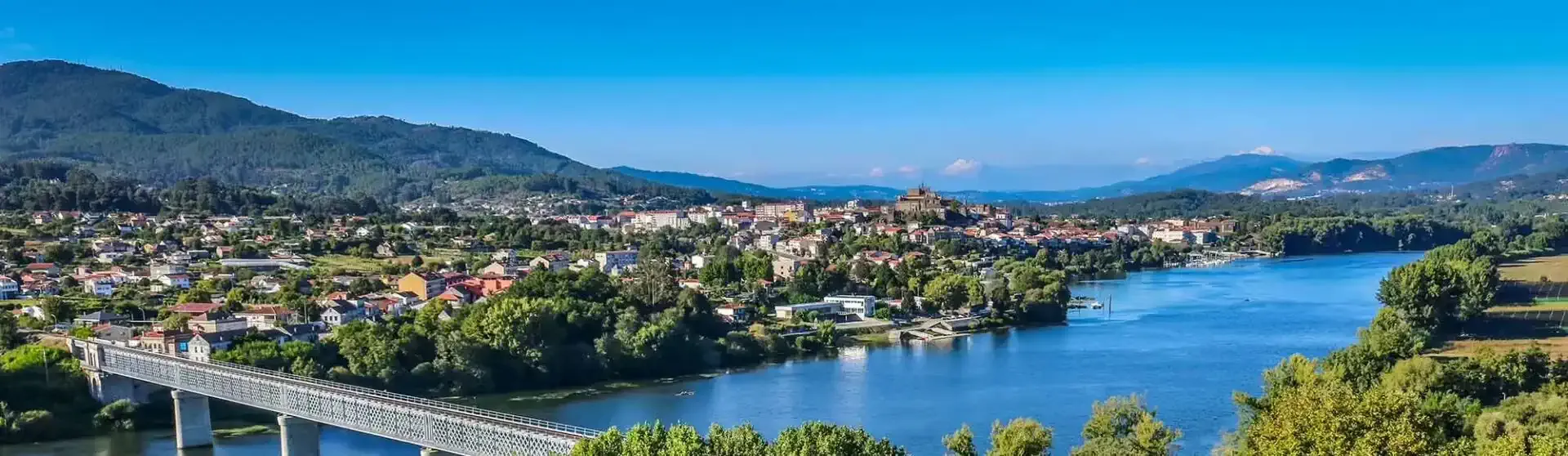
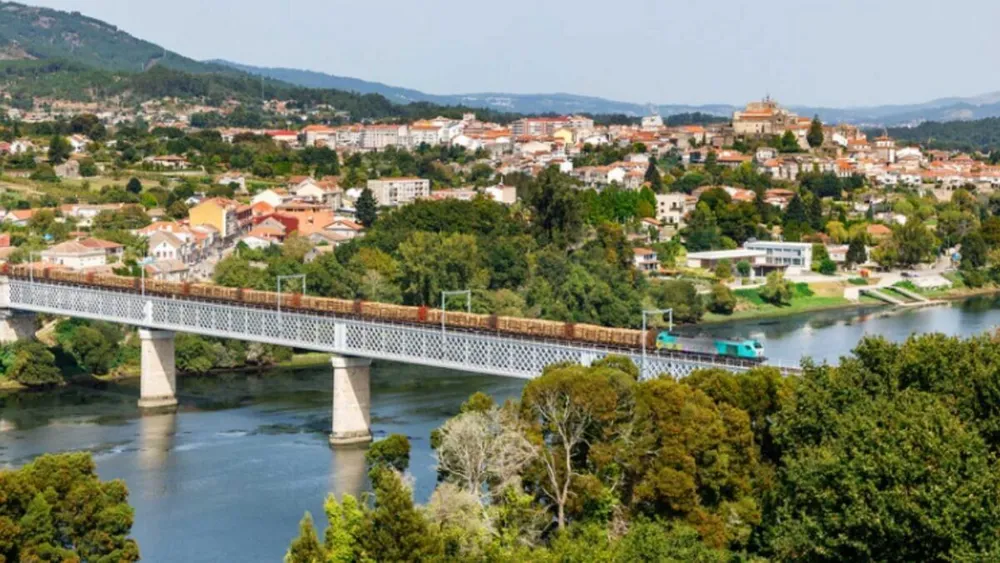
The Camino from Tui, the last stretch of the Portuguese Way, offers a unique experience as it leaves the Miño River, marking the border with Portugal, and leaves into the beautiful Rías Baixas with Santiago de Compostela as the final destination.
Cities like Tui, Arcade, Pontevedra, Caldas de Reis, and Padrón will be key points along your route. On the way, you’ll encounter a rich mix of nature and heritage, crossing lands that blend Galicia’s green landscapes with the region’s history and winemaking tradition. This route invites you to walk through serene landscapes, not far from the sea, and enjoy a relaxed atmosphere as you get closer and closer to Santiago de Compostela.
Throughout this journey of about 120 km, which you can enjoy in less than a week (6 or 5 stages), you will enjoy stunning landscapes, with views of the sea and crossing vineyards.
How to get to Tui
Tui is a charming Galician city located south of the Pontevedra province, with good transport connections. You can get there:
By car: Direct access from various cities in Galicia and Portugal.
By train: Connections from Santiago de Compostela, Vigo, Porto, among others.
By bus: Connection from Vigo.
By plane: Fly to Vigo or Santiago and take a bus or train to Tui.
And if you prefer to make it easier, we offer Private Transfers to Tui from various points, and an exclusive Vehicle Transfer service from Tui to Santiago.
If you want to know more about how to get to Tui, discover more details here:
The Camino from Tui in 6 stages
- 7 days / 6 nights
- 7 days / 6 nights
- 7 days / 6 nights
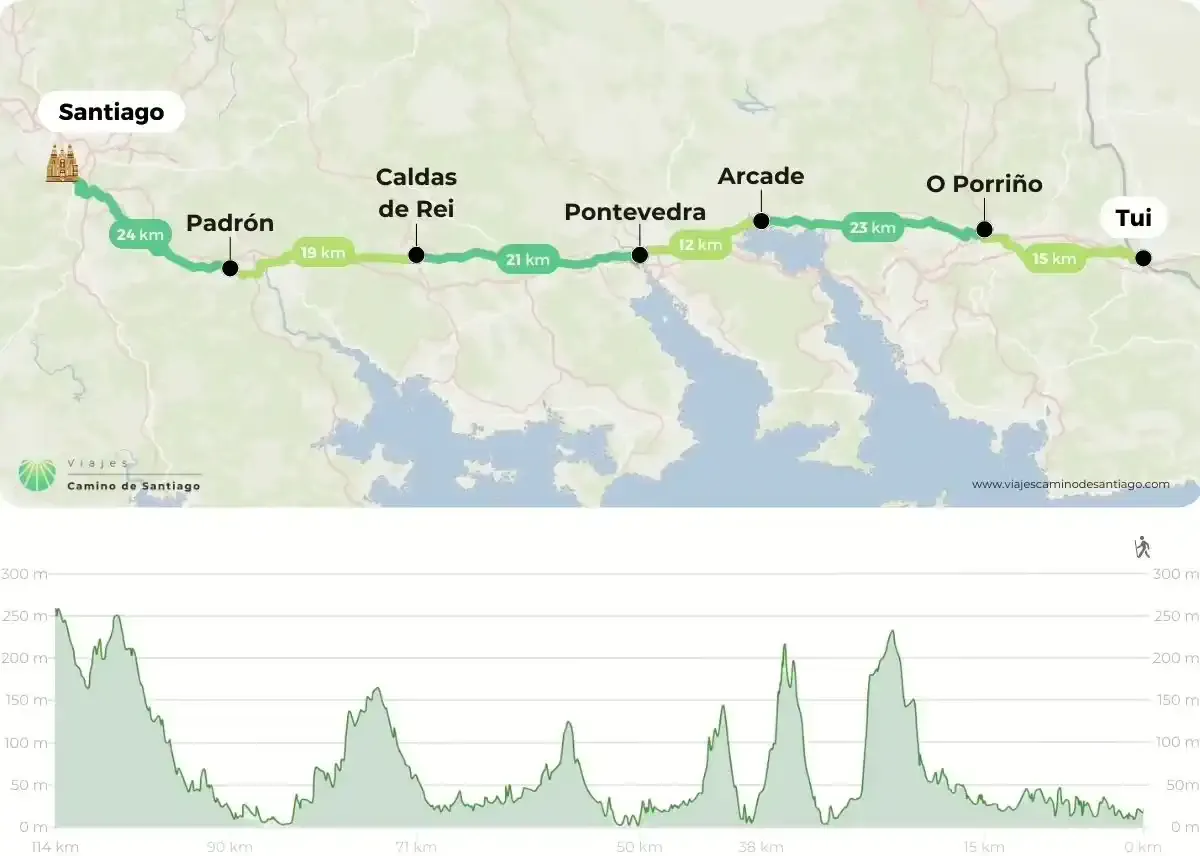
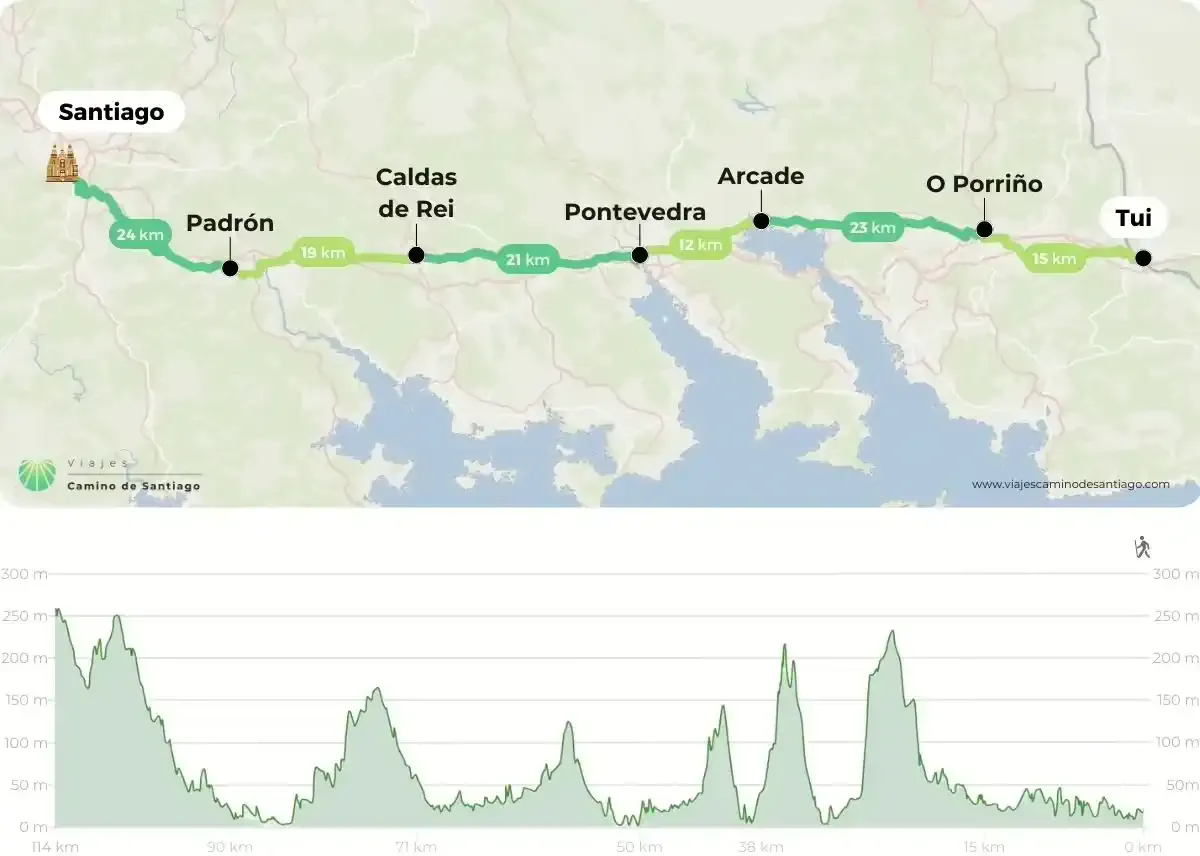
| Stage | Start | End | KM |
|---|---|---|---|
| 1 | Tui | O Porriño | 18 km |
| 2 | O Porriño | Arcade | 23 km |
| 3 | Arcade | Pontevedra | 12 km |
| 4 | Pontevedra | Caldas de Reis | 21 km |
| 5 | Caldas de Reis | Padrón | 19 km |
| 6 | Padrón | Santiago de Compostela | 24 km |
The Camino from Tui in 5 stages
- 6 days / 5 nights
- 6 days / 5 nights
- 6 days / 5 nights

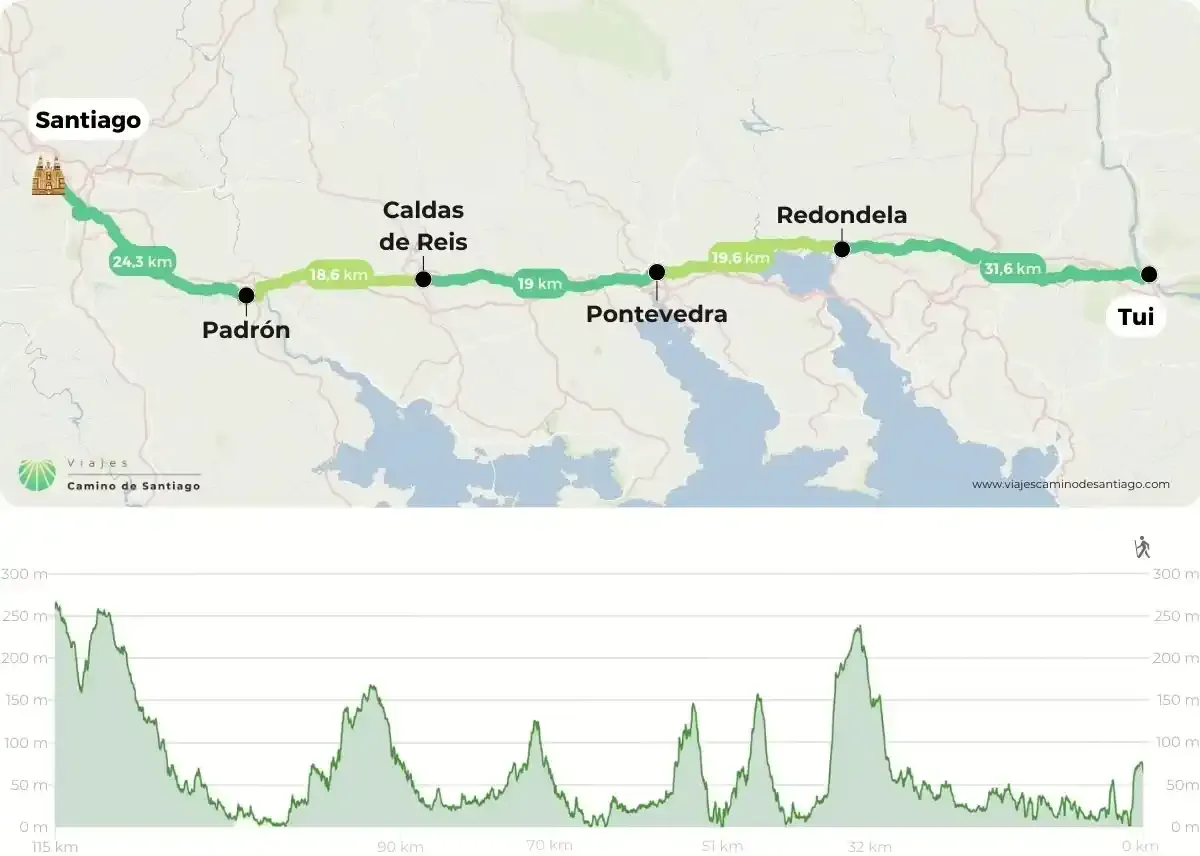
| Stage | Start | End | KM |
|---|---|---|---|
| 1 | Tui | Redondela | 31 km |
| 2 | Redondela | Pontevedra | 19 km |
| 3 | Pontevedra | Caldas de Reis | 21 km |
| 4 | Caldas de Reis | Padrón | 19 km |
| 5 | Padrón | Santiago de Compostela | 24 km |
Is the Camino from Tui difficult?
No, not at all. On this route you won’t find extremely demanding elevation changes nor does it pass through high mountains, and it crosses the Galician countryside, estuaries, and hills, dotted with rivers and streams. Its 120 km journey has the following characteristics:
Maximum altitude: 254 meters above sea level (Santiago de Compostela).
Minimum altitude: 0 meters above sea level (sea level in Redondela, Arcade, Pontevedra, etc.).
Accumulated positive elevation gain: ~1400 m.
Accumulated negative elevation gain: ~1200 m.
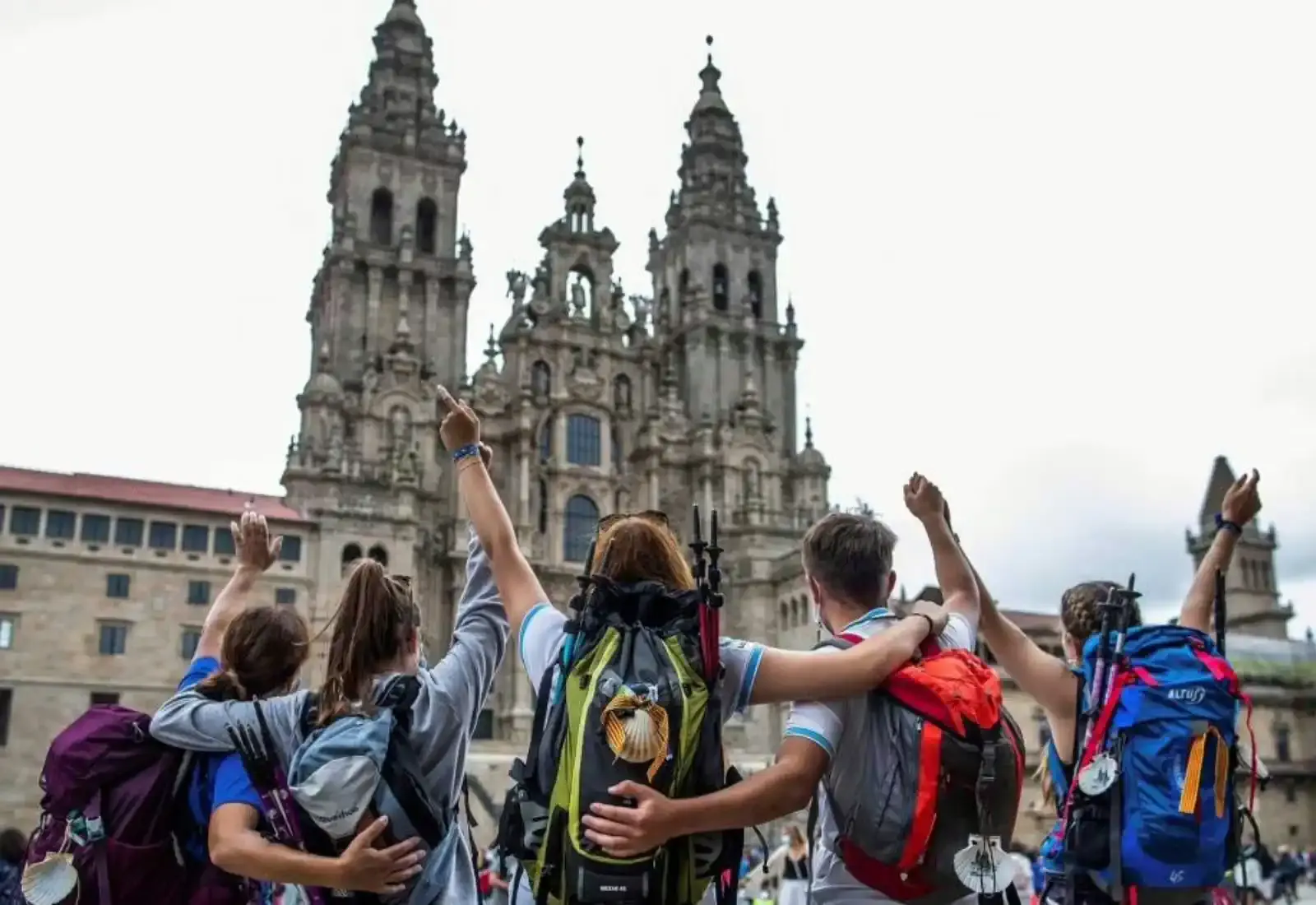
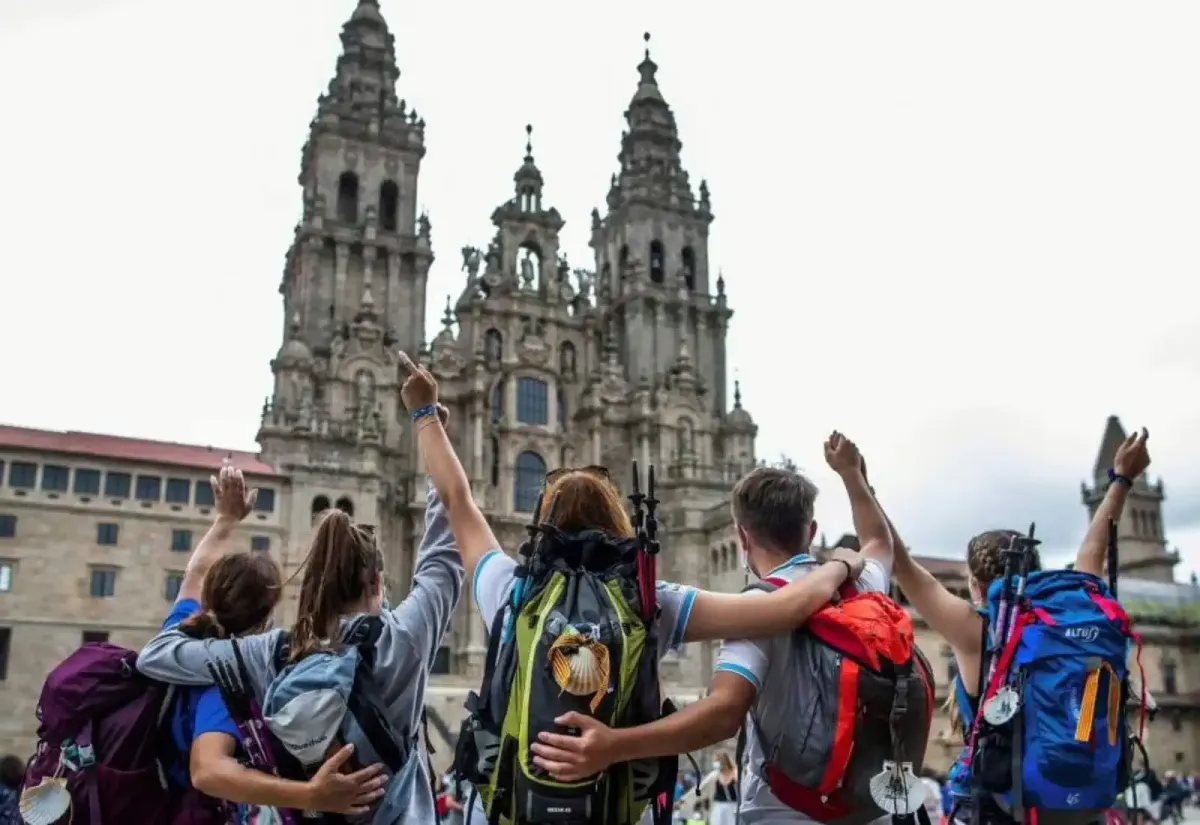
Why do the Camino from Tui to Santiago?
And you may wonder, why do so many pilgrims take the Camino from Tui?
It can be completed in a week, in 5 or 6 stages.
It’s accessible for everyone, with no very demanding sections.
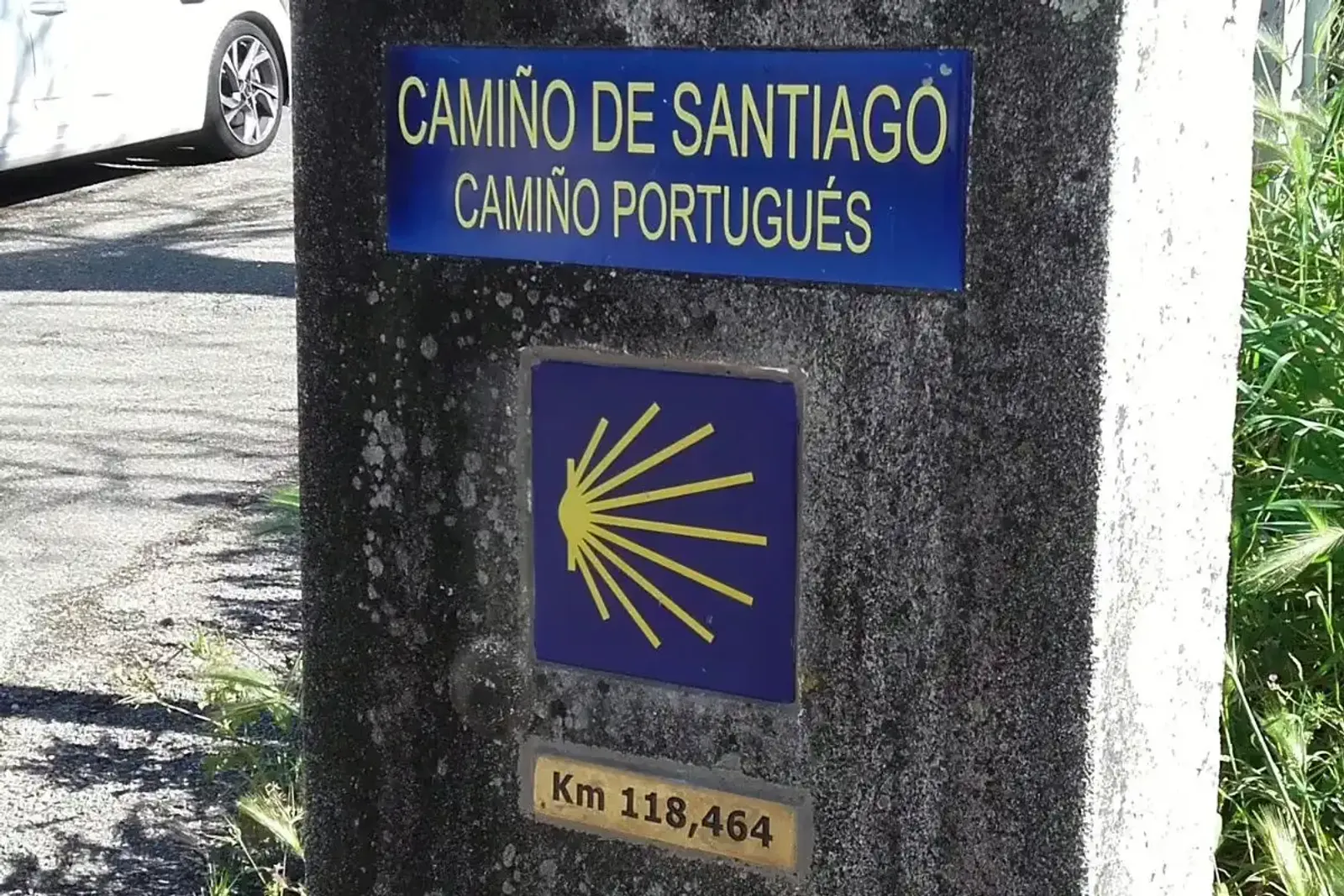
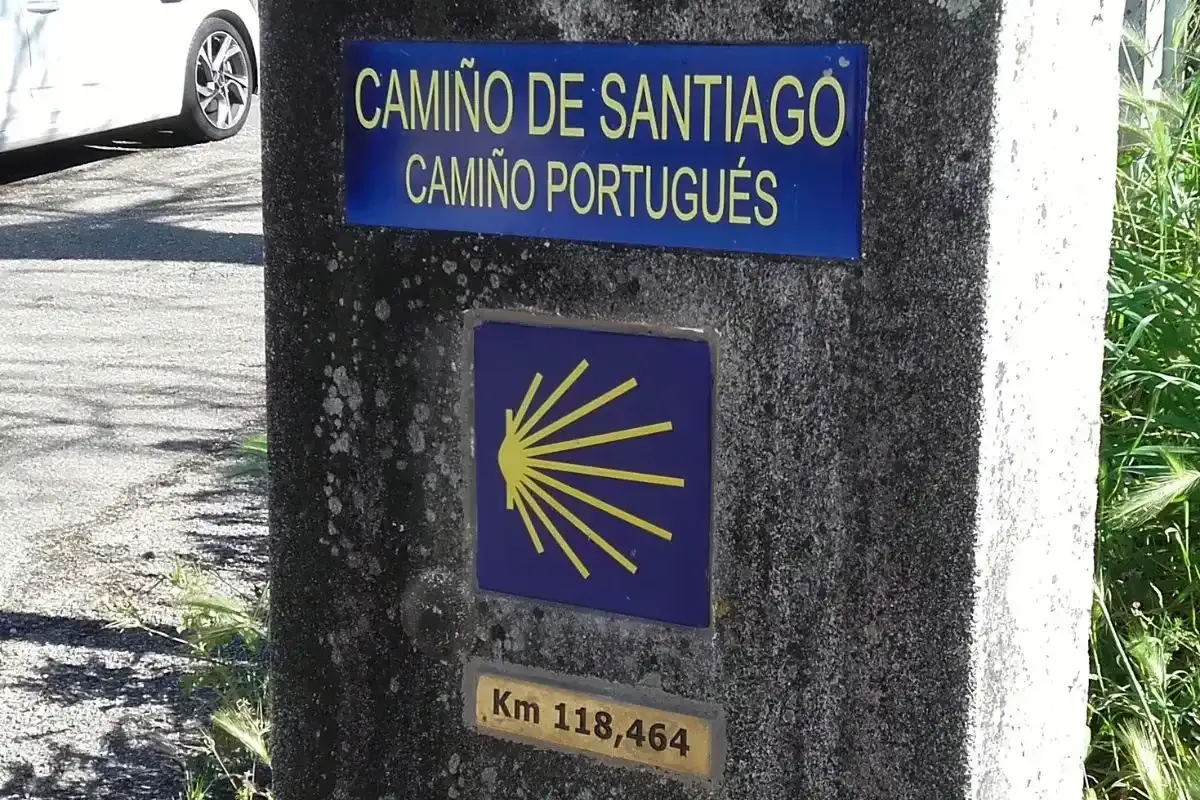
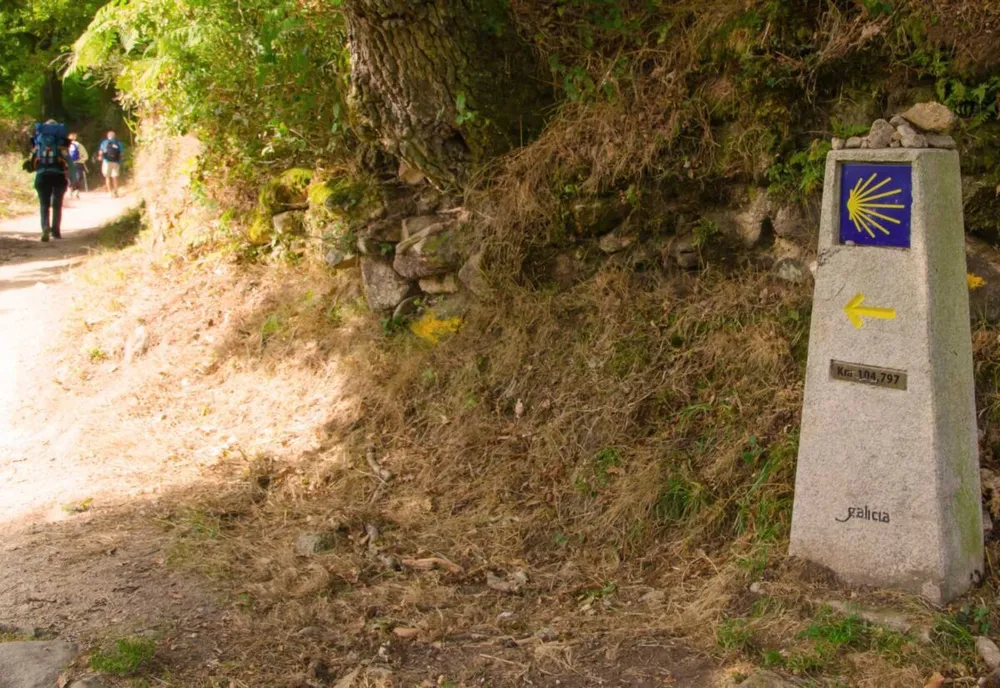
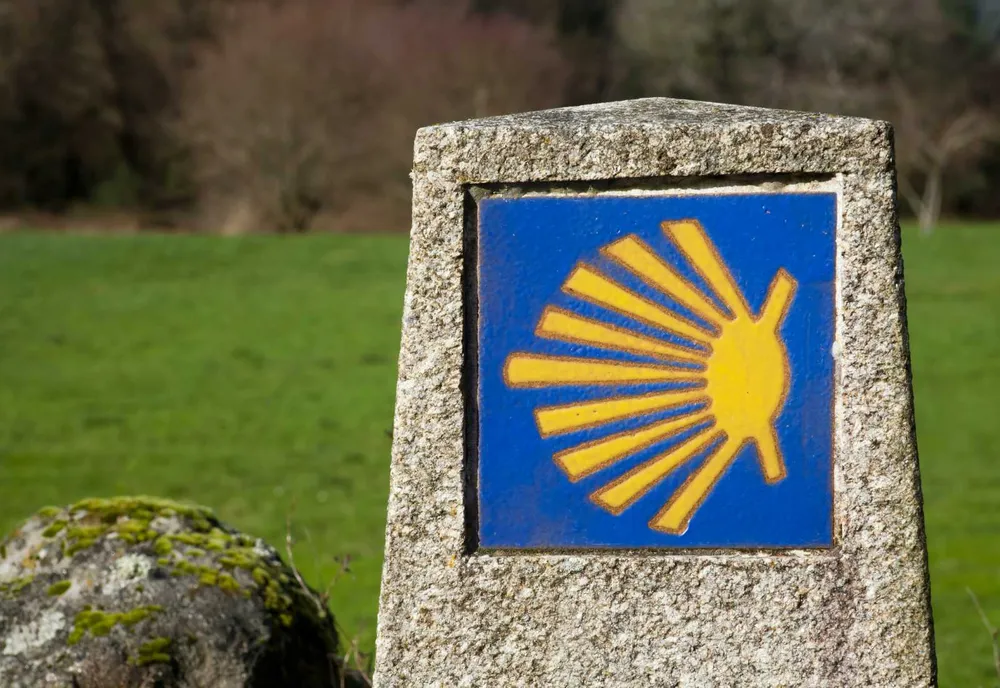
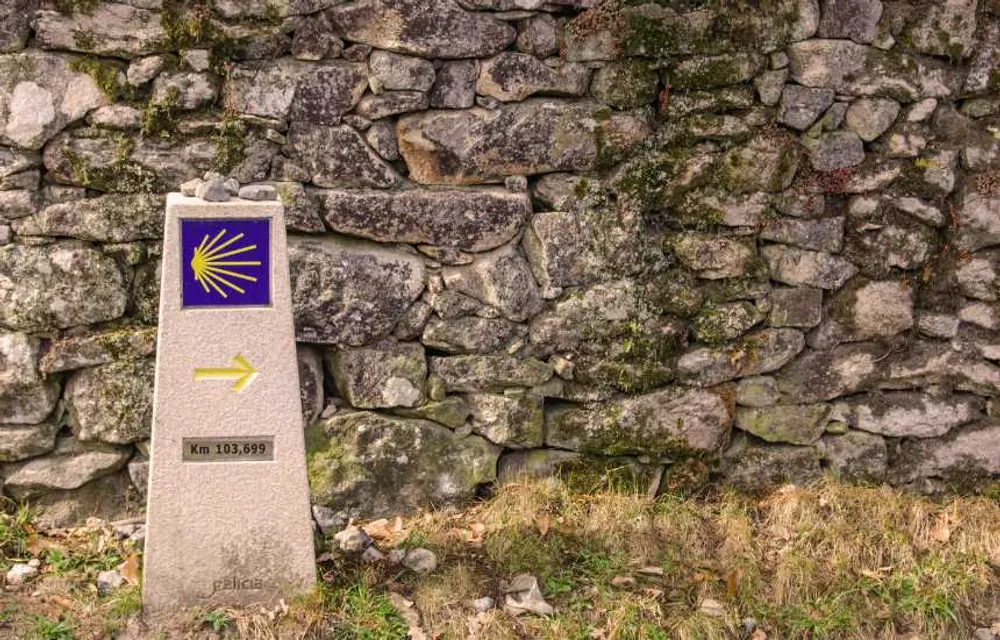
It’s perfectly signposted, and you just have to follow the yellow arrows.
It offers a great number of services, both during and at the end of the stages.
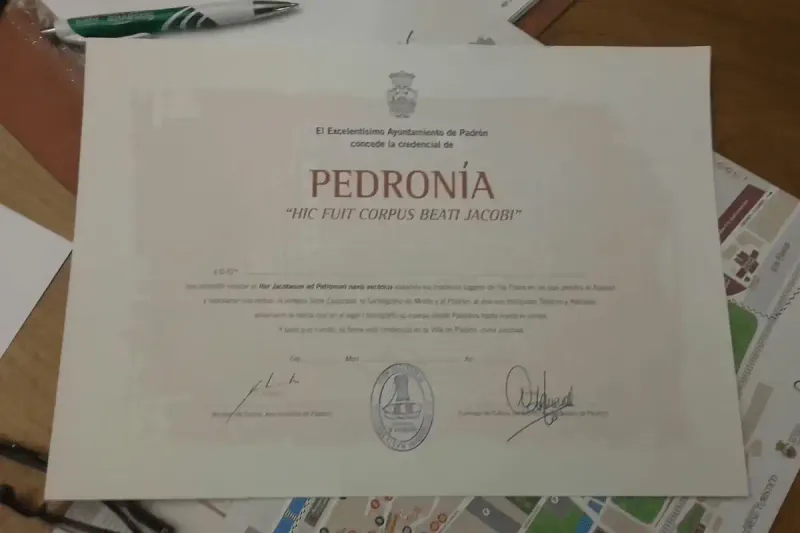
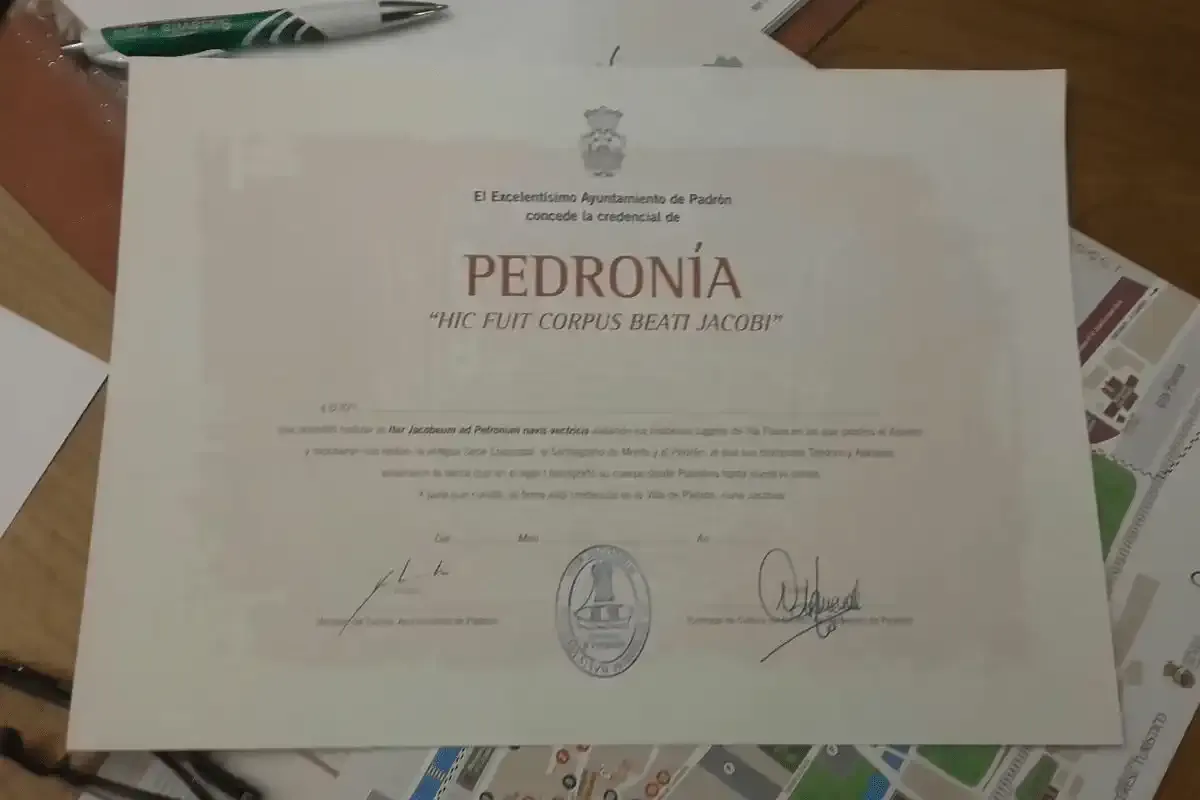
You’ll receive your Compostela, the final certificate of your pilgrimage, after walking the last 100 km of the Portuguese Way. And not only that, you can also get the Pedronía in Padrón!
Starting in Tui is, for me, the easiest and most beautiful way to experience the Camino for the first time and get the Compostela: a great balance between time, landscape, and logistics.
Every time I’ve walked it, I’ve always found the same thing, to my joy: impeccable signposting and plenty of services right along the route, with stage finishes that are “mini-cities” with everything you need. That ecosystem makes it so that, even walking alone, you feel accompanied and safe. Tui also has a special atmosphere with pilgrims of all ages and from all countries.
I’ve walked with family, friends, and people I met along the way: laughter, constant greetings among pilgrims, and when a strain or blister appears, it’s solved calmly with a good bandage. Getting the stamp for the credential is super easy — churches, hostels, bars, craft shops, even self-service — I’ve even seen the Civil Guard on horseback stamping on the route, which is very safe.
What is the best time to do the Camino from Tui?
The Camino de Santiago from Tui can be done all year round, but if you’re looking for mild weather and a good pilgrim atmosphere, the ideal time is from March to October.
⭐ May and June (best spring option): mild temperatures, long days, green fields and less crowding than in July and August.
⭐ September and October (best autumn option): moderate heat, beautiful light, less crowds after summer and services still fully operational.
March and April: start of the season, with variable weather and more rain, but with growing atmosphere (watch out for Holy Week: more occupancy).
July and August: maximum crowds and heat; it's advisable to get up early and have booked in advance.
November to February (low season): lots of tranquility and more contained prices, but colder and rainier climate, fewer daylight hours and some services closed.
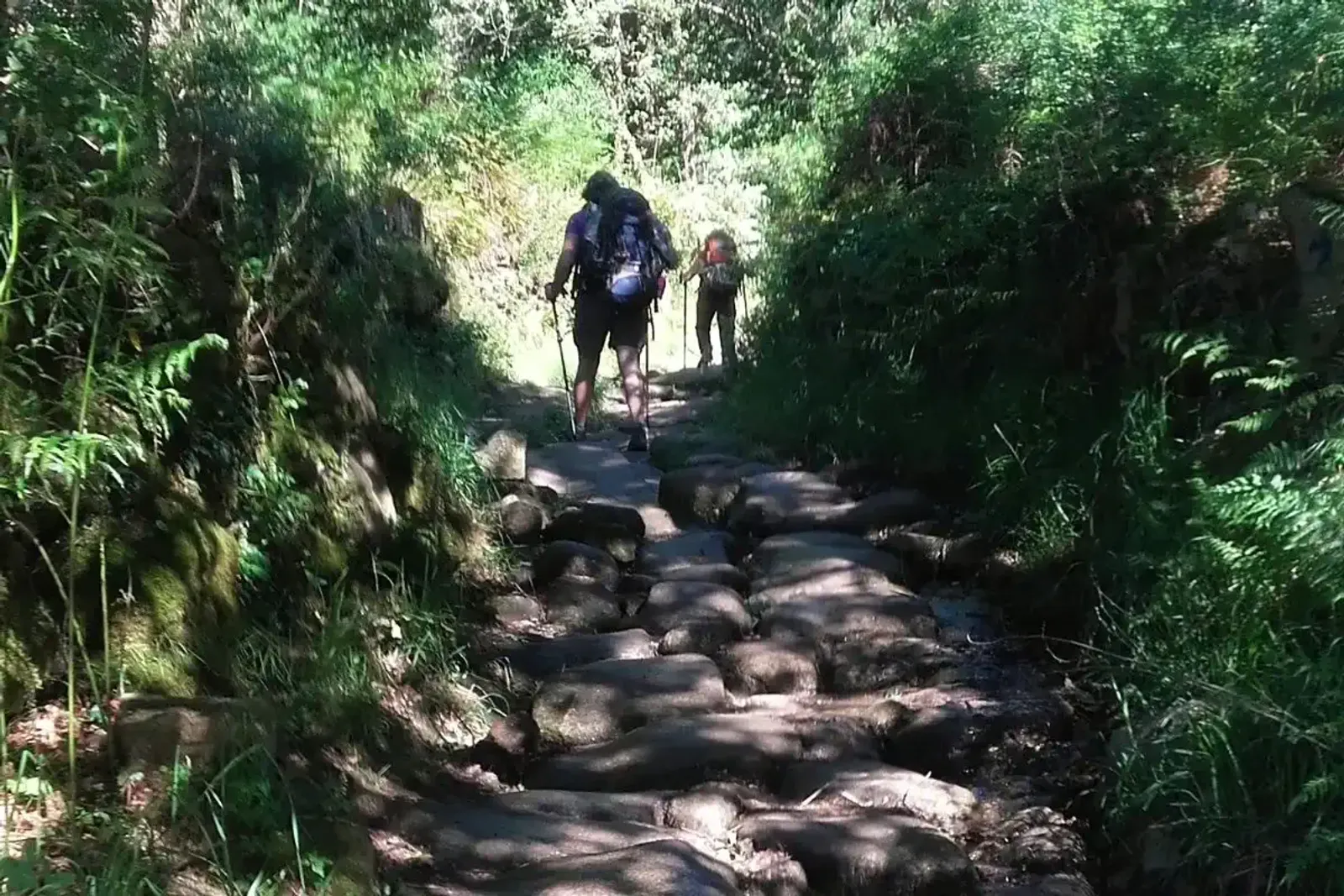

Stage Guide of the Camino de Santiago from Tui
Stage 1. Tui - O Porriño | 18 km | Low difficulty | 5h. 30m.
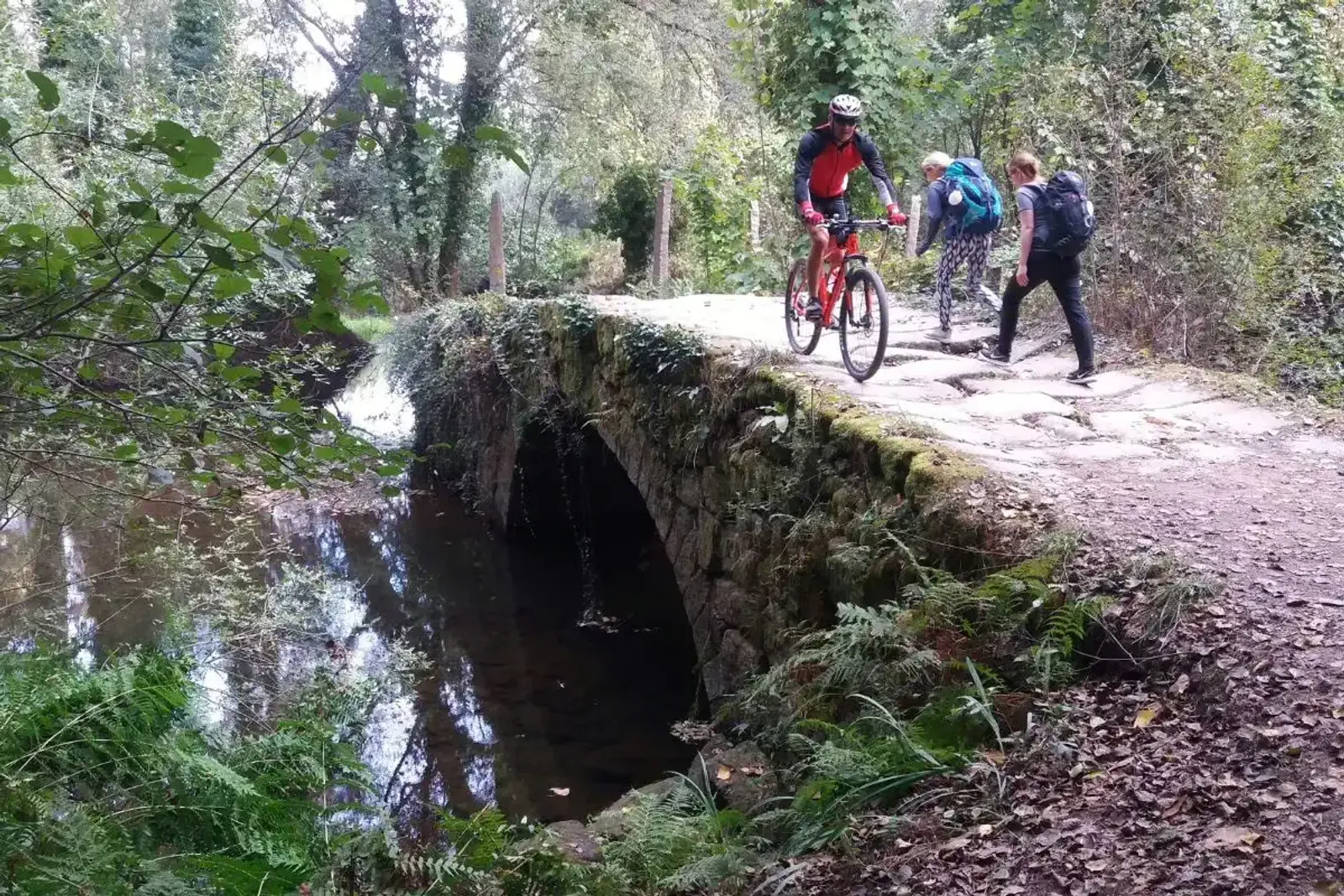
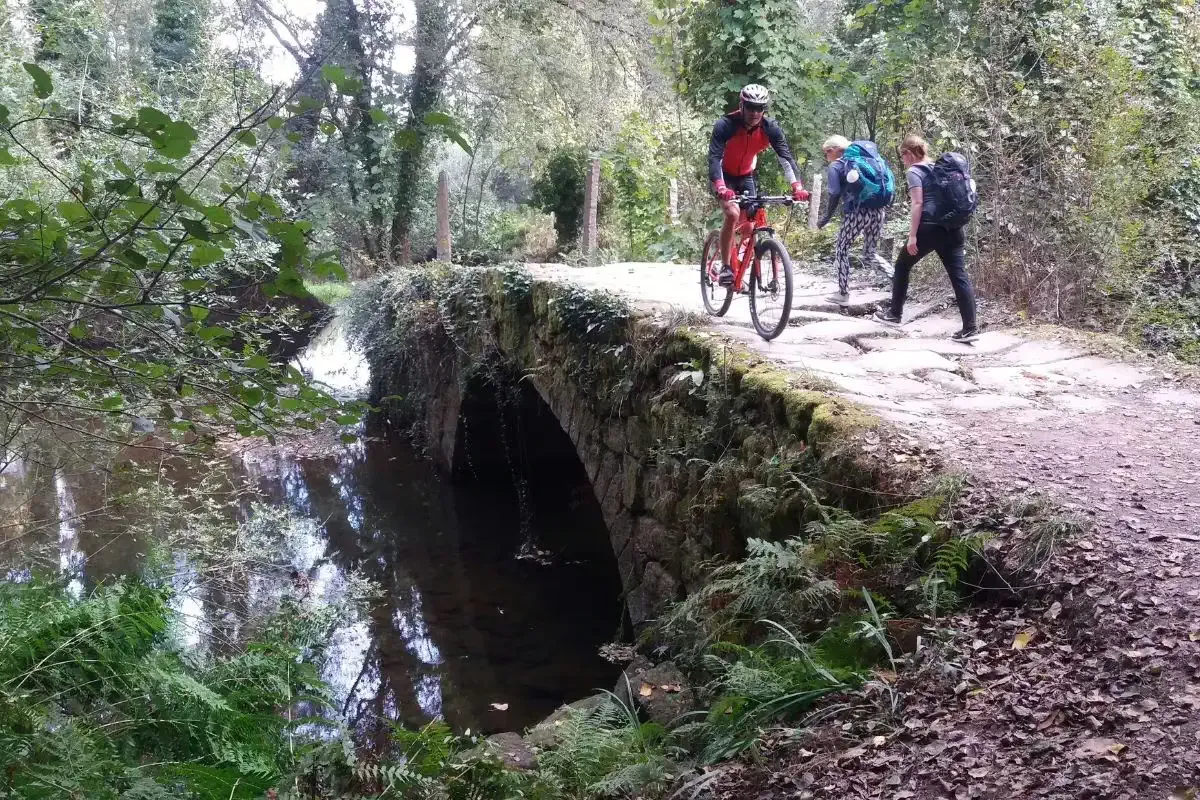
You leave Tui with the cathedral behind you and, almost without realizing it, the ground becomes earth and shade: paths through forests, medieval bridges and even kiwi fields that appear without warning. The Ponte das Febres awaits you ahead, associated with the figure and legend of San Telmo; it's a place that invites you to slow down and listen to the water. The landscape stretches between eucalyptus trees and ancient bridges, and soon the first serious decision arrives: before O Porriño, a fork offers you two ways to enter. The one on the right is more direct but crosses the industrial estate: lots of asphalt, little shade and little charm. The one on the left lengthens the day a bit, but it compensates with greener sections and services; the body arrives better and the mind, happier.
Forks on this stage (Complementary Way):
Km 110.040: to reach O Porriño, on the right you go through an industrial estate, while on the left you go along a longer but more beautiful and shaded path, with services.
Stage 2. O Porriño - Arcade | 23 km | Medium difficulty | 6h.
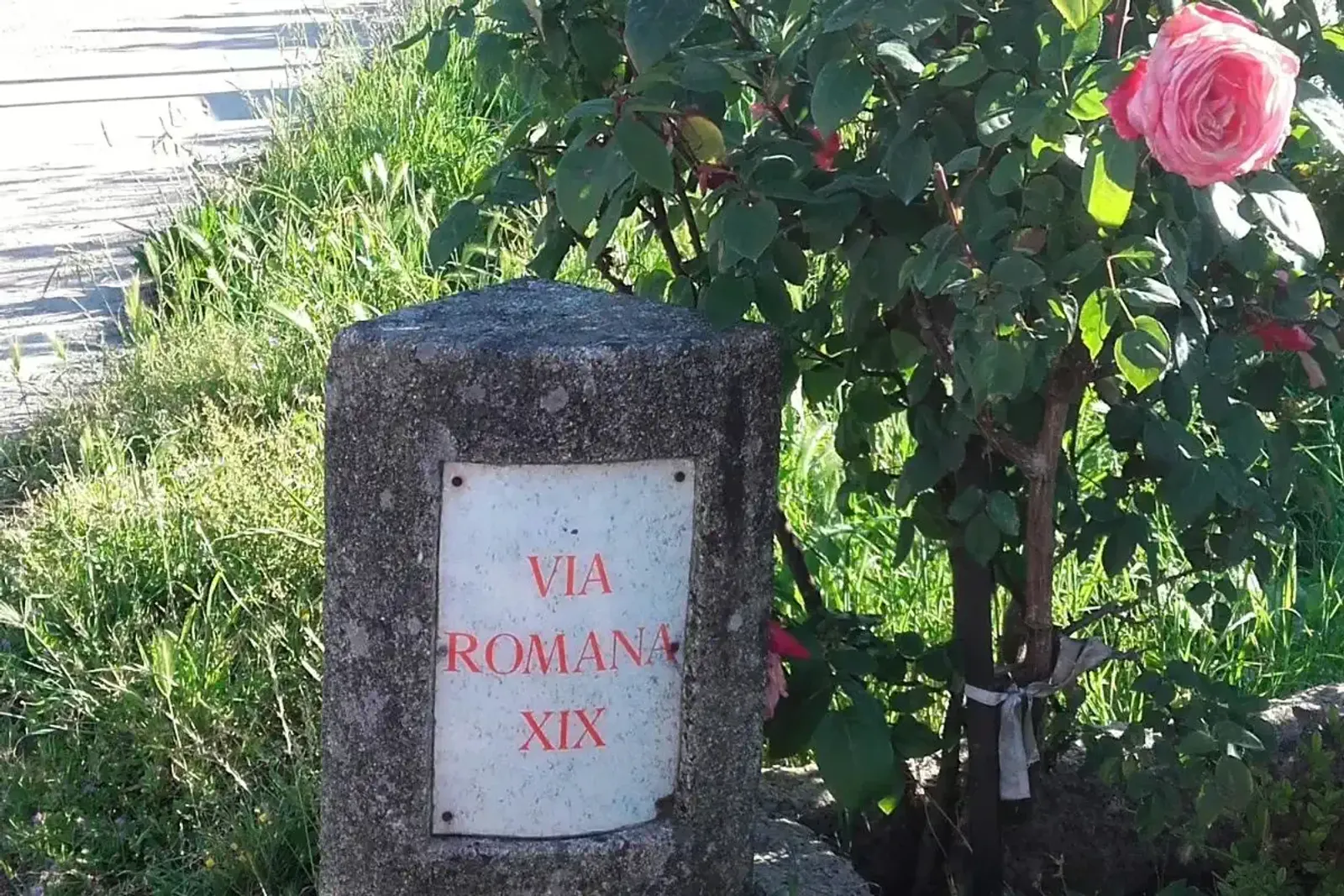
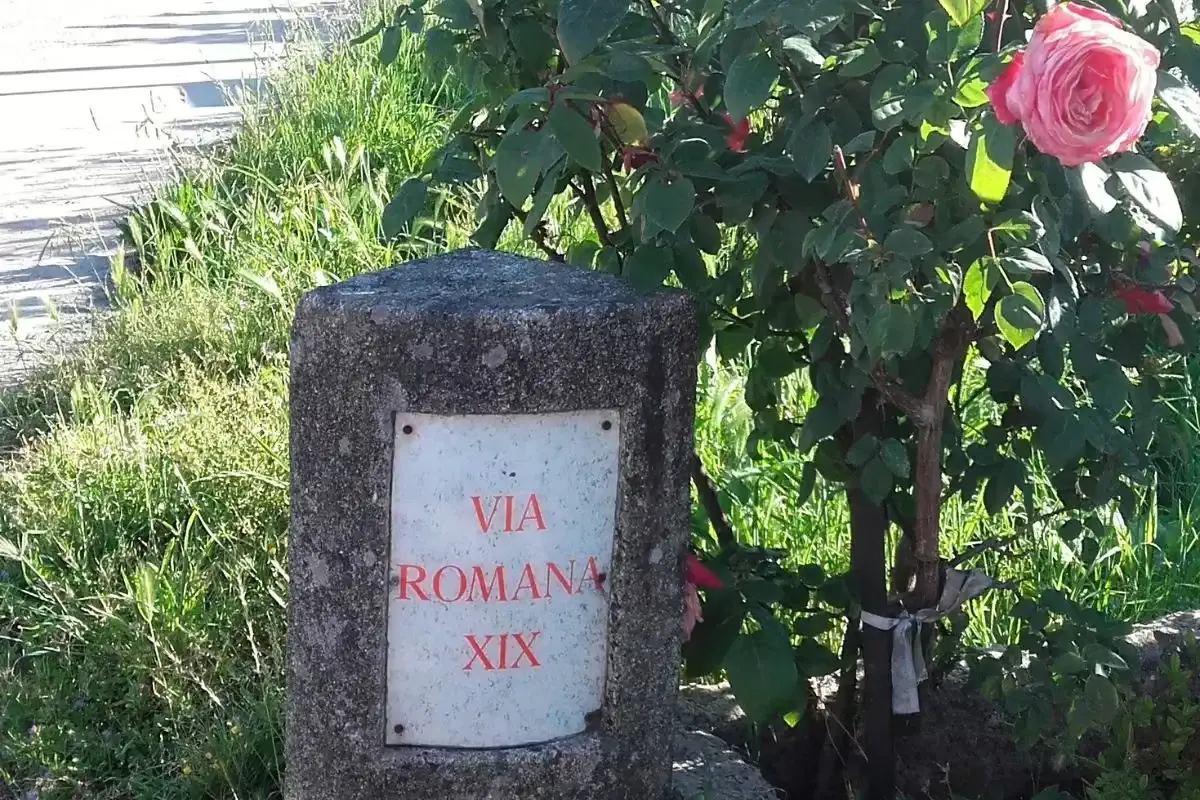
You leave O Porriño and the N-550 behind right away; the noise stays to one side and the orchards appear. Mos is your first excuse to stop: church, manor house, a quick coffee and you continue. The climb takes you to the chapel of Santiago, where there are services, and shortly after a milestone appears that recalls the old Roman road XIX (Braga-Astorga): walking on history changes your step. The descent to Redondela is rough and asphalt; control your stride and protect your knees (I've resorted to field solutions, and when I didn't have a stick, I picked up a pole: worked like a charm). You cross the historic center and head towards Cesantes with the blue of the Vigo estuary hinting between rooftops. The path returns to the forest and, if you're lucky, a craftsman will stamp you at an improvised stand; these little scenes add color to the credential. The day ends in Arcade, synonymous with oysters served almost by the sea; if you like them, this is your place.
Stage 3. Arcade - Pontevedra | 12 km | Low difficulty | 3h.
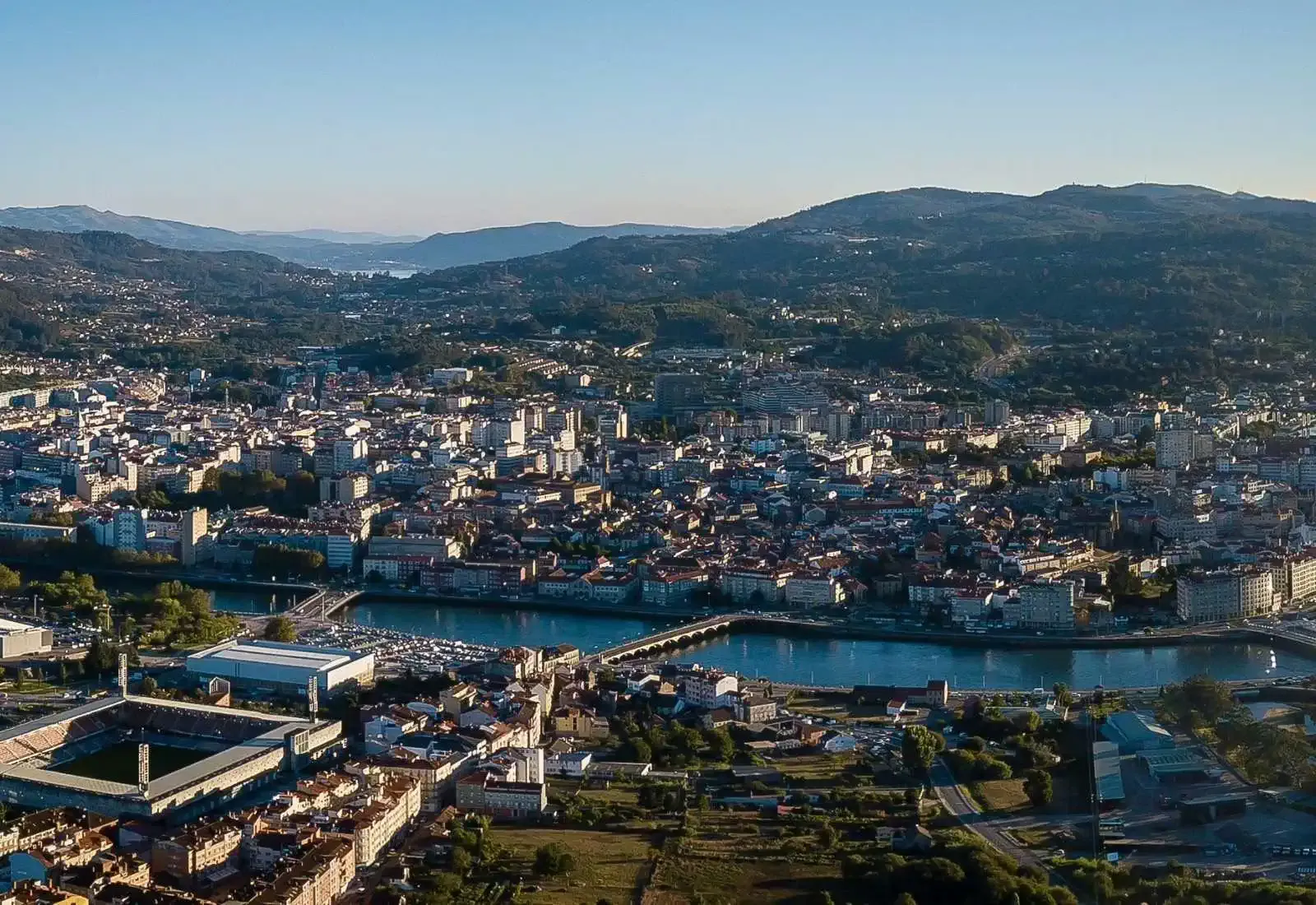
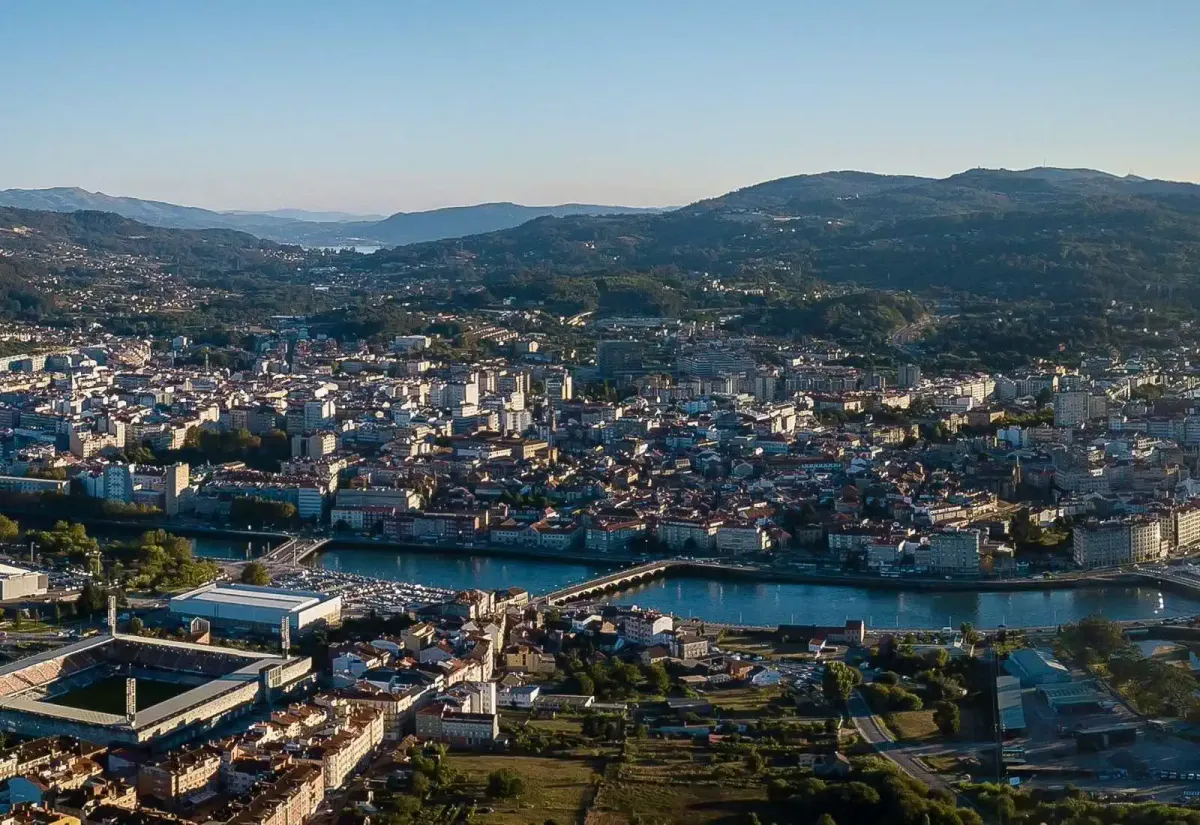
As soon as you leave Arcade, the medieval bridge of Ponte Sampaio forces you to look up: there the locals resisted Napoleon's troops and the road still seems to tell the story. Then you chain rural sections, some streams and, before reaching Pontevedra, in Ganderón, an overseas bar functions as the last oasis. The entrance to Pontevedra offers you another choice: by the road you'll arrive sooner, but if you take the bank of the Tomeza river you'll gain silence, shade and that murmur of water that fixes the mind. It's a bit longer, yes, but walking its meanders under the forest more than compensates; there's even a point where you can soak your feet. You enter through the bus and train station area and let yourself be carried to the Peregrina: Pontevedra, and its historic center, call for a walk without a watch.
Forks on this stage (Complementary Way):
Km 71.465: the fork after the chapel of Santa Marta, at the gates of Pontevedra. On the right, road EP-0002, and on the left, a somewhat longer but very beautiful section through the bucolic shaded meanders of the Tomeza-Gafos river.
Stage 4. Pontevedra - Caldas de Reis | 21 km | Low difficulty | 5h. 30m.
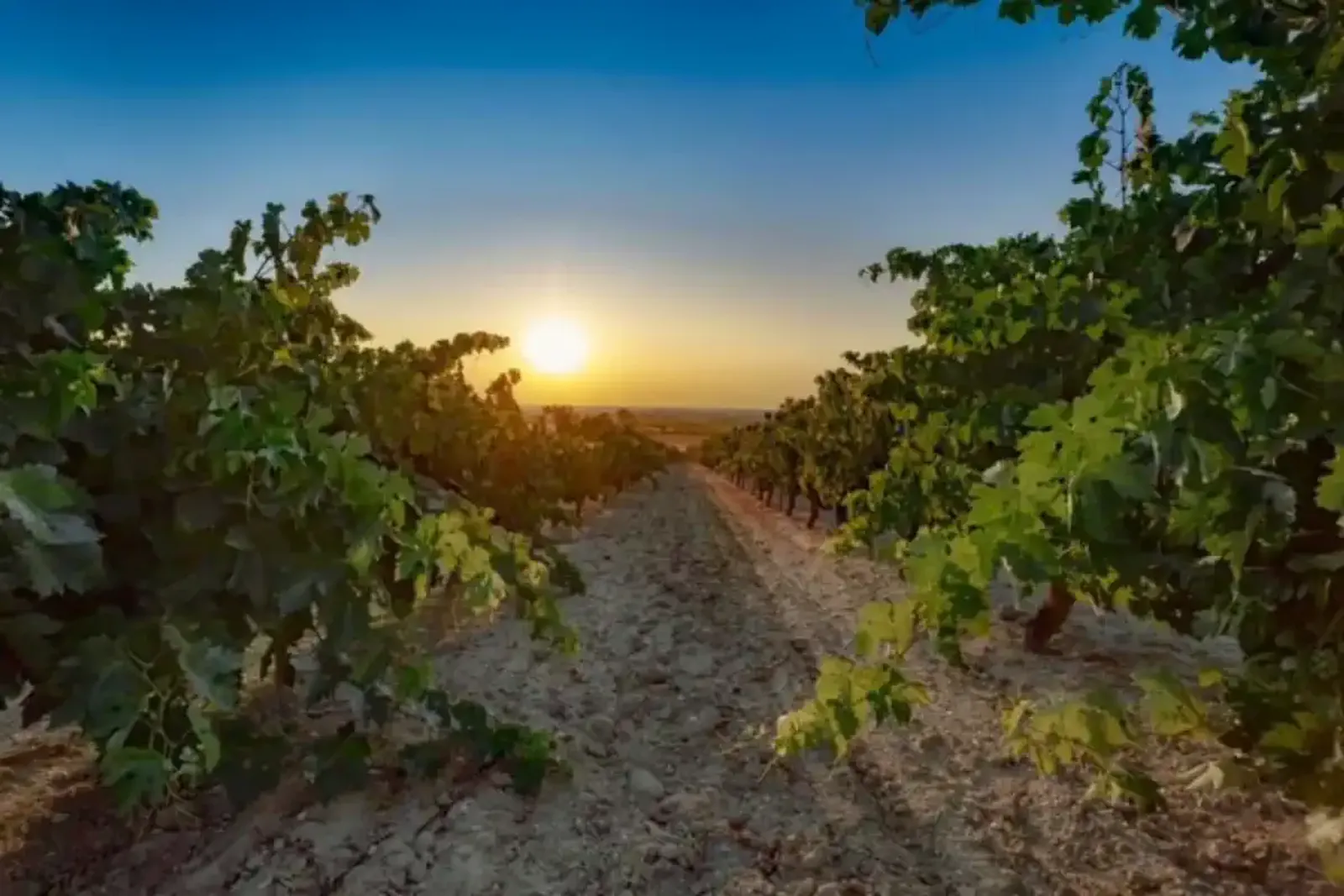
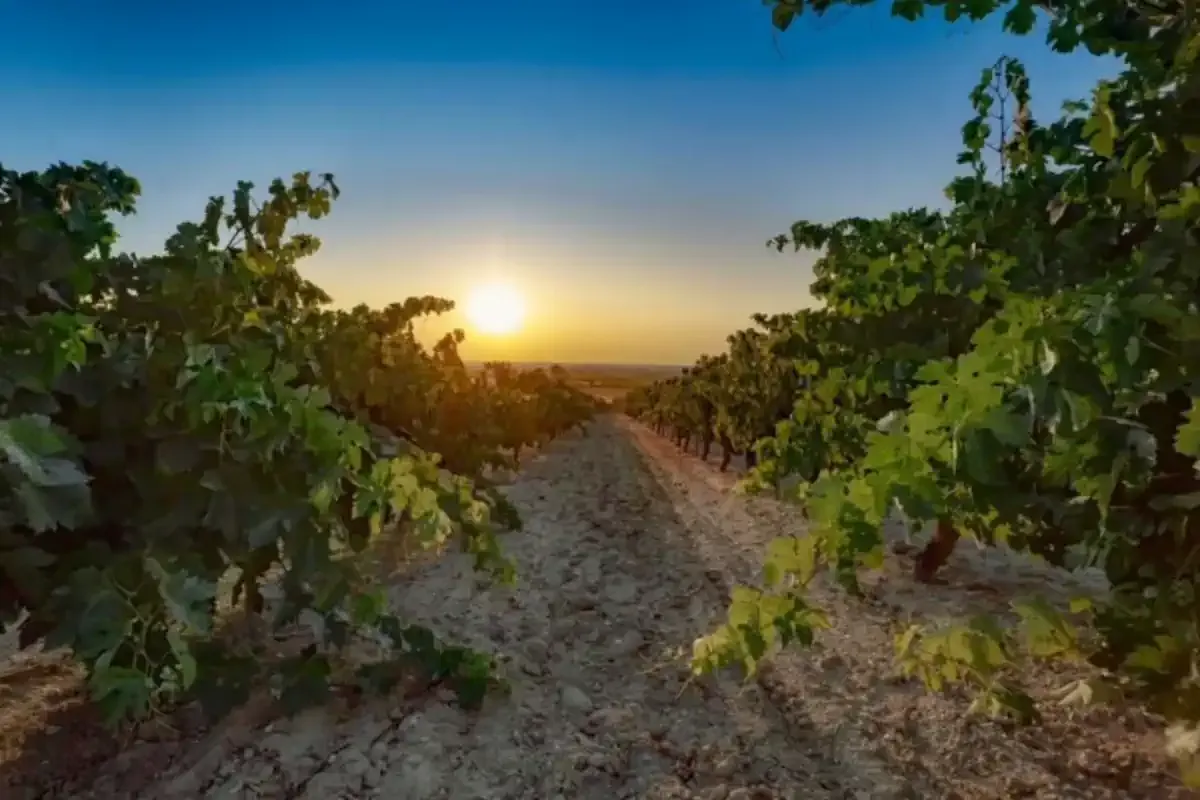
You leave the old part of Pontevedra via the Ponte do Burgo and, at the railway, the Spiritual Variant appears tempting you to the left. Take the Way to the right and save that other path for another time. Santa María de Alba opens the House of Mercy to you: a kind volunteer, a stamp that tastes of short and sincere conversation. Further on, San Amaro offers you a stop and a small chapel. The day passes among vineyards; in August you might even catch a grape harvest scene. (I was invited once and spent 10-15 minutes cutting grapes: impossible not to smile.) Before finishing the stage, if you fancy a treat, detour a few minutes to the Barosa waterfalls: cross the road, follow the signs and go down to a cool spot, with a restaurant and the possibility of bathing. You return light to the Way, pass through Tivo and, now in Caldas de Reis, you choose: hot springs in hotels (also for non-guests) or public hot water fountains. Either option is a caress at the end of the day.
Forks on this stage (Complementary Way):
Km 63.280: it's not a complementary, but the beginning of the Spiritual Variant of the Portuguese Way after leaving Pontevedra.
Km 51.070: it's not an official detour, but, before Caldas de Reis, if you want to enjoy the beautiful waterfalls of the Barosa river, leave the Way on your left for a while, and refresh yourself after crossing the N-550 road and accessing the area. It has a restaurant, traditional mills and is a good option to stop and eat.
Stage 5. Caldas de Reis - Padrón | 18.6 km | Low difficulty | 5h.
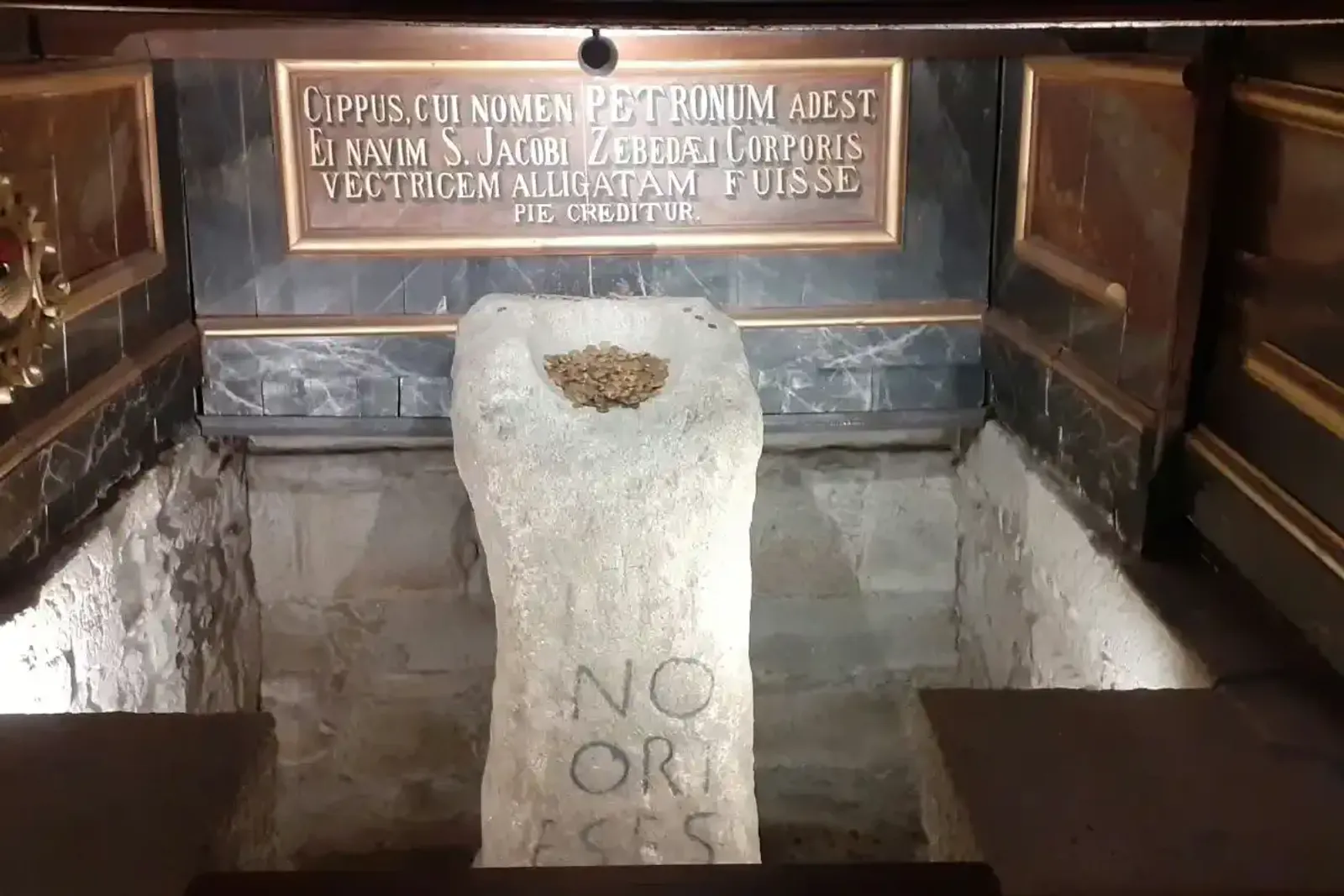
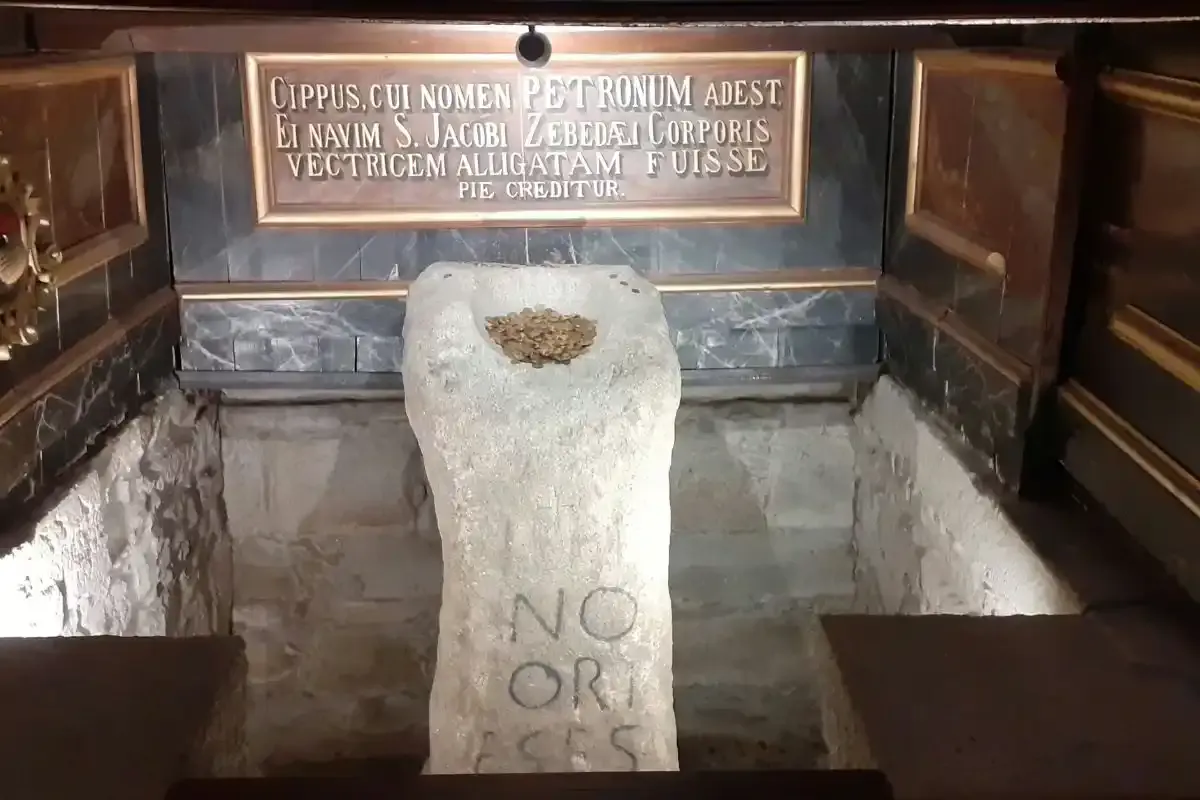
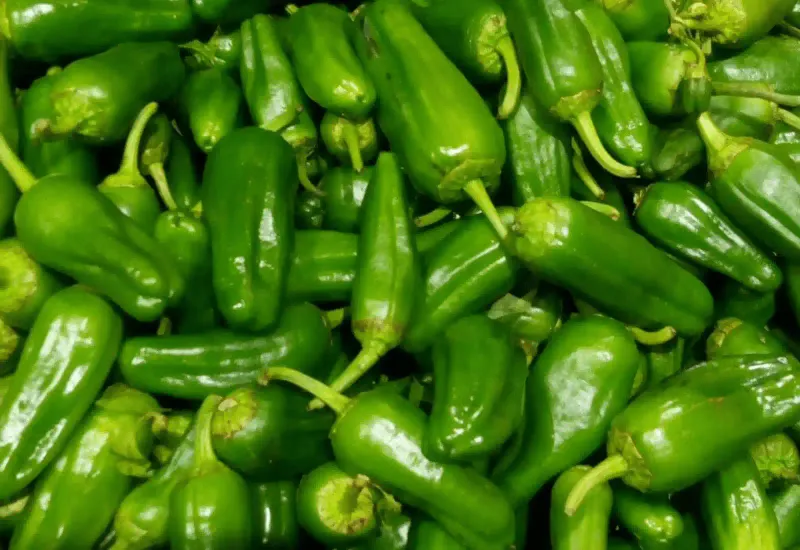
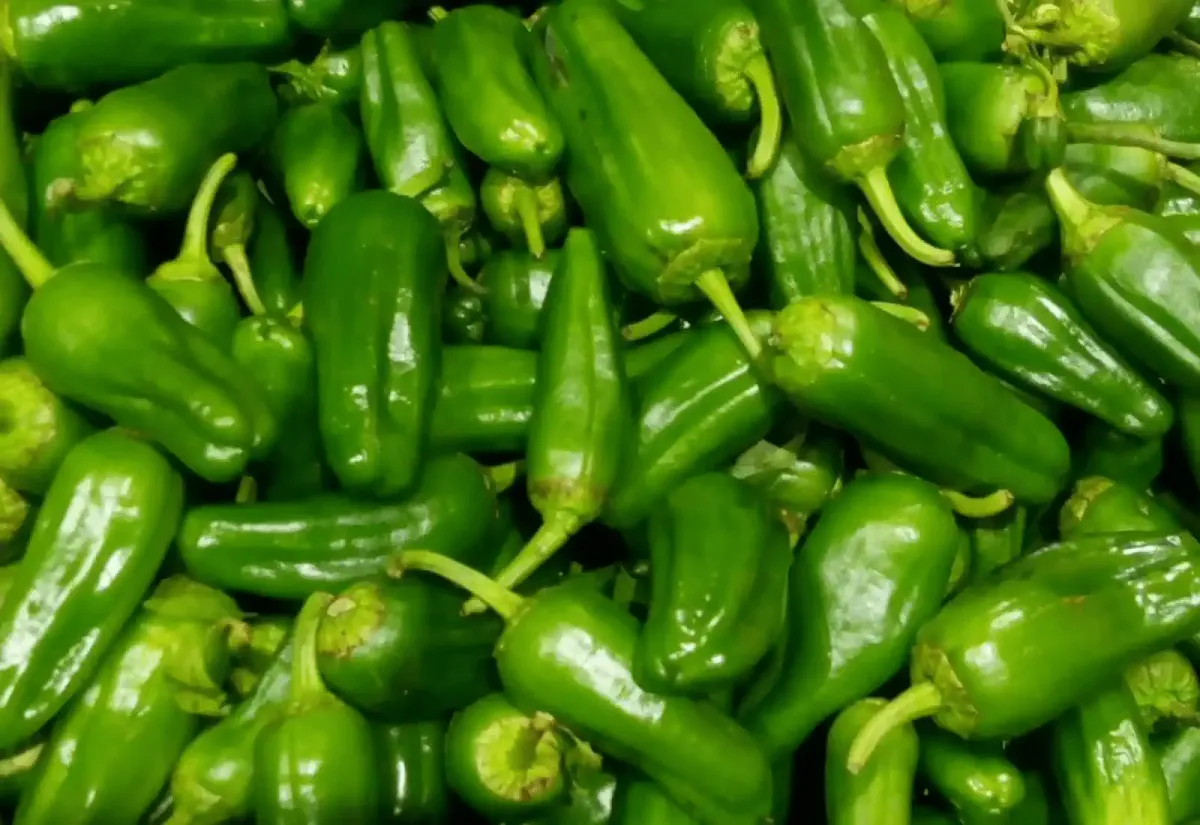
The start from Caldas de Reis takes you without surprises to Carracedo, with a bar and the church of Santa Mariña looking out to the fields. Between vineyards and villages, the profile becomes undulating: you go up and down without drama, finding your rhythm. San Miguel de Valga offers a couple of restaurants to stock up before the final stretch to Pontecesures. You cross the Ulla and the word Padrón already weighs differently: it smells of market, stories and peppers. If it's Sunday, the fair will catch you for a while. In the Church of Santiago you look for the stamp and, in the Tourist Office, you can request the Pedronía; having it in your hand (I got it for €2) is a small rite that moves you. If you still have energy, go up to Santiaguiño do Monte: the "pedras santas" and the panoramic view are a perfect ending for the day.
Stage 6. Padrón - Santiago de Compostela | 24.3 km | Medium difficulty | 6h.
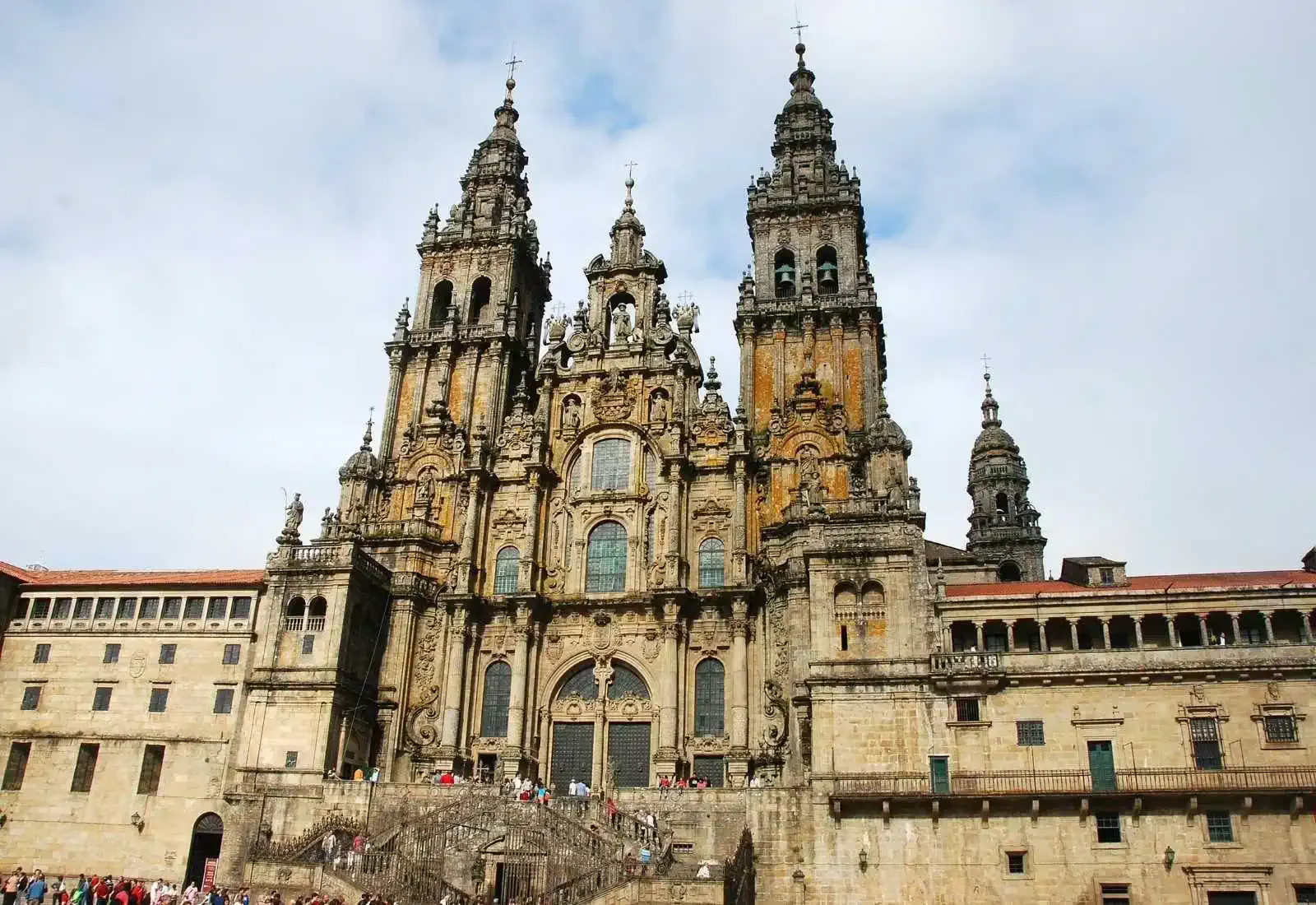
You leave Padrón heading north and soon step on Iria Flavia, inevitable to remember Camilo José Cela. The Way runs parallel to the road, but almost always through rural areas; the short climbs order your thoughts. At A Escravitude it's hard not to enter: the church imposes and the stamp tastes like a prize (a very kind sacristan always serves me.) At Picaraña you make the last stop calmly, and then you let yourself be carried away by O Faramello and A Rúa de Francos to O Milladoiro. Upon leaving, that moment you'll remember arrives: you see the city and, in the distance, the towers of the Cathedral. It's the Monte do Gozo of the Portuguese; it tightens your chest, but save a little energy: there's still some left. About four kilometers ahead, another choice: through Conxo you go a bit longer and through different streets; through Santa Marta you enter more directly. In the new area, the arrows take you to Porta Faxeira, where one of the seven old gates of Santiago de Compostela was located; you cross Rúa do Franco with its eternal pulse and, suddenly, Praza do Obradoiro opens up. You stop. You put down your backpack and look up. The entire Camino fits in that unique instant.
Forks on this stage (Complementary Way):
After passing a few meters of Km 3.478: at the gates of Santiago, you can go left (Santa Marta, shorter), or right (Conxo, longer).
Then, approaching the Cathedral, going down to the tomb, embracing the Apostle and collecting the Compostela at the Pilgrim's Office completes the rite, with that mixture of tiredness and happiness that can only be understood by walking.
The final celebration usually falls on the streets da Raíña or do Franco: long conversation, toasts at will and the promise, once again, to return walking to Santiago de Compostela.
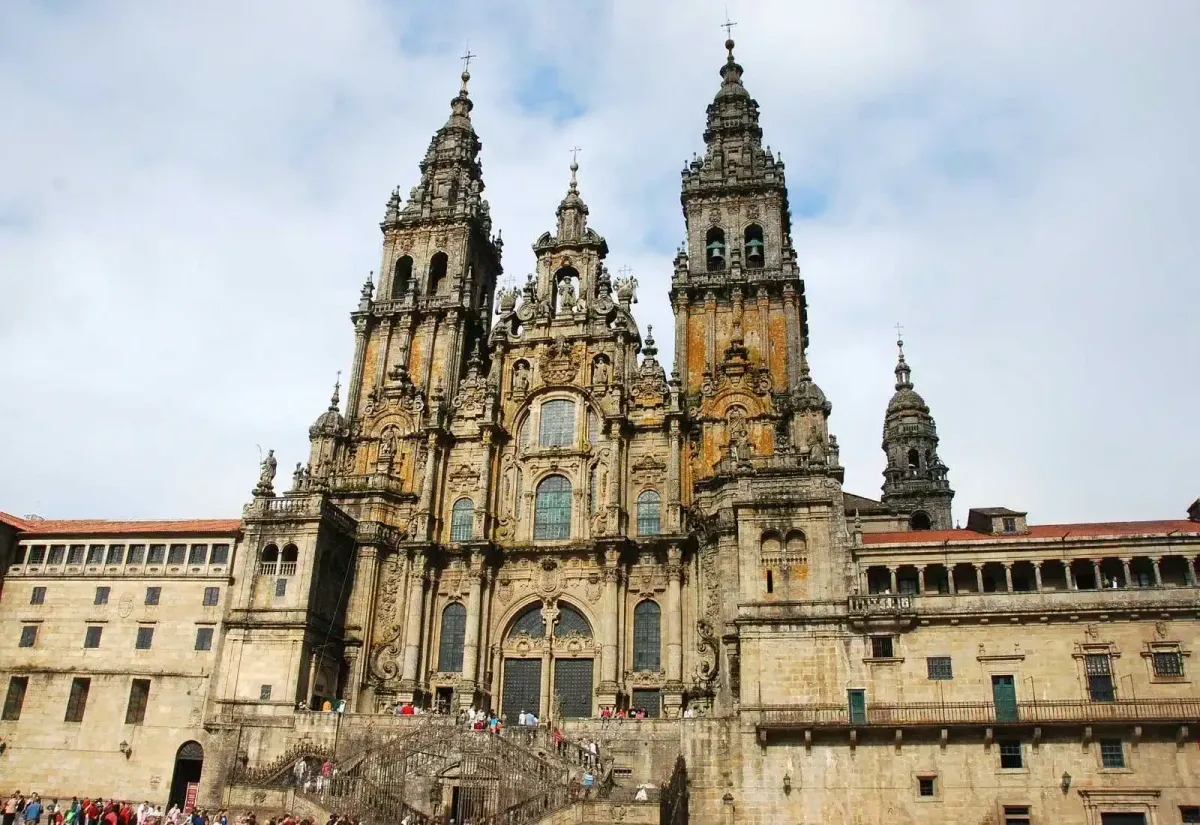
And at this moment is when everything makes sense and you understand what the Camino teaches.
The Camino from Tui to Santiago is not just a sum of kilometers: it's a choreography of landscapes, emotions, sensations, new companions and simple decisions —left, right, here I stop, here I focus on walking— that take you to an ending that always moves you.
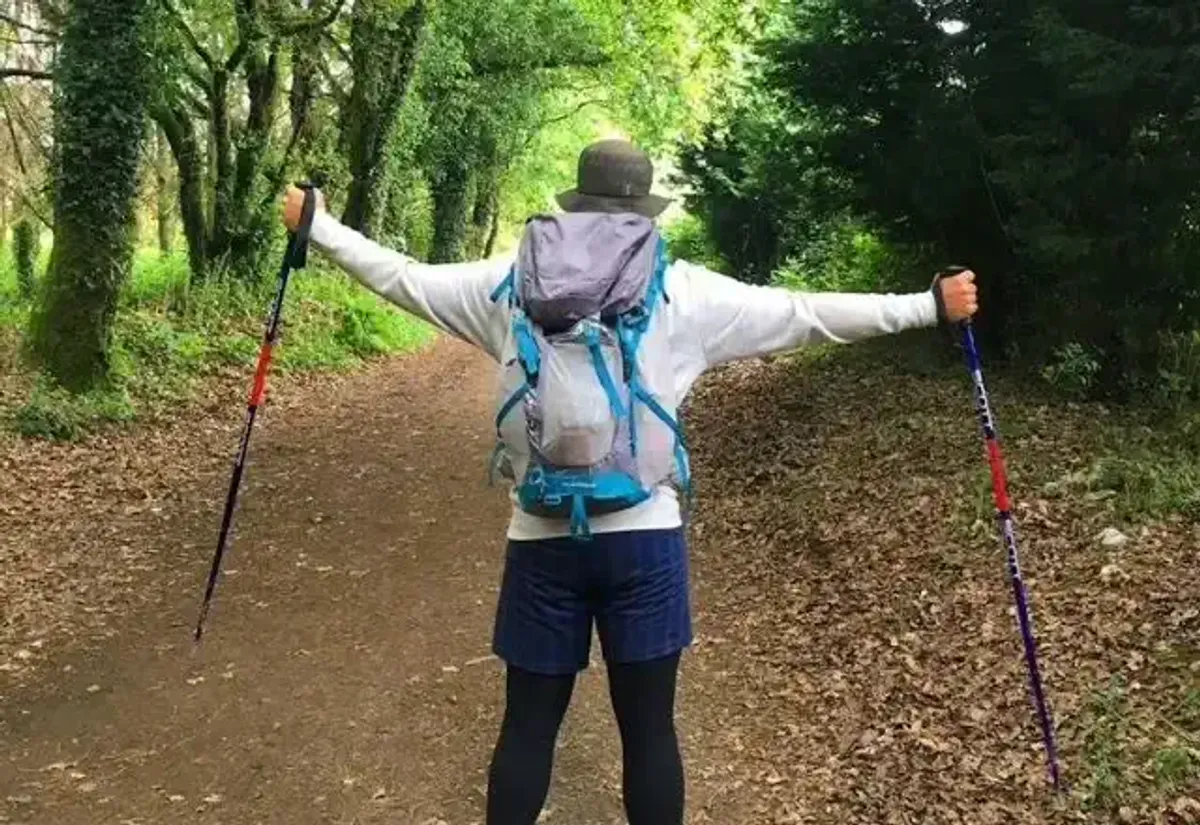
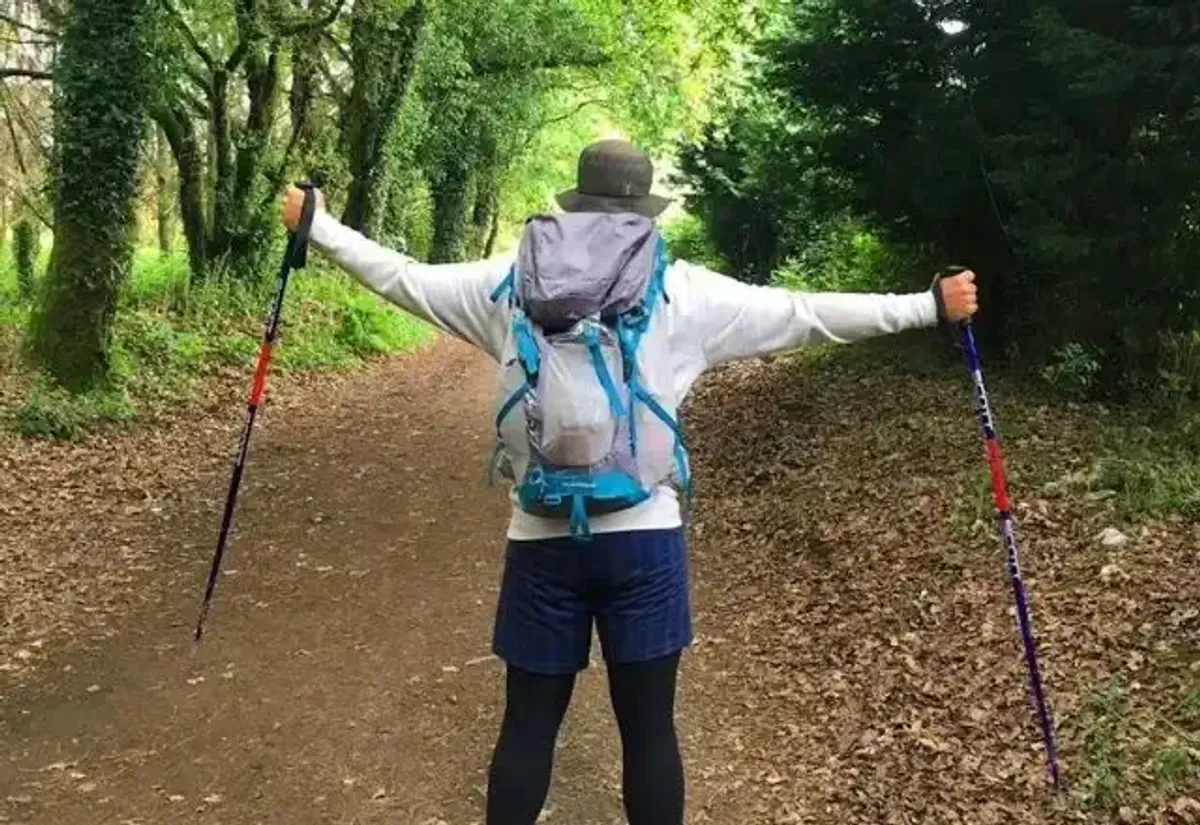
Photos of the Camino de Santiago from Tui
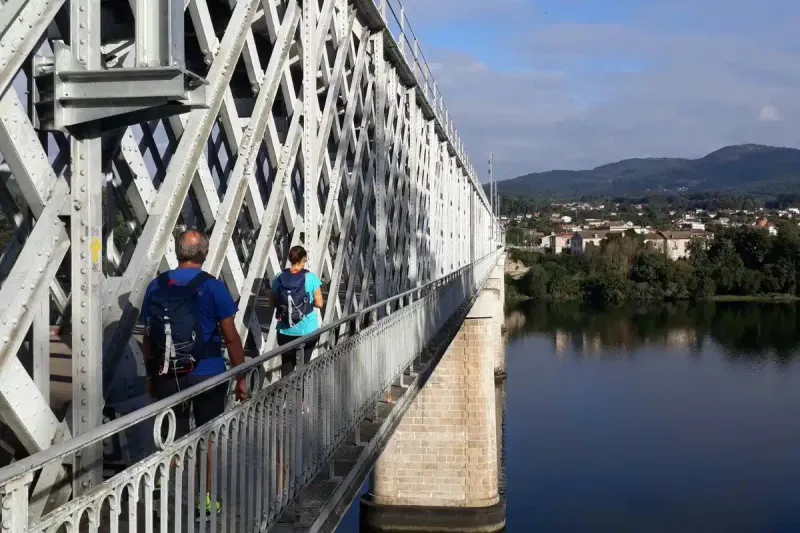
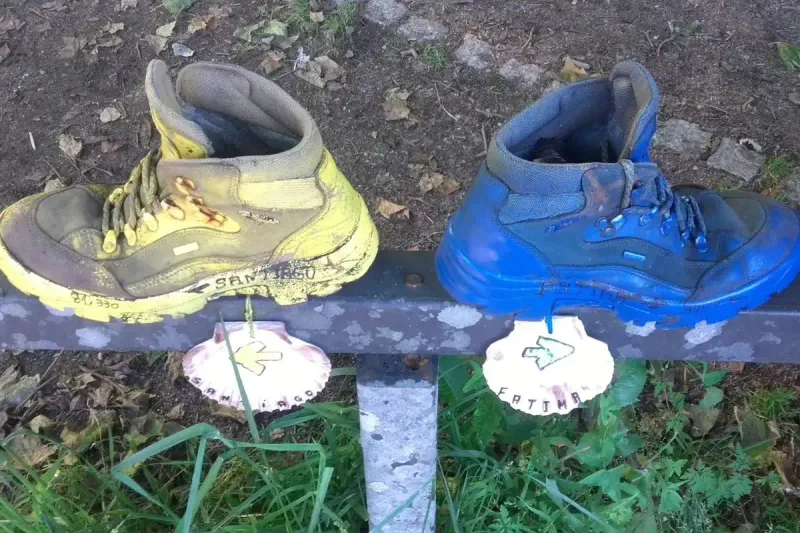
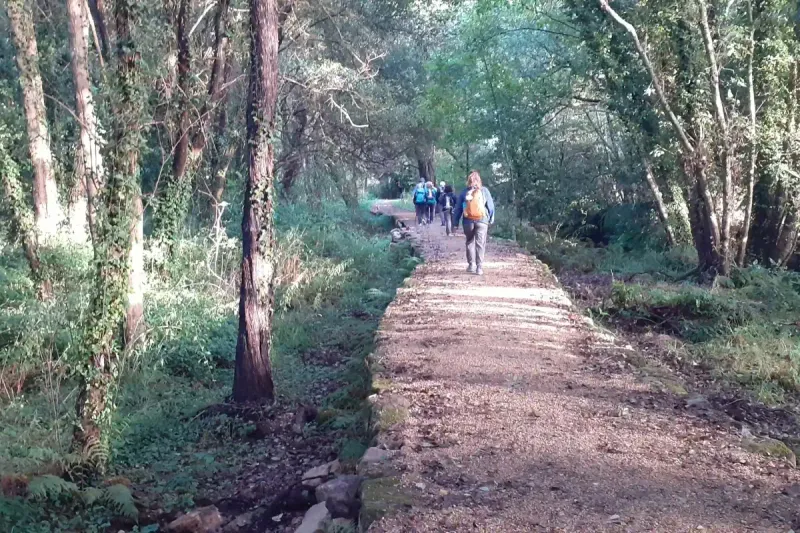
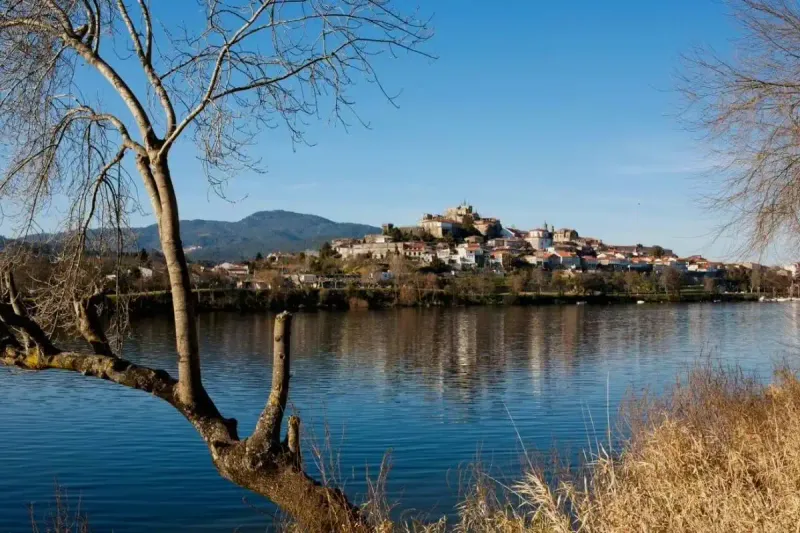
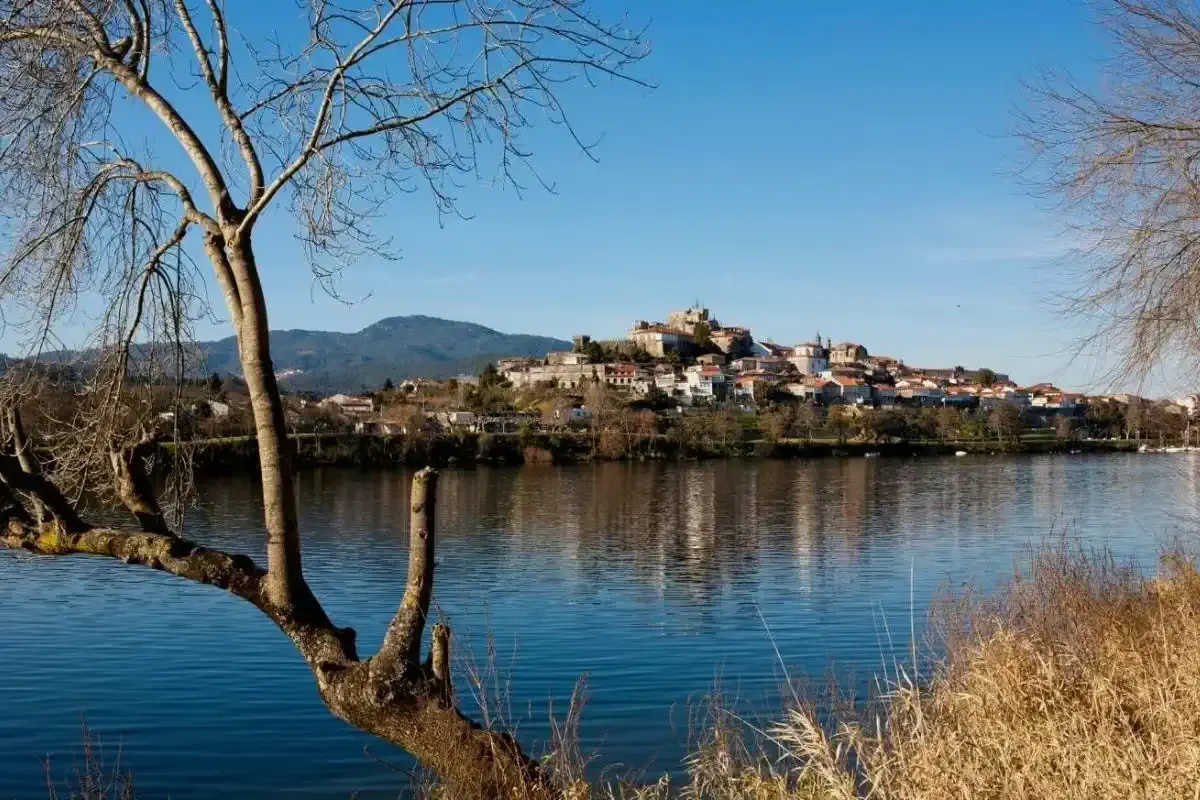
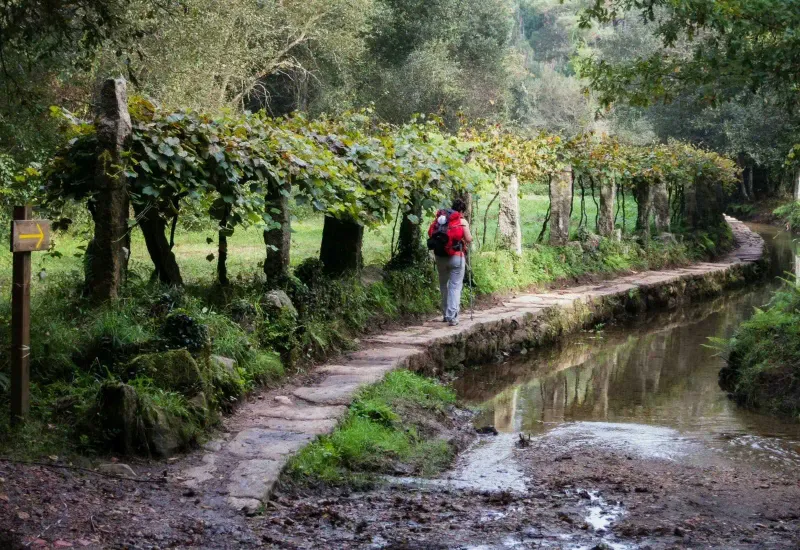
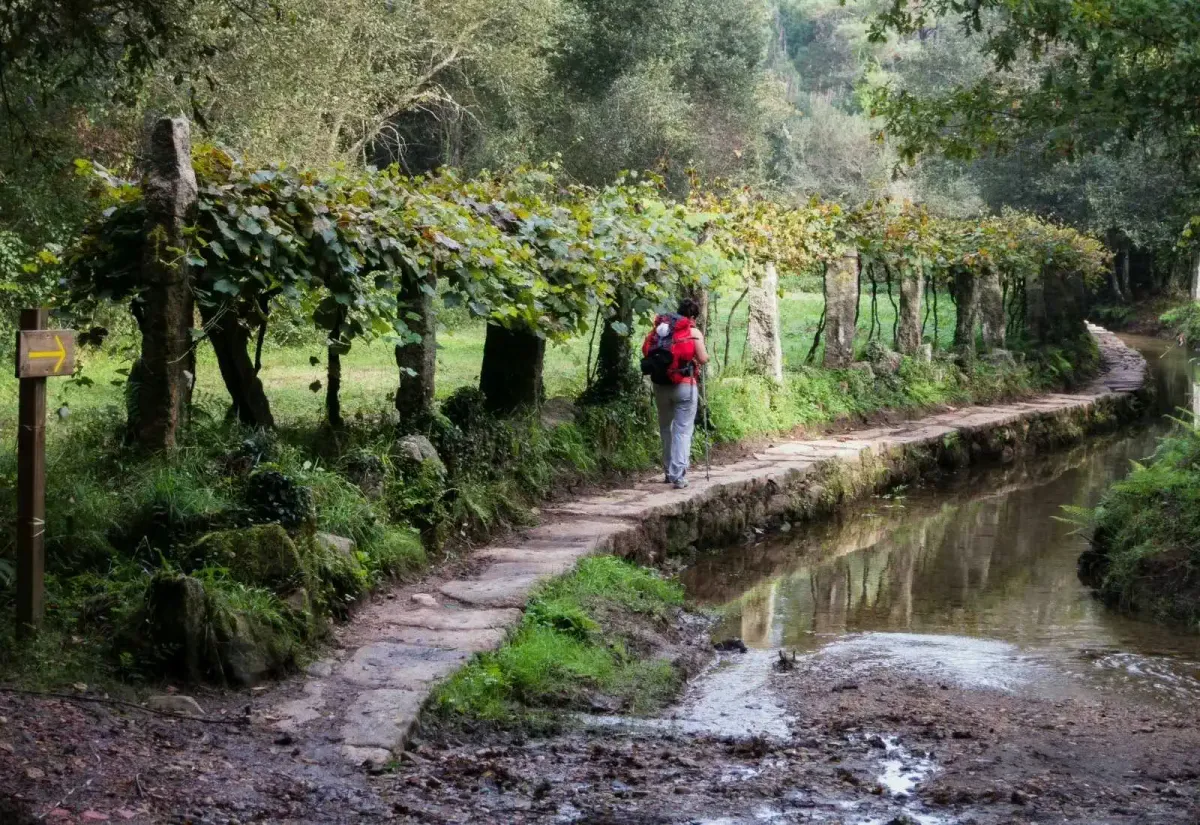
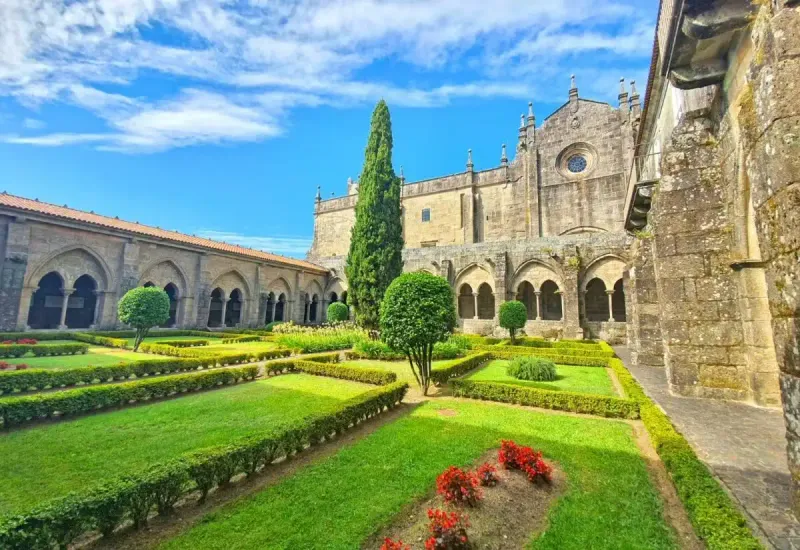
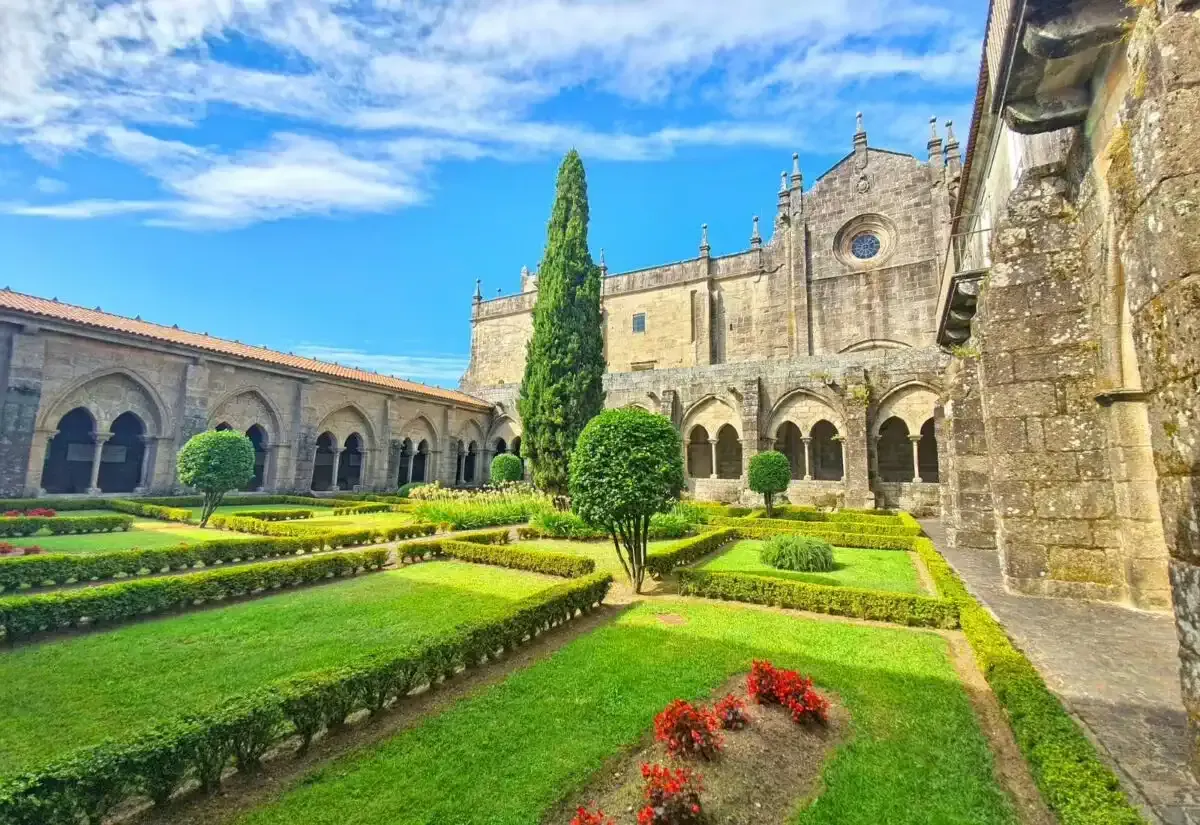
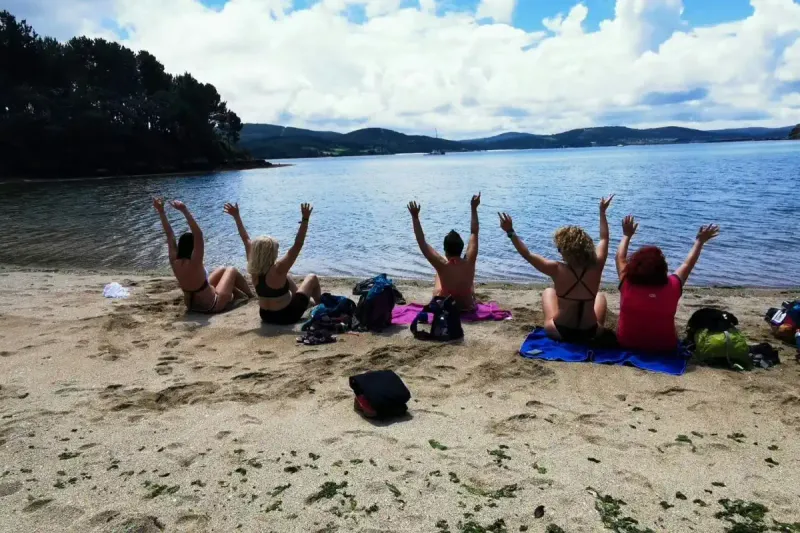
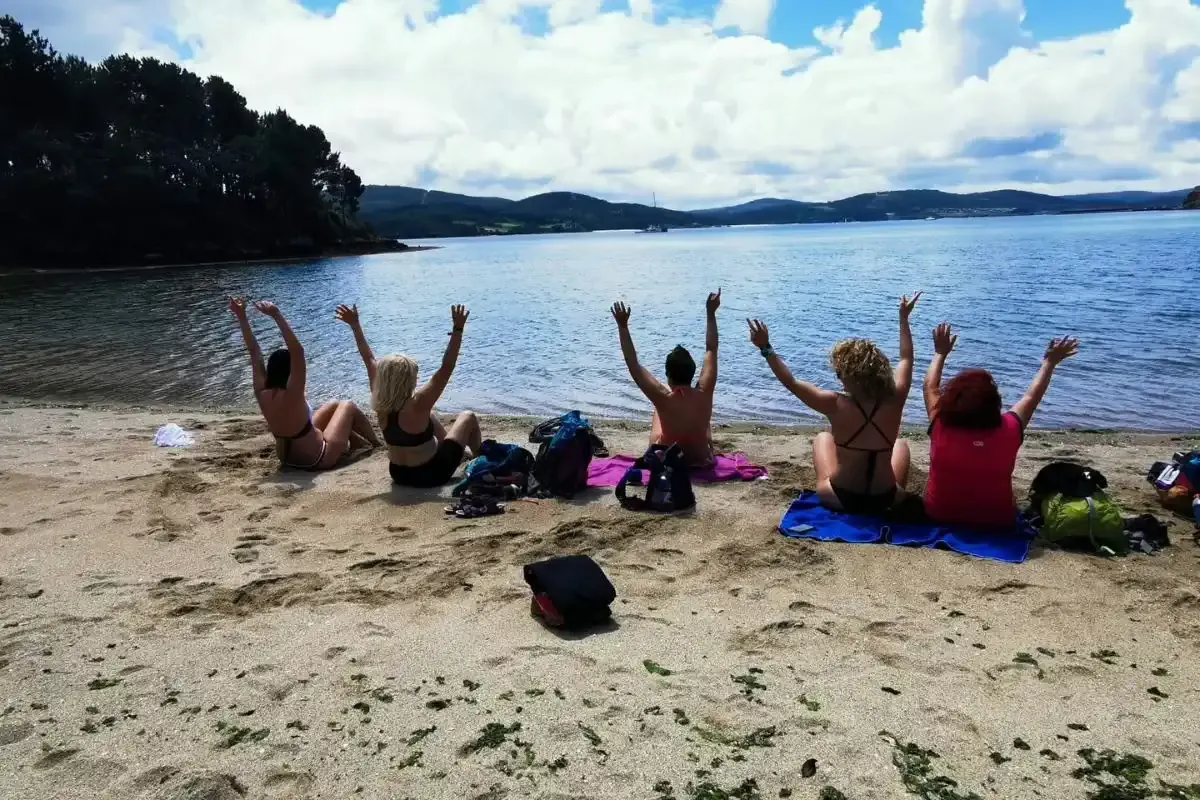
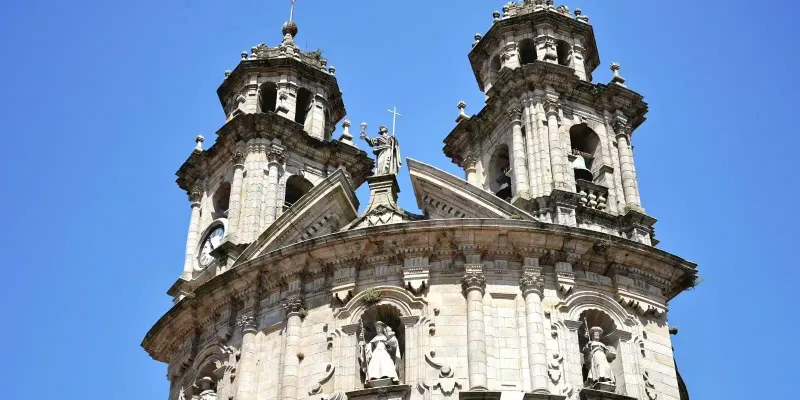
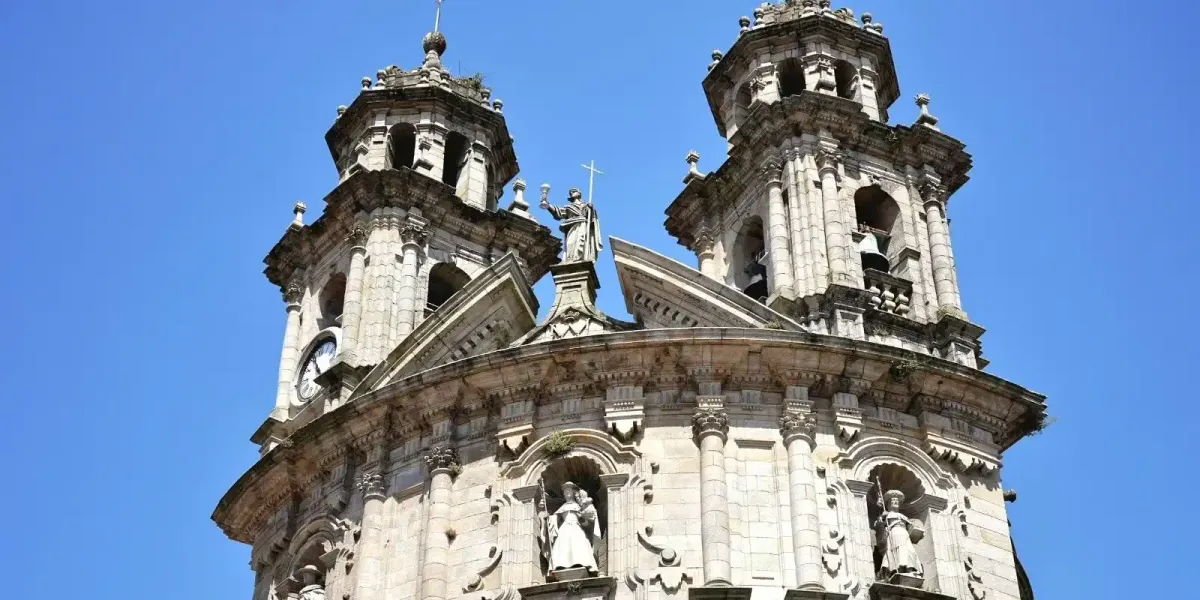
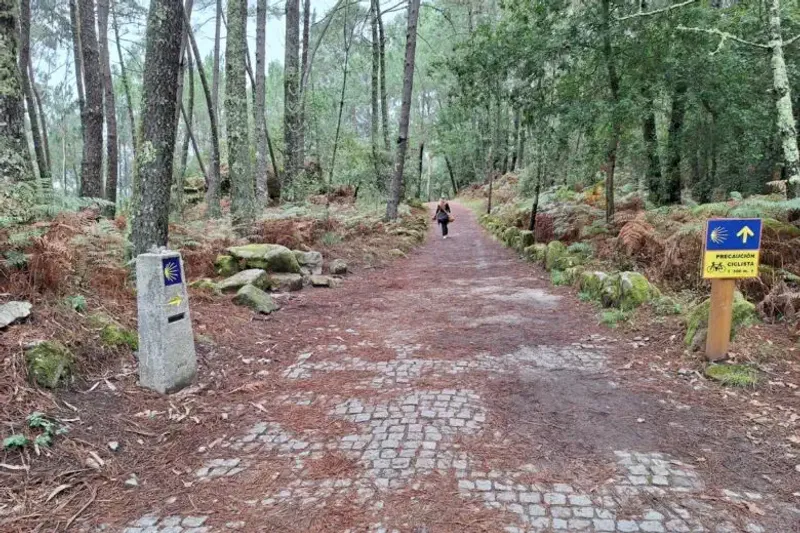
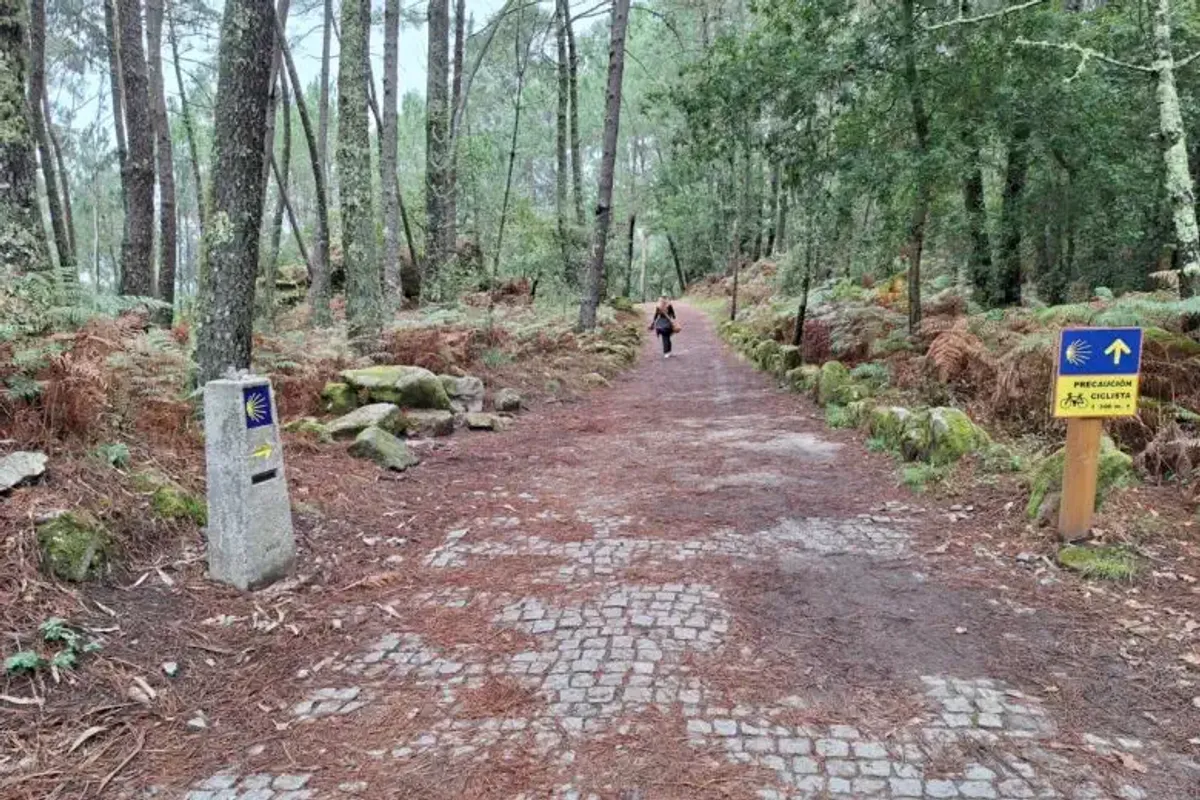
This is the Camino de Santiago from Tui through the eyes of our pilgrims. Thank you for sharing your photos!

Frequently Asked Questions about the route
-
How can I get to the start of the Camino de Santiago route?
Depending on the route and starting location you choose, you will have some options or others. Often it will be a combination of plane, bus, train and even taxi. Of course, you can also arrive in your private car. If you are going to do the Camino de Santiago with us and want to know how to get to Sarria, how to get to Tui, or how to get to Roncesvalles, among other starting points, contact us and we will help you start your adventure. -
How busy is the Portuguese Way?
The Portuguese Way has become increasingly popular in recent years, positioning itself as the second most traveled route after the French Way. Although it does not reach the same level of traffic as the French route, it is still a busy option, especially from Porto or Tui. At these points, you will find a constant flow of pilgrims, especially during the high season (spring and summer). One of the reasons for its growing popularity is that it is an accessible route with less physically demanding stages. In addition, it offers excellent infrastructure for pilgrims, with numerous hostels, hotels and services at each stage. -
What are the stages of the Portuguese Way?
Throughout its approximately 620 kilometers, the Portuguese Way is divided into the following 27 stages:- Lisboa - Alpriate (21,7 km)
- Alpriate - Vila Franca de Xira (18,8 km)
- Vila Franca de Xira - Azambuja (20 km)
- Azambuja - Santarém (33 km)
- Santarém - Golegã (30,7 km)
- Golegã - Tomar (31,3 km)
- Tomar - Alvaiázere (31,7 km)
- Alvaiázere - Alvorge (22,7 km)
- Alvorge - Cernache (26,1 km)
- Cernache - Coimbra (11,3 km)
- Coimbra - Sernadelo (24,8 km)
- Sernadelo - Águeda (23,5 km)
- Águeda - Albergaria-a-Velha (15,8 km)
- Albergaria-a-Velha - São João da Madeira (28,8 km)
- São João da Madeira - Grijó (19 km)
- Grijó - Oporto (15,1 km)
- Oporto - Vilarinho (26,5 km)
- Vilarinho - Barcelos (27,3 km)
- Barcelos - Ponte de Lima (34,5 km)
- Ponte de Lima - Rubiães (17,4 km)
- Rubiães - Tui (19,1 km)
- Tui - O Porriño (18,7 km)
- O Porriño - Arcade (23 km)
- Arcade - Pontevedra (12 km)
- Pontevedra - Caldas de Reis (21 km)
- Caldas de Reis - Padrón (18,6 km)
- Padrón - Santiago de Compostela (24,3 km)
This division can be modified, depending on the preferences and possibilities of each person, always taking into account having a place to spend the night. -
What are the most beautiful stages of the Portuguese Way?
Some stages of the Portuguese Way stand out for their natural beauty, historical richness and cultural significance. Below, I present a selection of the most beautiful stages of the Portuguese Way:- Tui - O Porriño
- Pontevedra - Caldas de Reis
- Valença do Minho - Tui
- Redondela - Pontevedra
- Caldas de Reis - Padrón
- Padrón - Santiago de Compostela
- Natural Landscapes: This stage crosses lush Galician forests, trails surrounded by vineyards and agricultural fields. The tranquility and greenery of the surroundings provide a comforting experience deeply connected to nature.
- Medieval Rivers and Bridges: Along the way, pilgrims cross crystalline rivers on ancient stone bridges, such as the famous Lérez River Bridge, which adds a historical and picturesque touch to the journey.
- Galician Villages: The route passes through small villages that preserve the traditional Galician essence, where pilgrims can enjoy the local hospitality and the rich gastronomy of the region.
- Hot Springs in Caldas de Reis: The stage ends in Caldas de Reis, known for its natural hot springs, which have attracted visitors since Roman times. It is the perfect place to relax after a day of walking.
-
Can I do any route in a group?
The organized group options we offer are:- The French Way from Sarria to Santiago in 5 stages.
- Depending on the season, other routes like the Way to Finisterre from Santiago or the Portuguese Way from Tui.
-
Which routes are most suitable for doing with dogs?
Our experience tells us that the most suitable routes are the French Way from Sarria and the Portuguese Way from Tui. Over the years, we've found that along these sections, dogs are welcomed as another pilgrim, treated with care, and you'll also find a good network of services available for them: dog-friendly accommodations, transportation, veterinarians, etc. -
What does the own-vehicle transfer service consist of?
OWN VEHICLE TRANSFER: We pick up your car at the starting point of your route. You're free to pick the day and time you arrive, just let us know in advance. We will take your vehicle to Santiago where it will be parked until the day you finish your trip. We can deliver the vehicle in Santiago either at your booked accommodation or at a specified city point, at no extra charge. To arrange this service, we'll need your ID card, a copy of your driver's license, a copy of the vehicle's ITV, and a copy of the vehicle's insurance. Here are the prices:
- From Tui to Santiago: 145€.
- From Finisterre to Santiago: 130€.
- From Muxía to Santiago: 125€.
- From O Cebreiro to Santiago: 150€.
-
What does the car rental service consist of?
VEHICLE RENTAL: We will deliver the vehicle in Santiago de Compostela (airport, train station or bus station) so you can move to the starting point of your route. The price is for vehicles up to 6 people, includes full insurance, 24 hours assistance and must be delivered with the same level of fuel with which it was picked up. The prices are as follows:
- From Santiago to Sarria: 130€.
- From Santiago to Tui: 135€.
- From Santiago to O Cebreiro: 150€.
- From Santiago to Finisterre: 130€.
-
Which is the easiest route of the Camino de Santiago?
The word "easy" or "difficult" is a subjective term depending on who you ask, what may seem very easy to some may not to others, and vice versa. On the Camino de Santiago, the level of difficulty depends on several factors, including the time of the year, your physical condition, the terrain's topography, the total distance to be covered, the daily kilometers to be covered, whether you carry your backpack or hire a luggage transport service, among others. If you are a beginner to the Camino de Santiago and it is your first time, there are two routes that are perfect for you and ensure a fulfilling experience. The last 100 kilometres of the French Way from Sarria: It is the most popular and well known route, perfect to do the Camino de Santiago for the first time if you have little time. Its popularity is due to the quality of its services, the wide range of accommodation and restaurants and, above all, its great beauty. The stages along this route are not overly challenging. Over the course of a week, you'll walk approximately 20 kilometers each day on both dirt roads and paved rural trails, with gentle inclines. This comfortable route is suitable for all ages, making it a popular choice for families with children and seniors. The last 100 kilometres of the Portuguese Way from Tui: Another very good option for beginners can be found in the south of Galicia, in Tui. From here we can do the Camino de Santiago in about a week. As in the French Way, the stages are short and without unevenness, with many stretches by road. During your trip you will have no problem finding places to rest and refresh yourself, and you will find a wide range of accommodation and services (laundries, supermarkets, taxis, etc.). -
Where do the last 100 kilometres of the Camino de Santiago begin?
If you lack the time or are unable to complete the entire Camino de Santiago route, you can always opt to join at any point along the way. he most popular choice is to undertake the "last 100 kilometers. This allows you to select any of the routes and reach Santiago de Compostela in approximately a week, covering the final and most renowned 100 kilometers of the Camino de Santiago. These are the last 100 most popular kilometers of the Camino de Santiago.- French Way from Sarria (110 km)
- Portuguese Way from Tui (120 km)
- Primitive Way from Lugo (102 km)
- North Road from Villalba (120 km)
- English Way from Ferrol (122 km)
- Vía de la Plata from Ourense (110 km)
Videos of the Camino de Santiago from Tui
Links of Interest about Tui
Jorge Severo Medina Martín
Writer and Travel Guide for the Camino de Santiago
They say the Miño river separates two countries, but when you arrive in Tui and take the first step towards Santiago, you feel there are no borders… just a path that unites hearts. The green of Galicia, the ancient stones and the calm of the villages surround you as if you were walking inside an embrace. From Tui, each kilometer becomes a conversation with yourself and with those who walk beside you. And then you understand: the Portuguese Way doesn't just take you to Santiago… it also brings you closer to what really matters.
The Camino from Tui taught me that life is ordered step by step. I didn't need a great answer, but small gestures repeated with love: traveling light, opening myself to others, advancing one more kilometer, breathing patience, and paying attention to those humble signs that appear when you lower the noise.
In all my Caminos there were small signs that organized from within: a natural environment that liberates, a silence that finally makes room, a light crossing the forest as if it knew the exact moment.
What does the Camino de Santiago from Tui have? Every pilgrim will speak wonders of this very special Way, but they will also tell you that, to understand it, you have to do it, live it and feel it.
Related articles on the Portuguese Way of Santiago from Tui
- French Way
- Portuguese Way
- Portuguese Way along the coast
- Portuguese Way: spiritual variant
- Finisterre and Muxía Way
- Northern Way
- Primitive Way
- English Way
- Sanabrian Way
- Silver Route
- Winter Way
- Father Sarmiento Way
- Way of the Lighthouses