


Our Camino de Santiago Routes from Sarria
-
 7 days / 6 nights
 - 6 days / 5 nights
- 7 days / 6 nights
- 6 days / 5 nights
- 6 days / 5 nights
- 5 days / 4 nights
Services we offer on our trips
Included in all our routes
-
Accommodation booking selected according to your budget (5, 6, or 7 nights).
-
Baggage transport between stages.
-
Practical information about the Camino in a detailed guide.
-
Route assistance for any questions or issues we are by your side.
-
Travel insurance with extensive coverage.
On group routes
-
Accompanying guides professionals throughout the Camino.
-
Support vehicle available during the stages.
Optional services
-
Meals and diets , with the option to add breakfasts or half board.
-
Private transfers from/to the point you need.
-
Bike rental (MTB, E-Bike).
-
Excursions in Galicia and extra nights at the end of your trip.
How to do the Camino de Santiago from Sarria
The Camino from Sarria is the final part of the famous French Way of the Camino de Santiago, leading you directly to Santiago de Compostela. It begins in Sarria, and from there you enter a Galician landscape full of green hills, lush forests, fresh rivers, and picturesque villages.
Along the route, you will pass through places such as Sarria, Melide, and charming villages like Furelos and Ribadiso. You will also cross rivers such as the Miño and admire historical monuments like the Church of San Nicolás in Portomarín and the ancient Castro de Castromaior. One of the most anticipated highlights is Monte do Gozo, from where you can see the city of Santiago for the first time.
In total, it is 115 km in the heart of Galicia, and you can complete it in less than a week, choosing the pace (6, 5, or 4 stages) and the company you prefer: on your own, with your dog, or in an organized group.
How to get to Sarria
Sarria is a town in the south of Lugo, well connected by road, train, bus, and air. You can get there:
By car: Direct access.
By train: Connections from Madrid, Santiago de Compostela, etc.
By bus: Connections from Lugo, Santiago de Compostela, A Coruña, Ourense, etc.
By plane: Fly to Santiago and take a bus to Sarria.
And if you prefer us to make it easier, we offer Private Transfers to Sarria from different points, and an exclusive Vehicle Transfer service from Sarria to Santiago.
If you want to know more about how to get to Sarria, discover more details here:
The Camino from Sarria in 6 stages
- 7 days / 6 nights
- 7 days / 6 nights
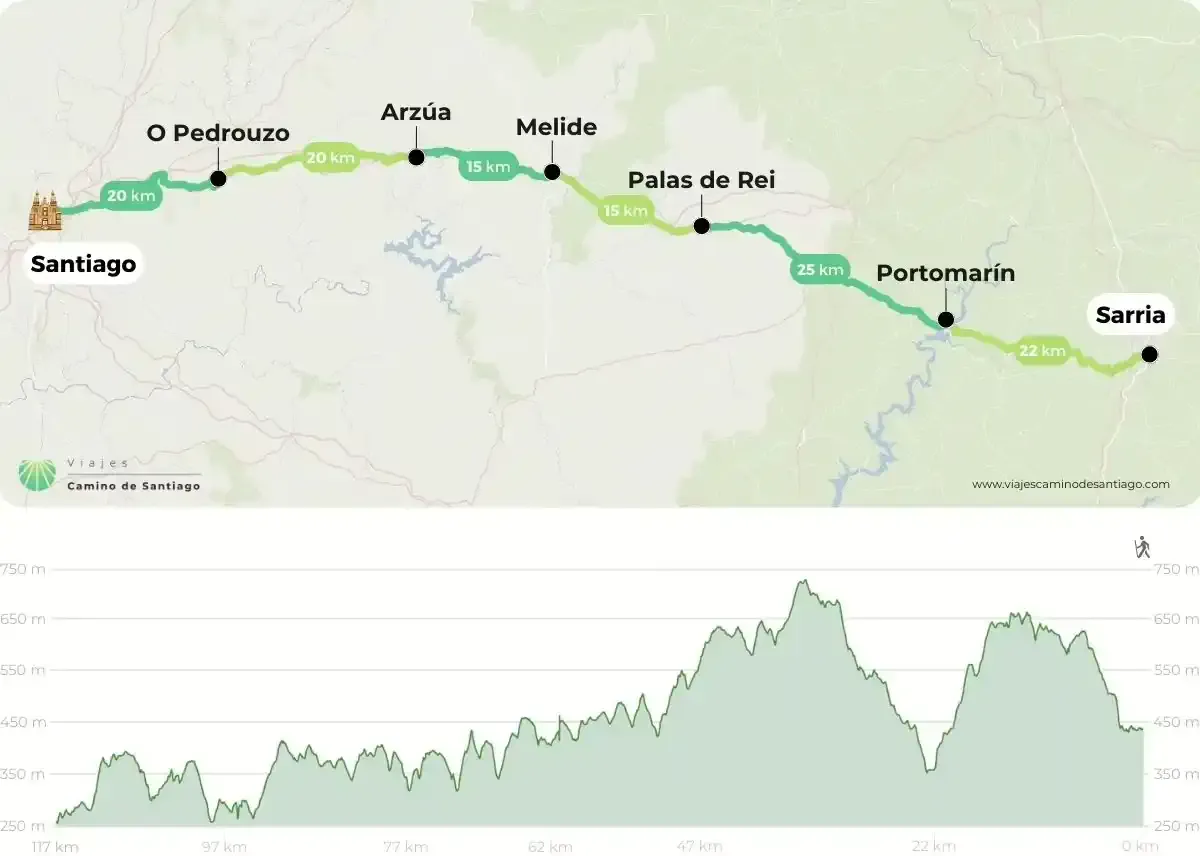
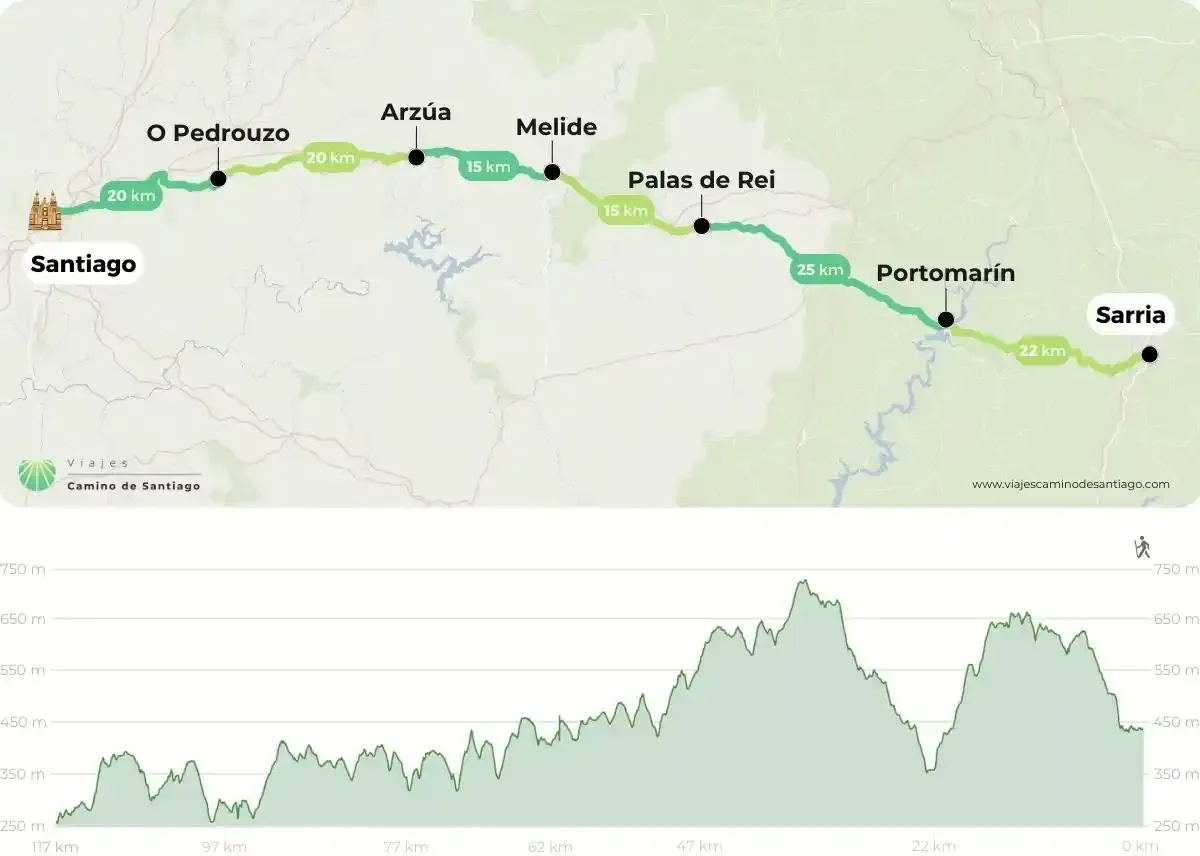
| STAGE | START | END | KM |
|---|---|---|---|
| 1 | Sarria | Portomarin | 22 km |
| 2 | Portomarin | Palas de Rei | 25 km |
| 3 | Palas de Rei | Melide | 15 km |
| 4 | Melide | Arzúa | 14 km |
| 5 | Arzúa | O Pedrouzo | 19 km |
| 6 | O Pedrouzo | Santiago de Compostela | 19 km |
The Camino from Sarria in 5 stages
- 6 days / 5 nights
- 6 days / 5 nights
- 6 days / 5 nights
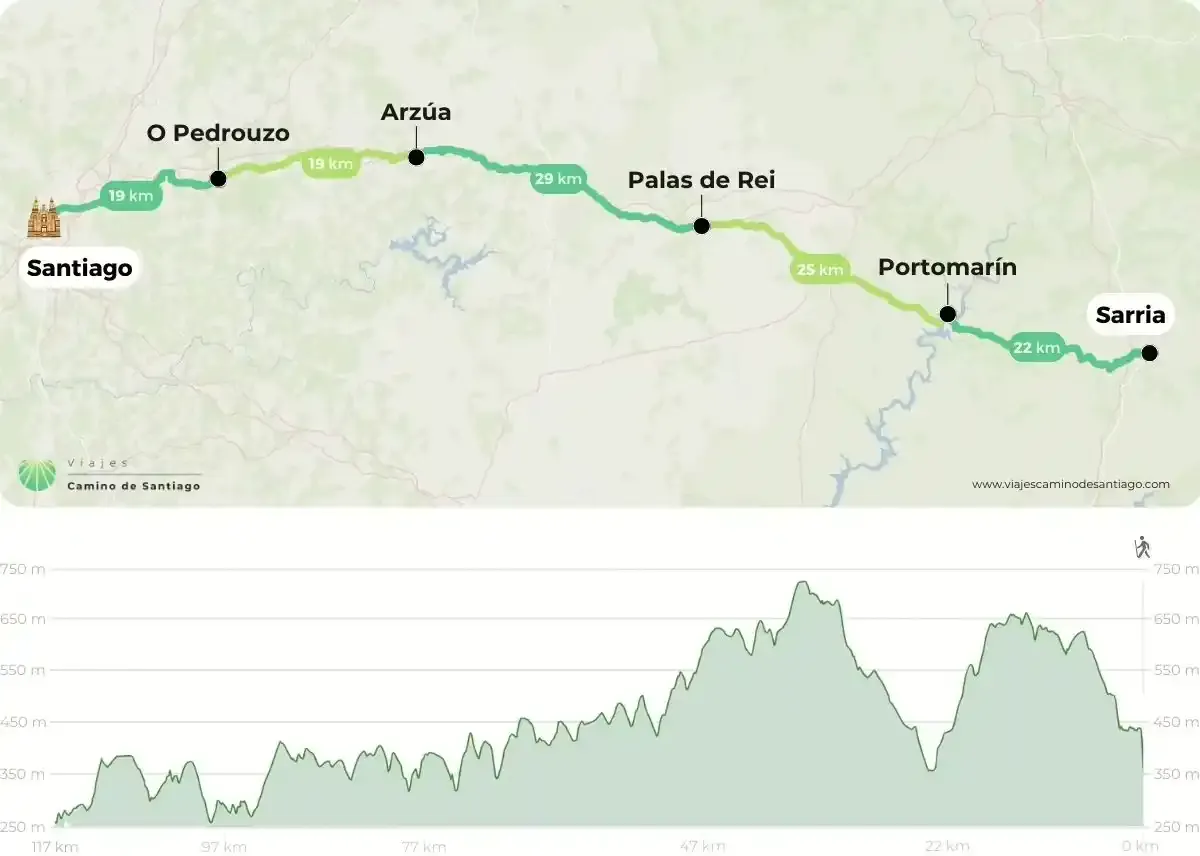
| STAGE | START | END | KM |
|---|---|---|---|
| 1 | Sarria | Portomarin | 22 km |
| 2 | Portomarin | Palas de Rei | 25 km |
| 3 | Palas de Rei | Arzúa | 29 km |
| 4 | Arzúa | O Pedrouzo | 19 km |
| 5 | O Pedrouzo | Santiago de Compostela | 19 km |
The Camino from Sarria in 4 stages
- 5 days / 4 nights

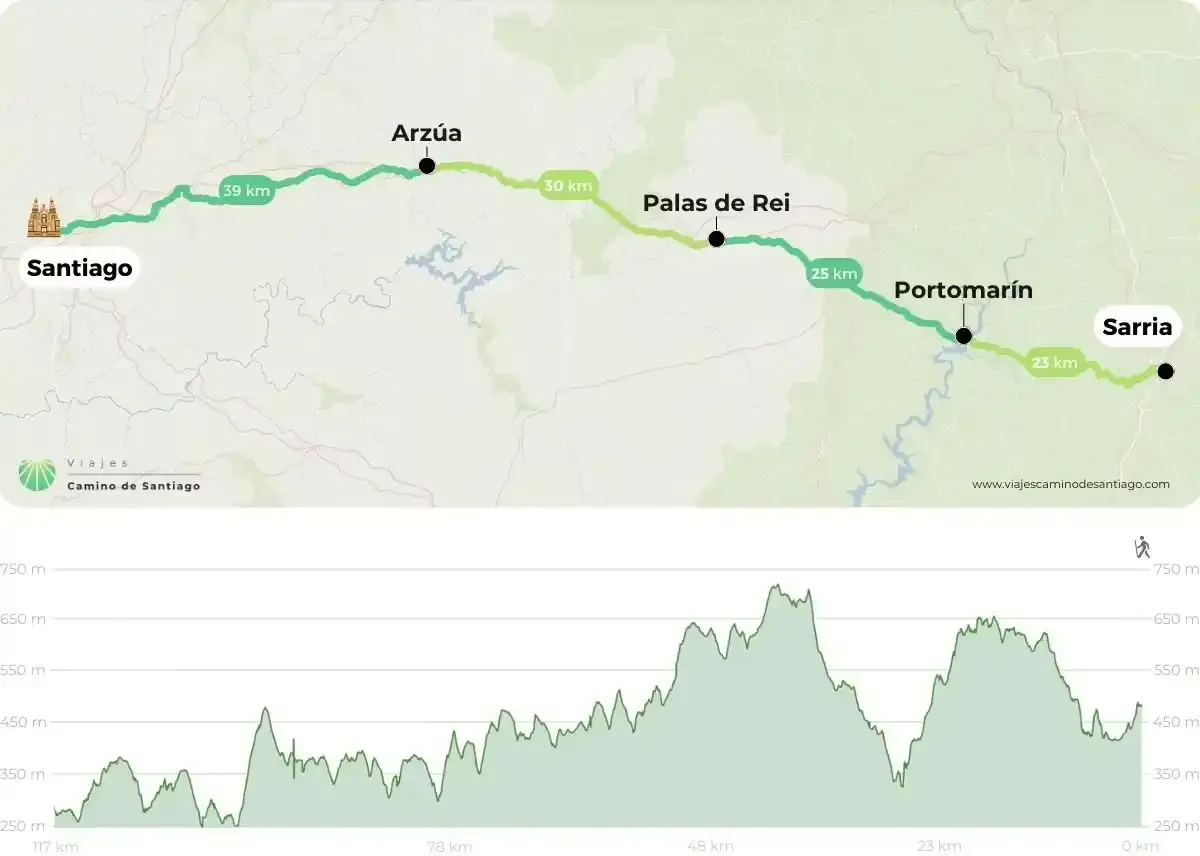
| STAGE | START | END | KM |
|---|---|---|---|
| 1 | Sarria | Portomarin | 22 km |
| 2 | Portomarin | Palas de Rei | 25 km |
| 3 | Palas de Rei | Arzúa | 29 km |
| 4 | Arzúa | Santiago de Compostela | 38 km |
Is the Camino from Sarria difficult?
No, not at all. On this route you won’t find extremely demanding slopes nor does it go through high mountains. Instead, it runs through Galician countryside, valleys, and rolling hills, dotted with rivers and streams. Its 115 km route has the following characteristics:
Maximum altitude: 726 m (Ventas de Narón).
Minimum altitude: 254 m (Santiago de Compostela).
Total positive elevation gain: ~2100 m.
Total negative elevation loss: ~2300 m.
Why is the Camino from Sarria to Santiago the most popular?
And you may wonder, why do so many pilgrims walk the Camino from Sarria?
It can be completed in one week, in 4, 5, or 6 stages.
It is accessible to anyone, with no overly demanding sections.
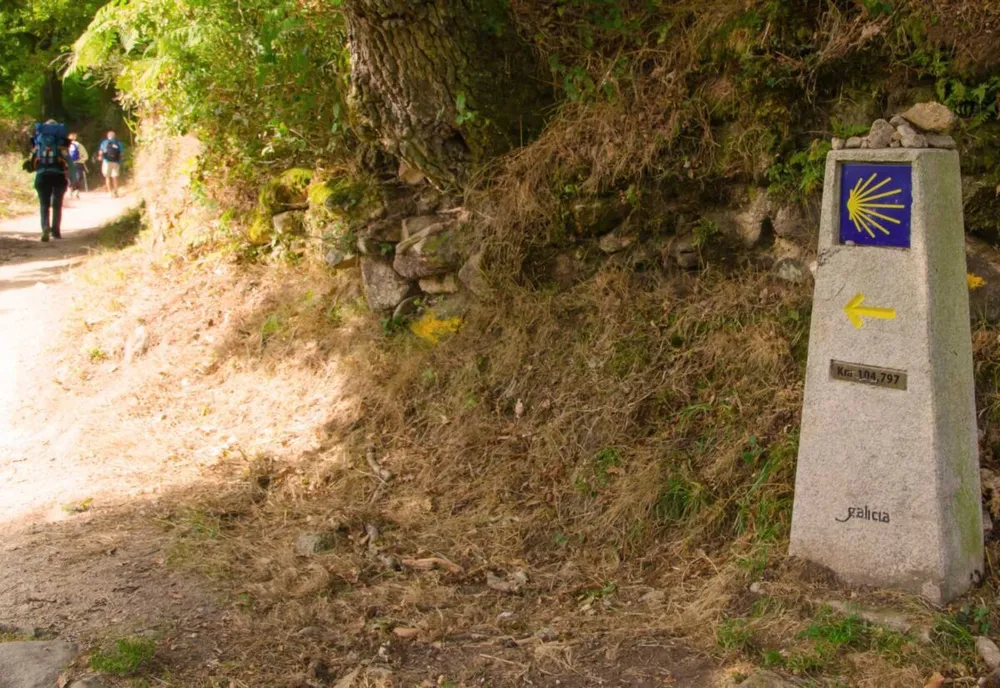
It is perfectly signposted, you just need to follow the yellow arrows.
It offers a wide range of services, both along the stages and at their end.
You will obtain your Compostela, the official certificate of your pilgrimage, after walking the last 100 km of the French Way.
Starting in Sarria is, for me, the easiest and most beautiful way to experience the Camino for the first time and to obtain the Compostela: a perfect balance between time, landscape, and logistics.
Every time I have walked it, I have always found, to my delight, the same: impeccable signposting and plenty of services right on the route, with stage endings that are like “mini-cities” with everything important. This ecosystem makes you feel accompanied and safe, even if walking alone. Sarria also has a special atmosphere of pilgrims of all ages and nationalities.
I have walked with family, friends, and people I met along the way: laughter, constant greetings among pilgrims, and when some soreness or blisters appeared, they were calmly solved with a good bandage. Getting the credential stamped is very easy — churches, hostels, bars, artisan shops, even self-service spots — I have even seen the Guardia Civil on horseback stamping along the route, which is very safe.
What is the best time to do the Camino from Sarria?
The Camino de Santiago from Sarria can be done year-round, but if you’re looking for pleasant weather and a lively pilgrim atmosphere, the ideal time is from March to October.
⭐ May and June(best spring option): mild temperatures, long days, green landscapes, and less crowding than in July and August.
⭐ September and October(best autumn option): moderate warmth, beautiful light, fewer crowds after summer, and services still fully running.
March and April: the start of the season, with variable weather and more rain, but a growing pilgrim atmosphere (note: Easter week is busier).
July and August: peak season with heat and high crowds; it’s best to start walking early and book in advance.
November to February(low season): very quiet and lower prices, but colder, rainier, with fewer daylight hours and some services closed.

Stage guide for the Camino de Santiago from Sarria
Stage 1. Sarria - Portomarín | 22 km | Low difficulty | 5h. 30m.
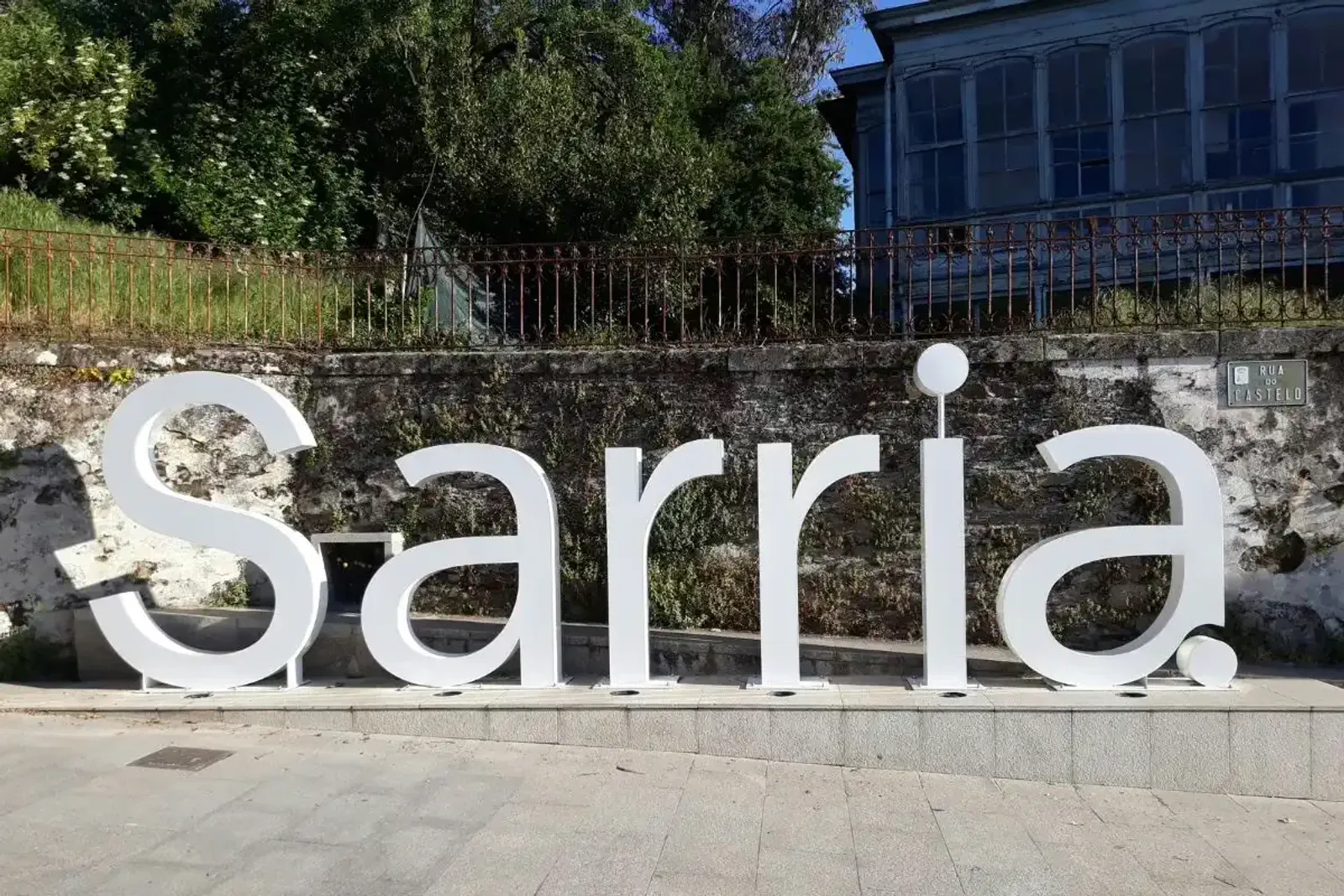
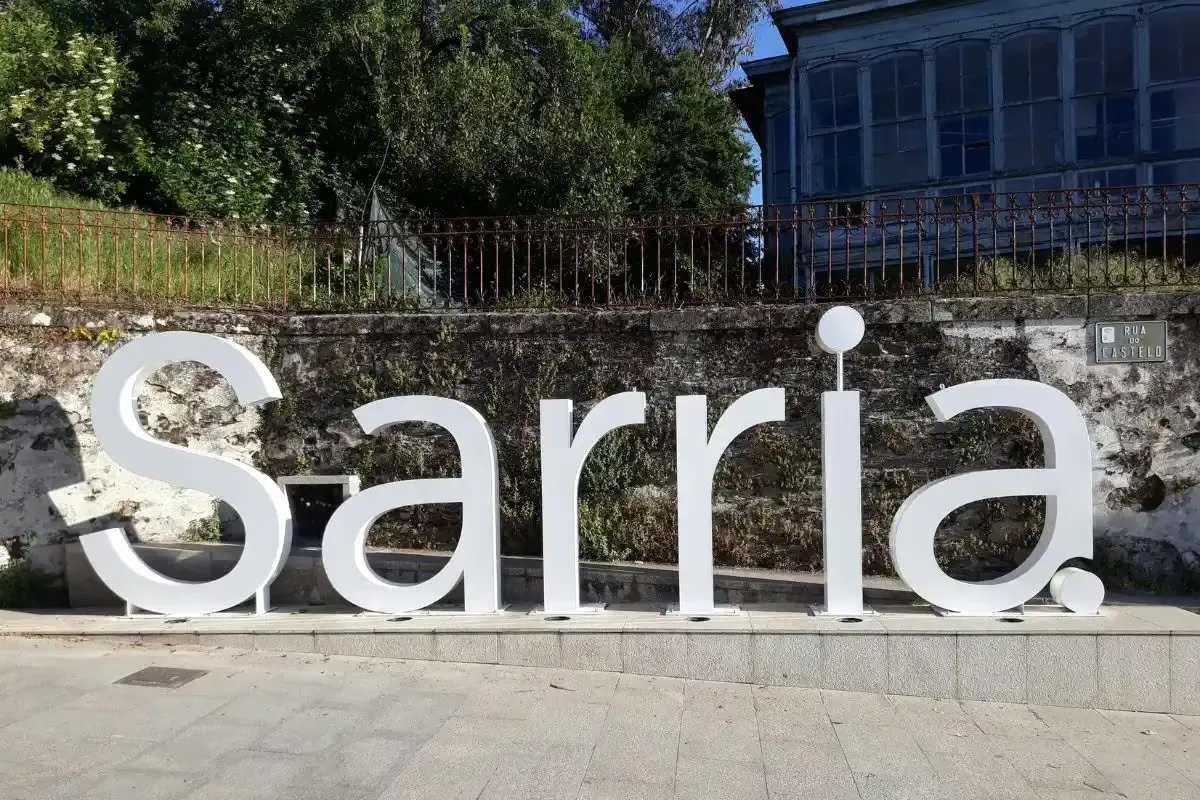
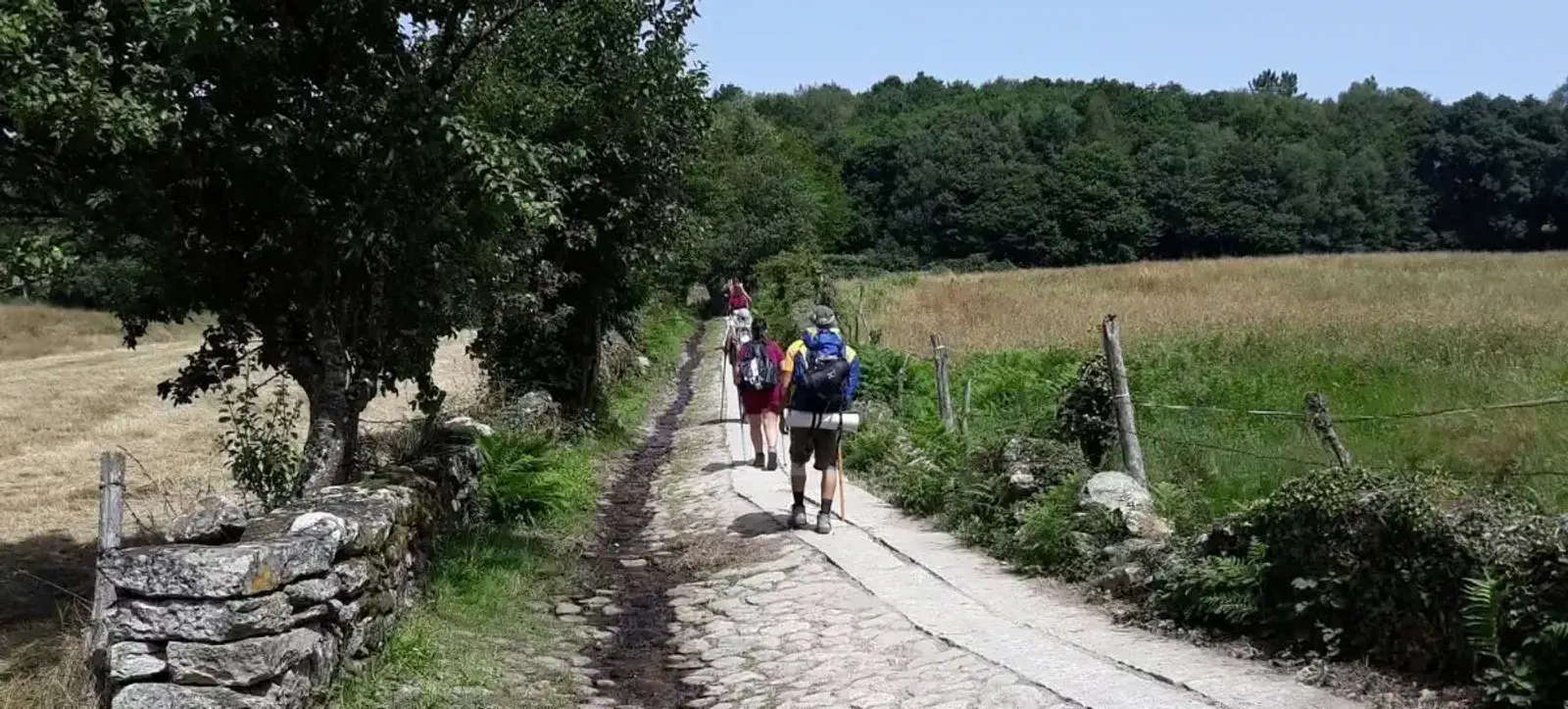
At 7:00 it’s time for the first coffee. The village awakens, and so do you, climbing the famous stairs that lead to the Rúa Maior of Sarria: 64 steps that awaken both your legs and your smile. You snap a quick photo at the Sarria sign, and soon the town is behind you. After Ponte da Áspera, it’s best to take the left variant: gentler, with less road and more meadows and forest — just what you need early in the morning.
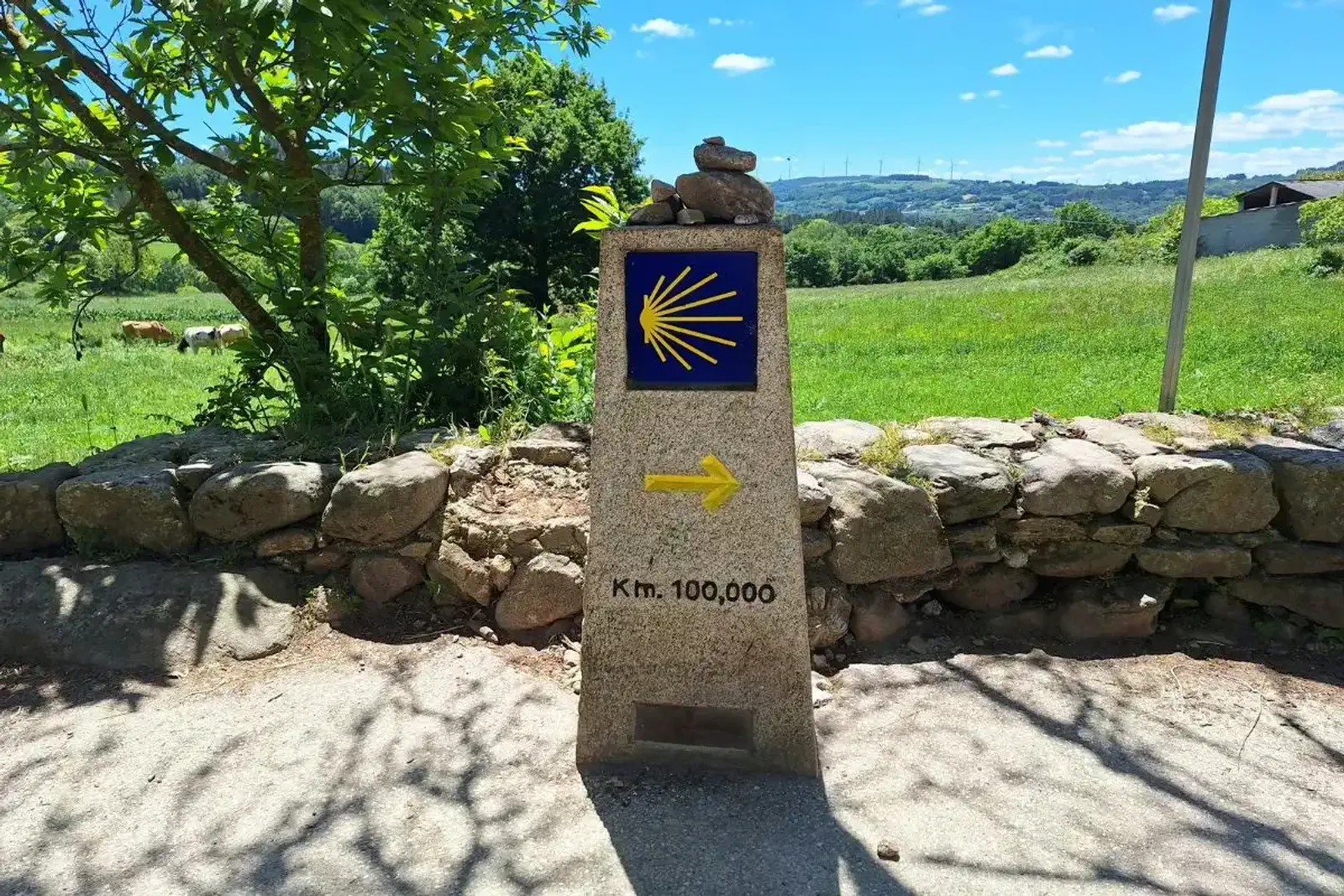
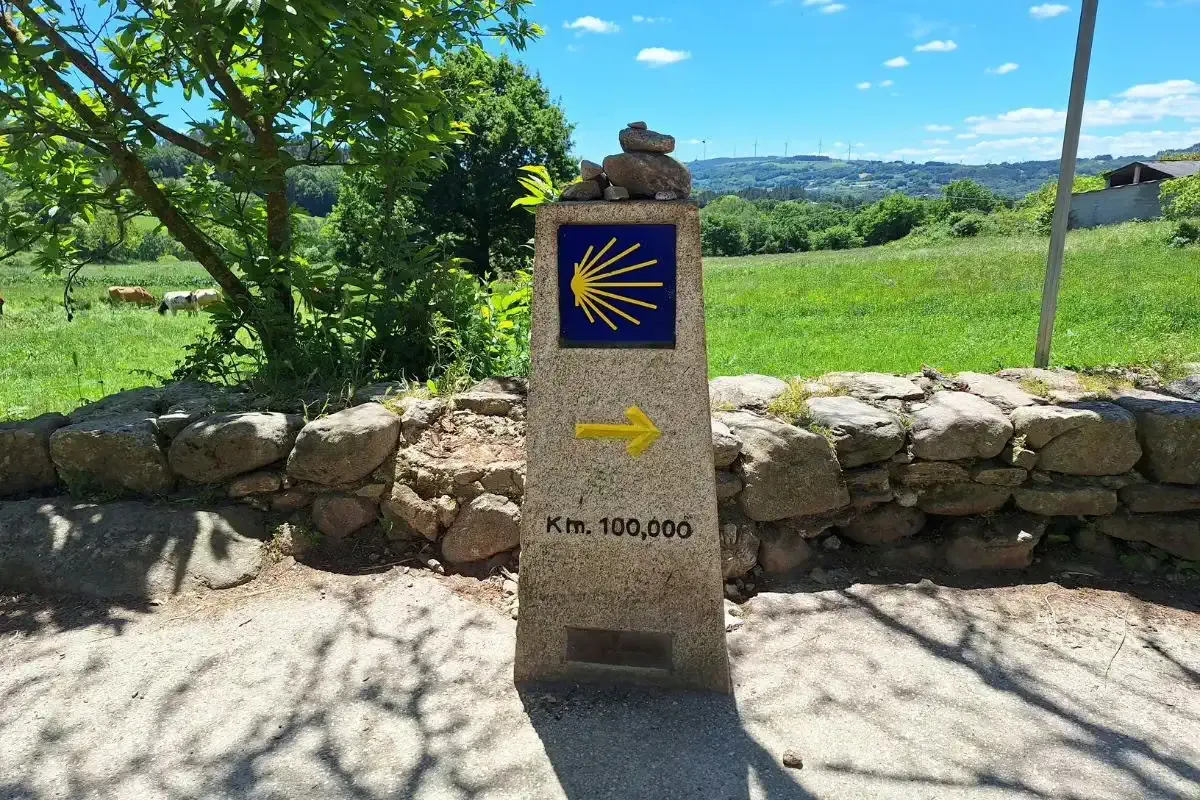
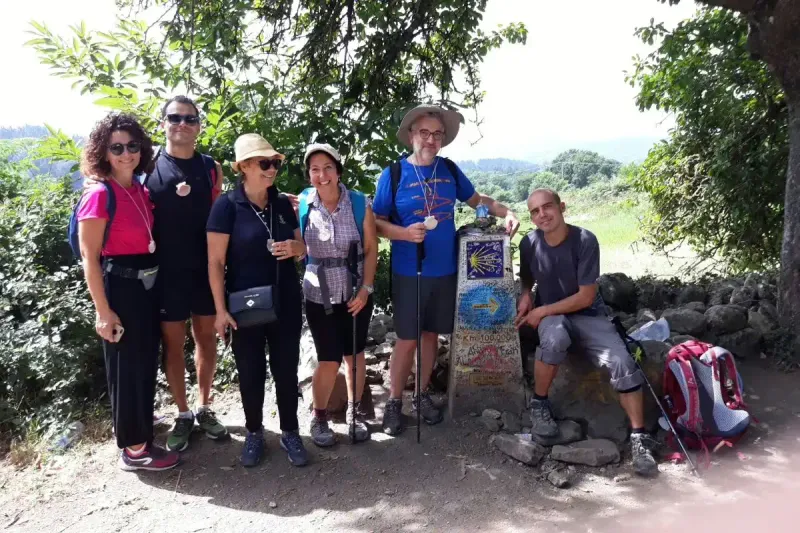
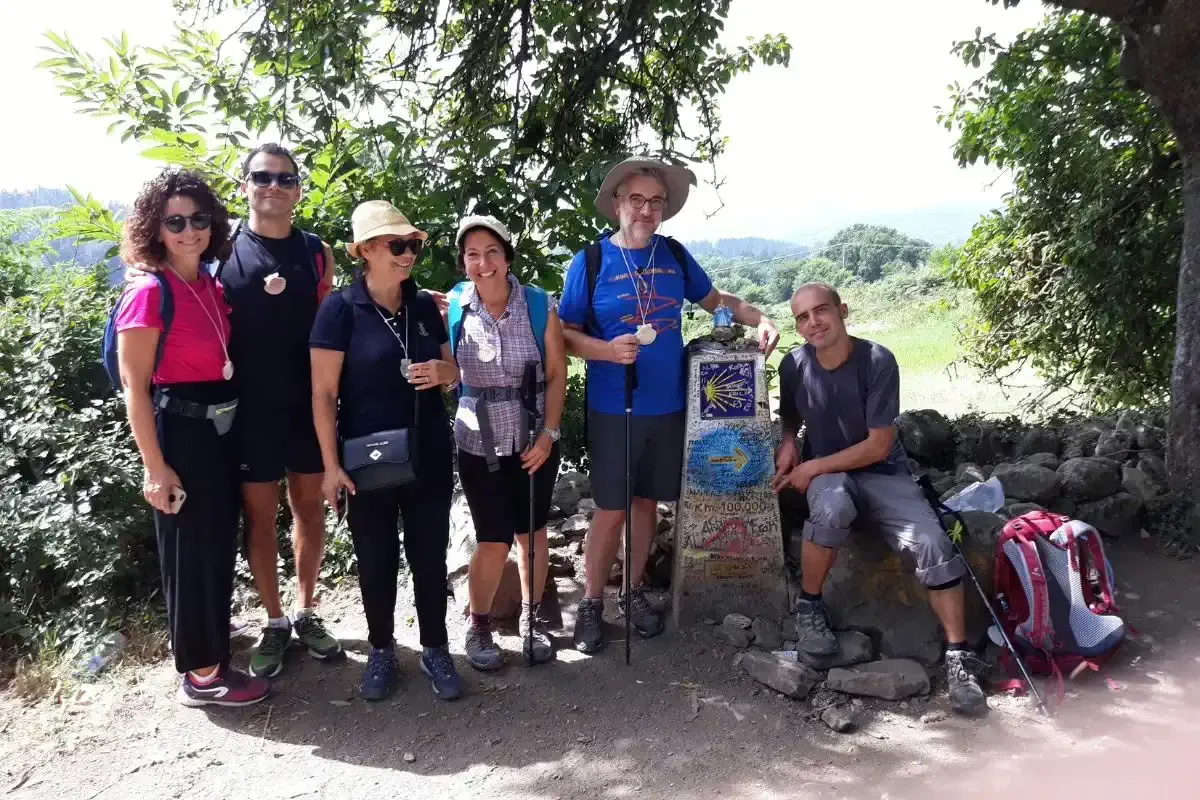
In Vilei you’ll find the first bar to stamp your credential, though it’s not essential — there are plenty of options along the way. For example, in Barbadelo, where the Church of Santiago greets you and sometimes a volunteer opens the temple to offer a stamp. The path continues to the viewpoint of A Brea and Morgade, where a small chapel and a bar share the landscape and serve unique juices. The walk feels light, with conversations flowing with new companions. In Ferreiros you reach the 100 km milestone; take a moment here, not so much for the photo but for what it symbolizes: the finish line already feels close. In Mercadoiro, a simple snack feels right, and with renewed energy you approach Portomarín, which soon appears in panoramic view.
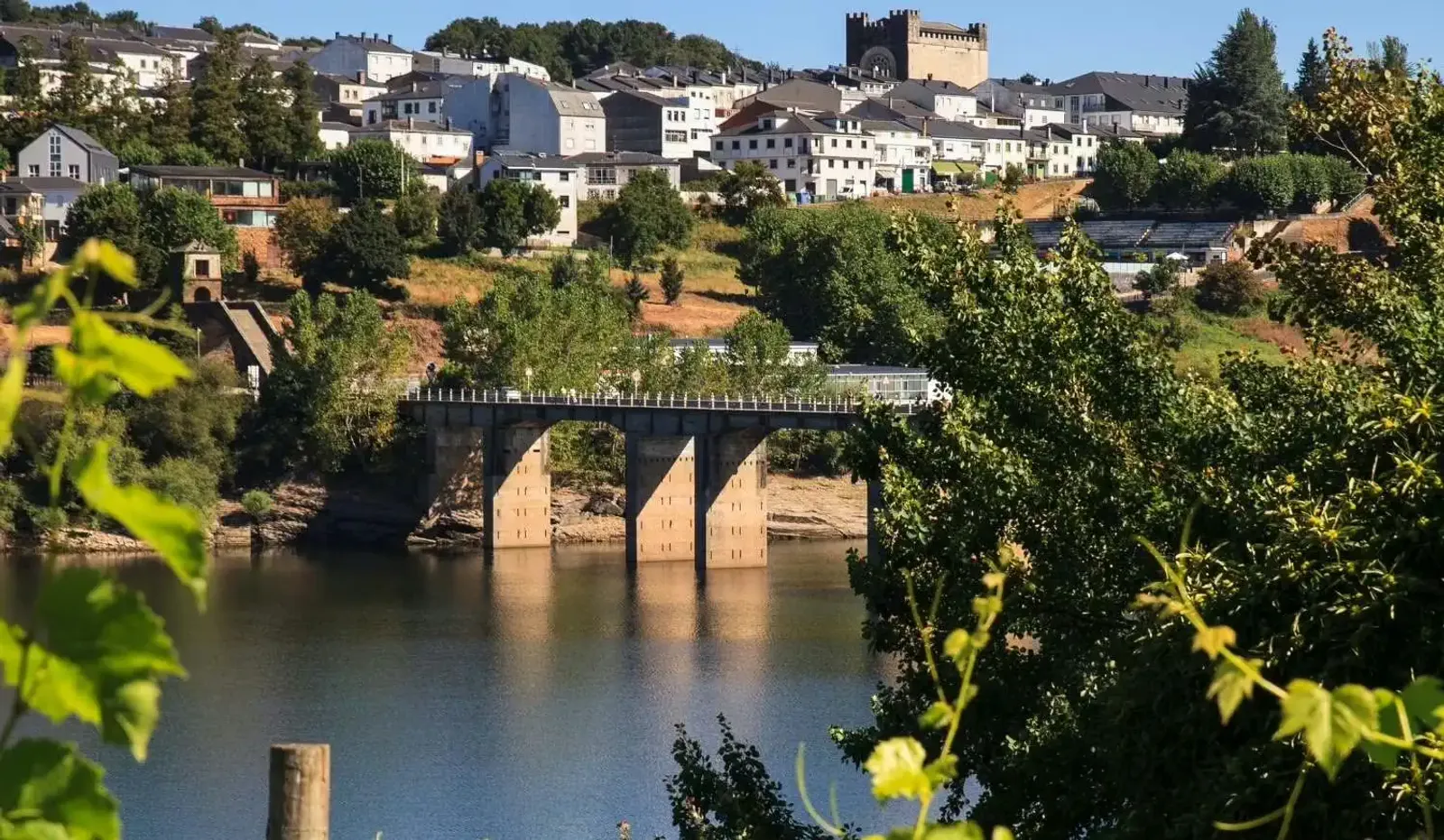
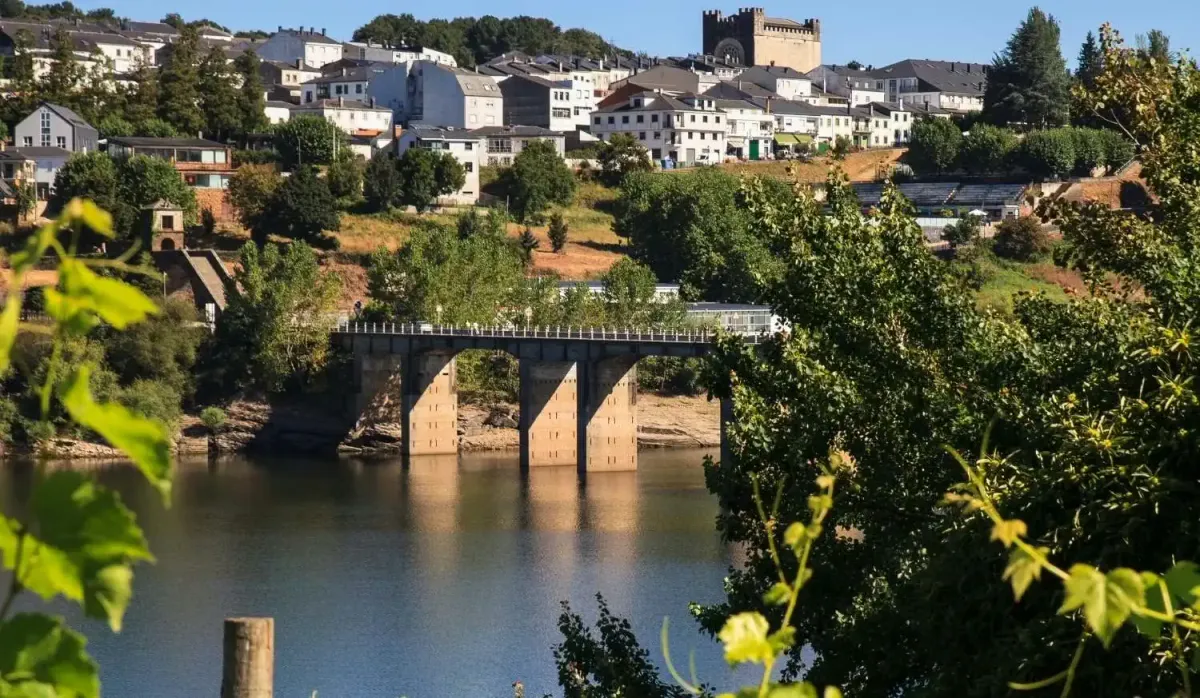
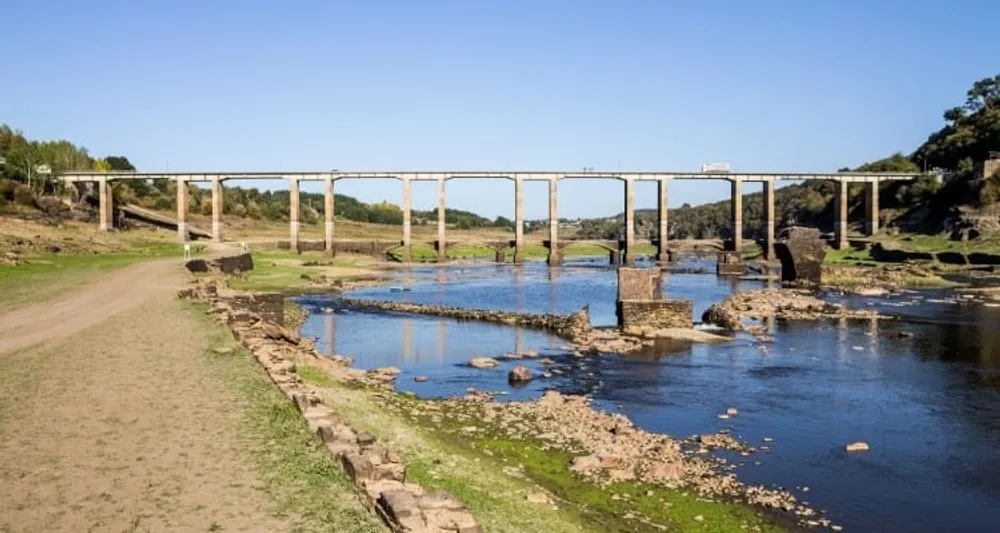
The entrance to Portomarín gives you a choice: the direct asphalt descent (steep) or the prettier path on the left, with a technical stretch best enjoyed only in dry weather; in rain, the risk of slipping isn’t worth it. Crossing the bridge, the Miño River embraces you. Time to stamp your credential at the Church of San Nicolás and, if the day allows, enjoy a swim in the river or stop at the public pool. At dusk, the mist falls like a blanket over the valley: Galicia whispers “boa noite.”
Forks on this stage (Alternative Camino):
Km 113.074, leaving Sarria: it is recommended to follow the left path, the main route, which is more scenic than the right-hand alternative that is longer and has more asphalt.
Km 93.745, arriving in Portomarín: to the right, a shorter but steep asphalt descent; to the left, after a few meters, there are two options: to the right, natural stone steps — an exciting but technical stretch (not recommended in rainy weather) — or to the left, a gentler descent.
Stage 2. Portomarín - Palas de Rei | 25 km | Medium difficulty | 6h.
Leave early from Portomarín, often wrapped in the evocative morning mist, taking the right-hand variant: the trail climbs gently through oaks and chestnuts, a progressive ascent that helps you “finish waking up.” Important: during the first 8 km there are no bars, so it’s best to set out well hydrated. At the entrance to Gonzar, a fork appears: to the left, the path goes through fields; to the right, alongside the road. No problem either way — both lead to a timely bar.
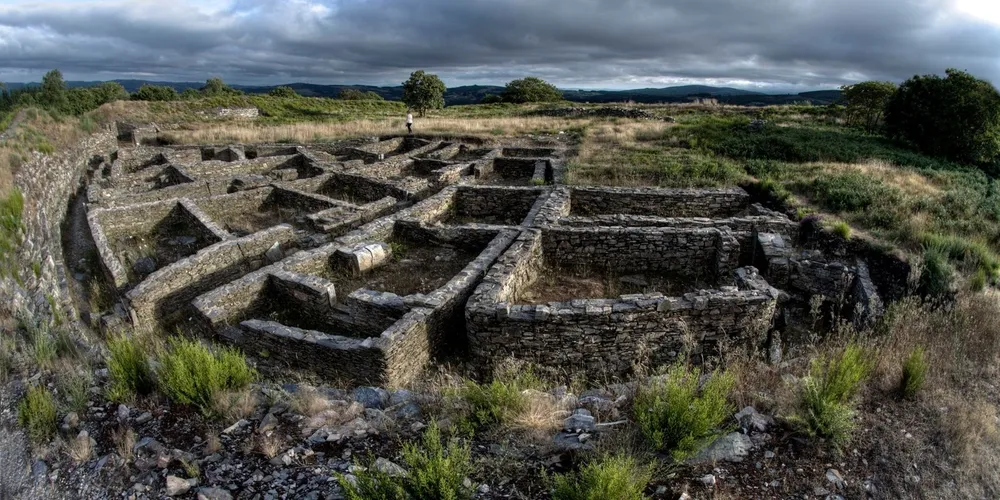
The little treasure of the day is the archaeological site of Castro de Castromaior. The detour, hidden on the left after a climb, connects without issue and is worth every step: ancient stones, a soft breeze, and a silence that says it all. After that, you pass through Hospital, famous for its giant omelet, and in Ventas de Narón the chapel of La Magdalena offers conversation and a stamp; sometimes a Templar volunteer provides a unique one. In Lameiros, you’ll find a 16th-century stone cross with the Passion carved into it, simple and striking. Between Ligonde and Airexe, it’s a good idea to grab a bite before the end of the stage so you arrive light.
Arrival in Palas de Rei is through the Church of San Tirso. The town has everything: pharmacy, shops, swimming pool. It’s the perfect afternoon to wash clothes after two stages, stretch a bit, and let the fatigue settle quietly.
Forks on this stage (Alternative Camino):
Km 91.953, leaving Portomarín: perhaps longer on the left. Pilgrims usually take the right-hand route, a beautiful climb through oaks often covered in evocative morning mist.
Km 84.672: about 8 km from Portomarín, the left path runs through the countryside, while the right follows the road, with no major difference in distance. Both lead to a bar.
Km 82.069: not an official fork, but well worth it to see the Castro de Castromaior , just a few dozen meters away, with no need to backtrack to rejoin the route.


Stage 3. Palas de Rei - Melide | 15 km | Low difficulty | 3h. 30m.
Leaving Palas de Rei through oak groves, the Wall of Wisdom, with its phrases written on the walls, will make you stop and reflect. Further on, in Leboreiro, the church displays beautiful frescoes beside a small bridge that turns the scenery into a postcard. The route continues to Furelos, a perfect village to dip your feet in the river and, on hot days, enjoy a swim. In the Church of San Xoán, a Christ with one arm un-nailed stands out — a powerful image that leaves an impression.
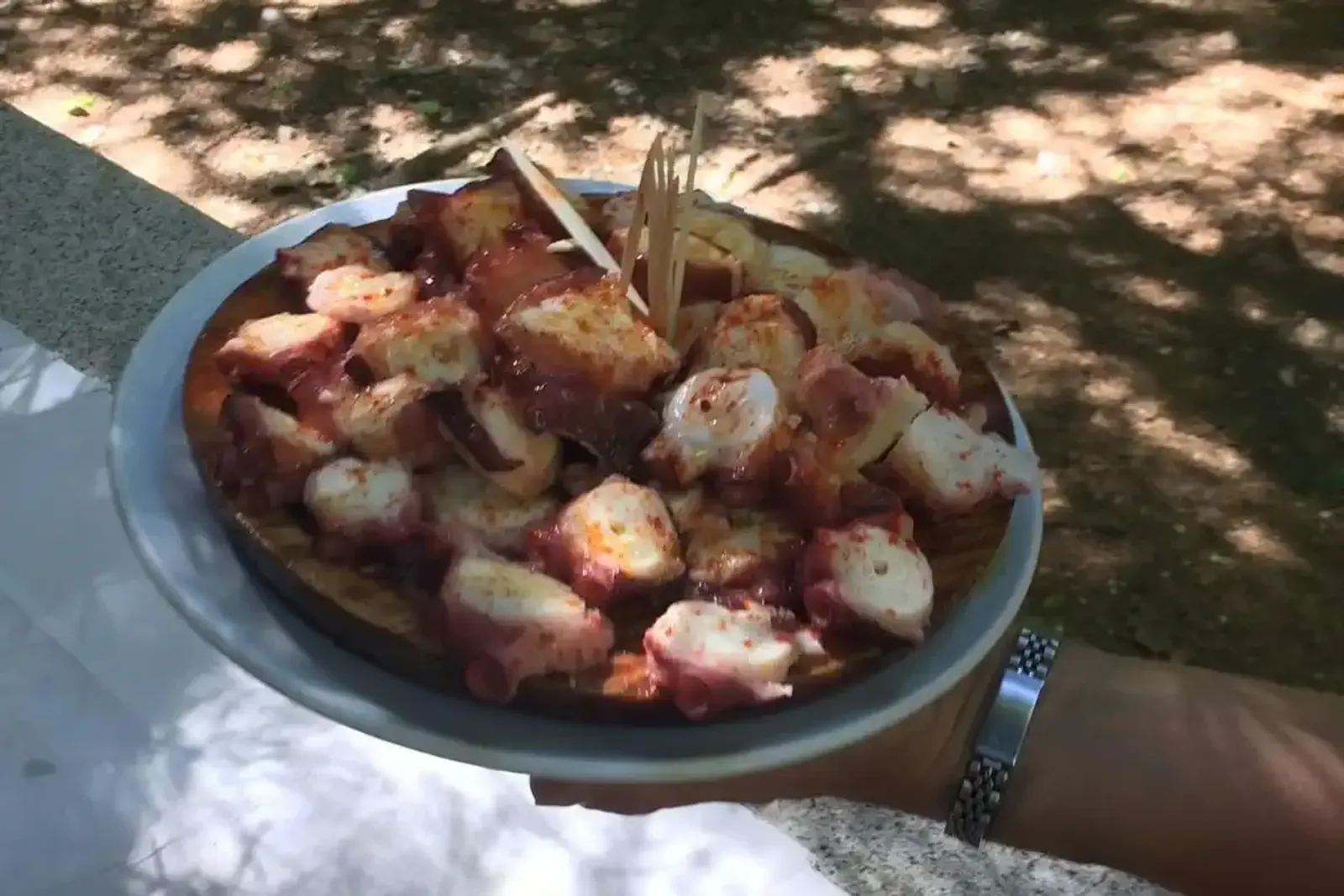
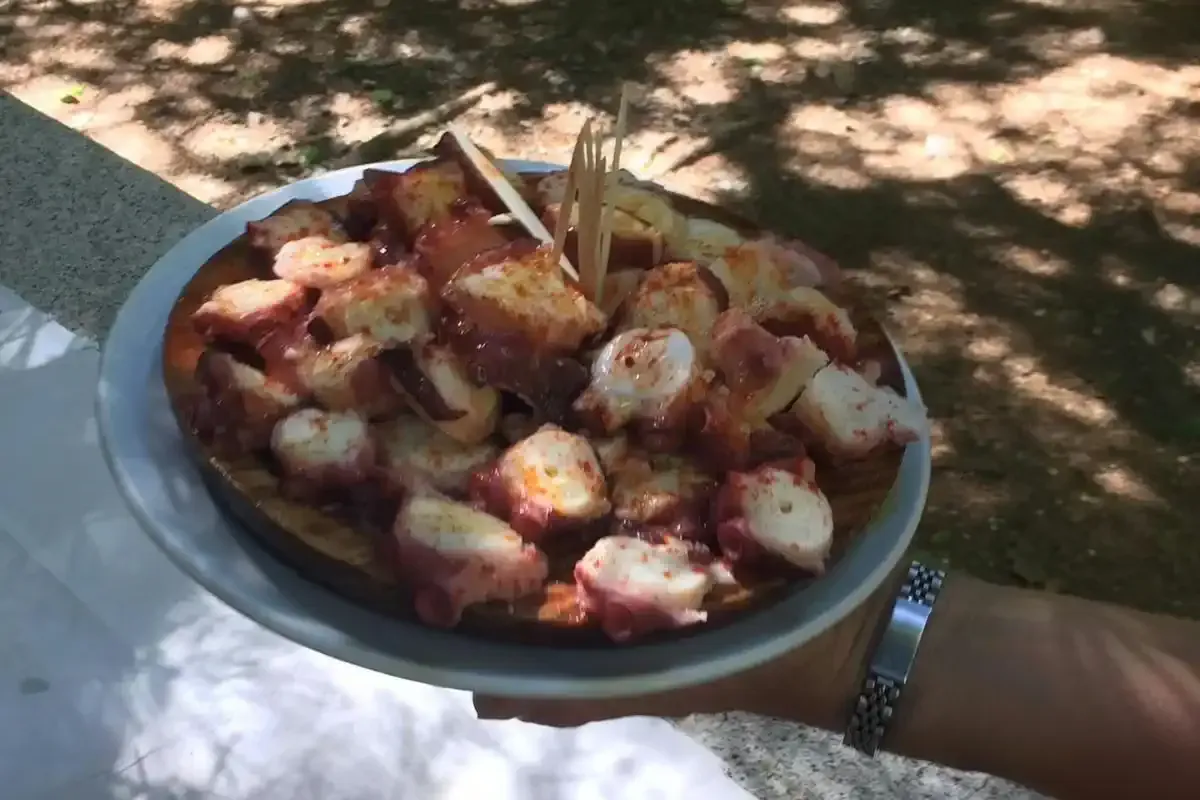
Soon after, you reach Melide, a must-stop if you spend the night here (6-stage option): octopus, a relaxed stroll, and an unhurried siesta. But if you continue on to Arzúa (4- or 5-stage option), it’s best not to overindulge in this delicacy, as there is still more walking ahead.
Forks on this stage (Alternative Camino):
Km 52.501, center of Melide: an alternative indicates how to reach the parish church of San Pedro de Melide, to rejoin the Camino through the historic center (public hostel).
Stage 4. Melide - Arzúa | 14 km | Medium difficulty | 3h. 30m.
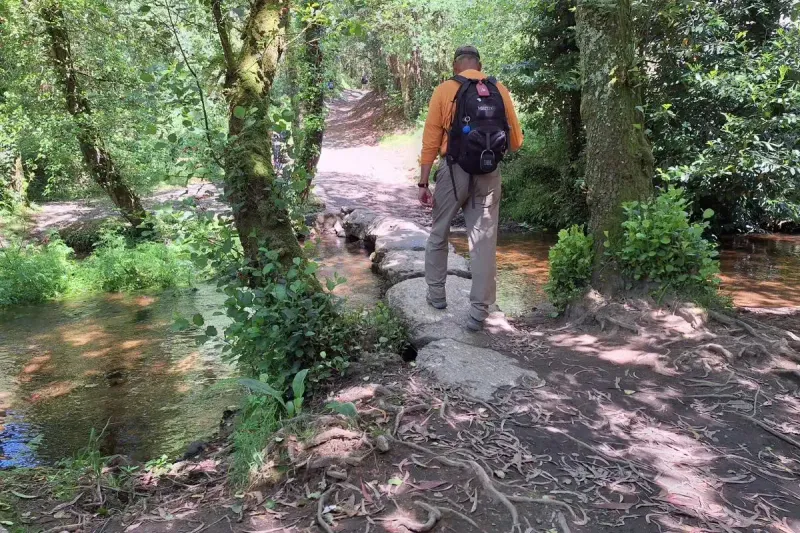
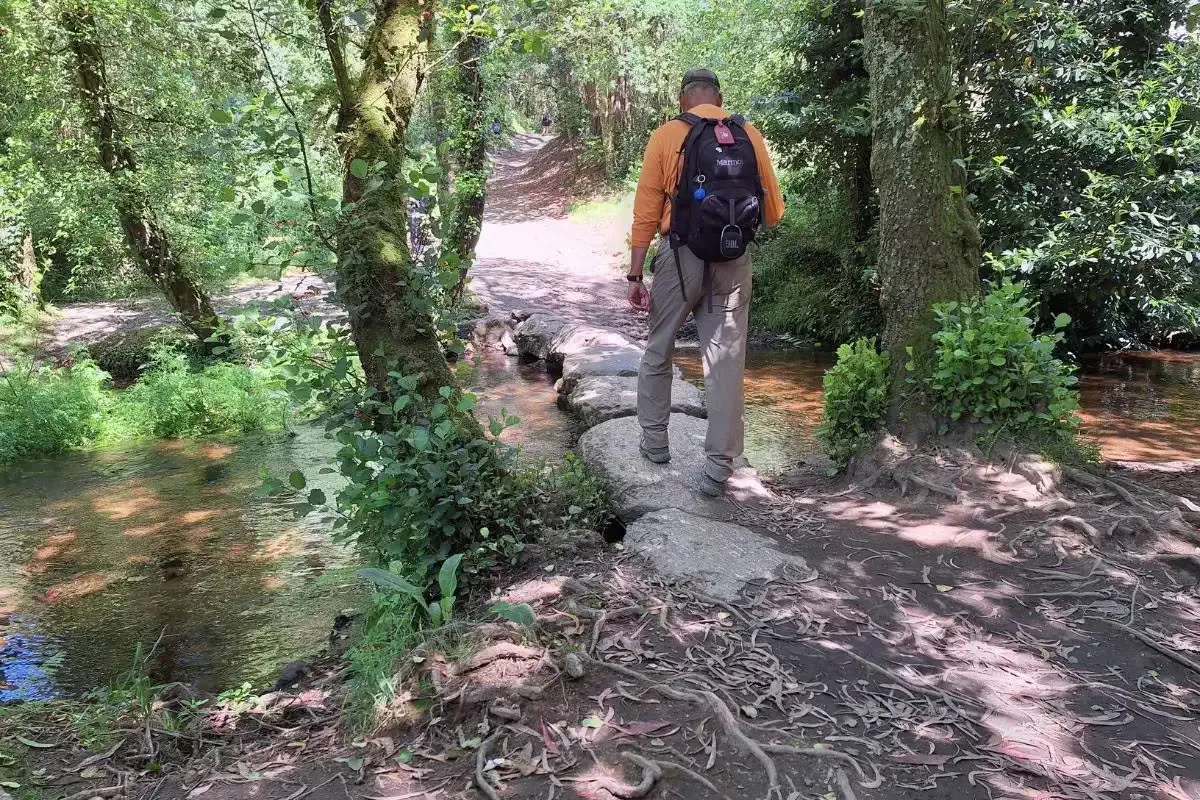
As you leave Melide, a fork appears: it’s best to take the right-hand path to follow the Catasol River. Crossing the stepping stones adds a touch of fun and adventure: in dry weather you almost feel like “dancing” across; if they’re wet, it’s better to go slowly or, if you feel like it, take off your shoes and cross the shallow river barefoot. Further on awaits “The Little Oasis”: a stop with homemade raspberries, hospitality, and smiles.
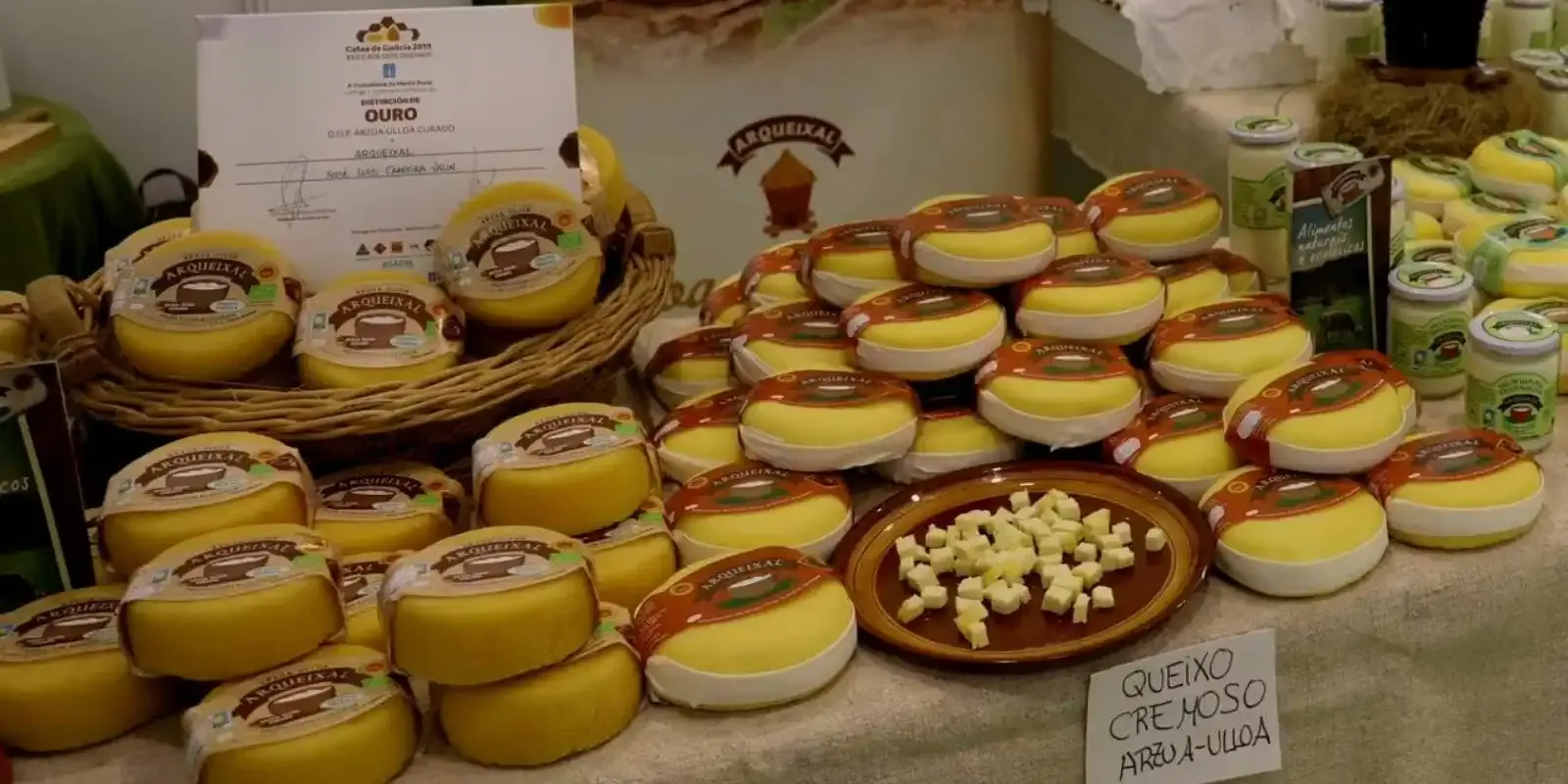
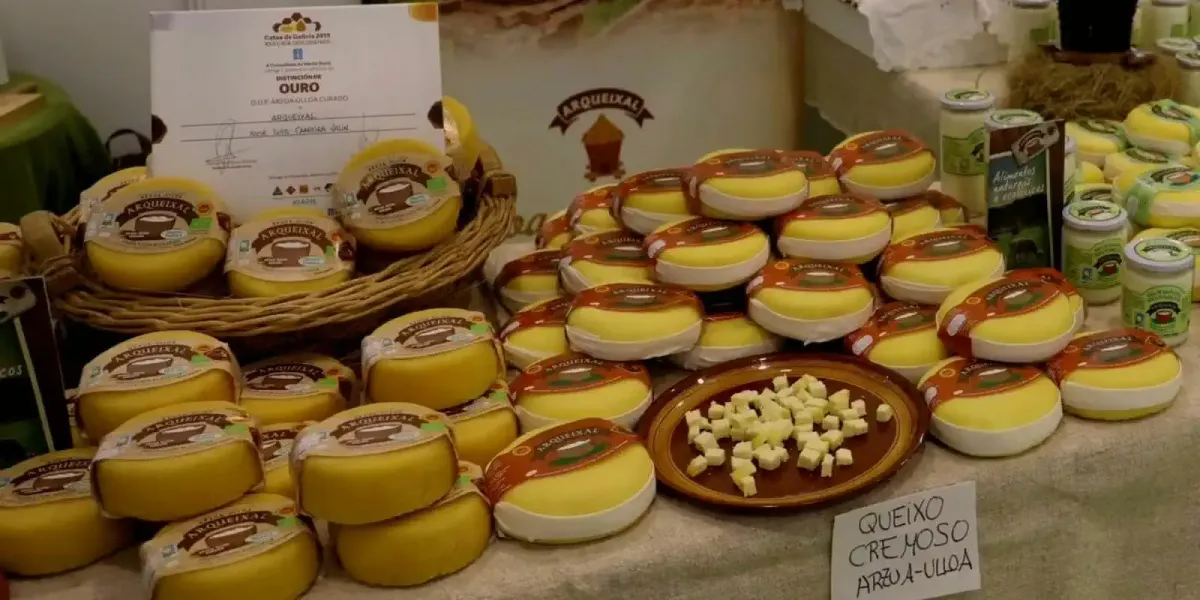
In Boente begins the famous “leg breaker.” After the Church of Santiago come three climbs and descents that you won’t easily forget; the best way to face them is as a long conversation with your legs. When Ribadiso finally appears, the afternoon begs for a stop — a swim and rest in the Iso River. About 3 km remain to reach Arzúa, usually welcomed with cheese and a visit to the Church of Santiago for a stamp. It’s a complete stage, one of those that puts things in order inside.
Forks on this stage (Alternative Camino):
Km 52.501, center of Melide: an alternative indicates how to reach the parish church of San Pedro de Melide, to rejoin the Camino through the historic center (public hostel).
Km 50.521, leaving Melide: the right-hand path passes by the beautiful Catasol River and its unique bridge, which the left-hand route does not.
Km 45.252: after a climb, the left path may be more scenic, with less asphalt and no significant difference in distance, though it has fewer services than the right-hand option.
Stage 5. Arzúa - O Pedrouzo | 19 km | Low difficulty | 5h.
The fifth stage is a gift: short, gentle, and with frequent services. After Arzúa, the route passes through Preguntoño, A Calzada, A Calle, Salceda, and A Brea until O Empalme, where hearty “truck driver” meals and long-table conversations abound — the perfect place to truly recharge your energy. It’s worth taking the short detour to the chapel of Santa Irene out of curiosity; it’s usually closed, but rejoining the Camino is immediate.
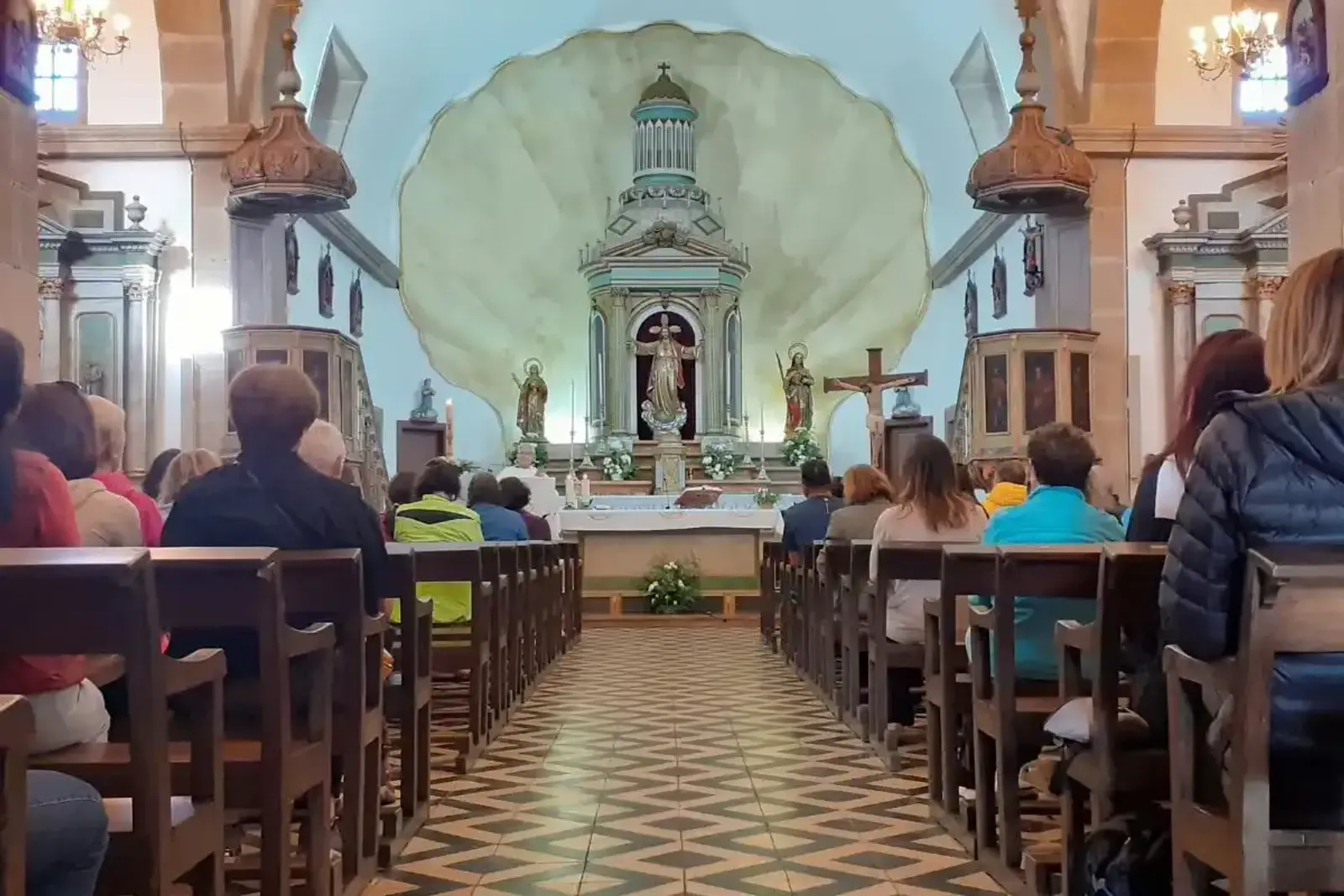
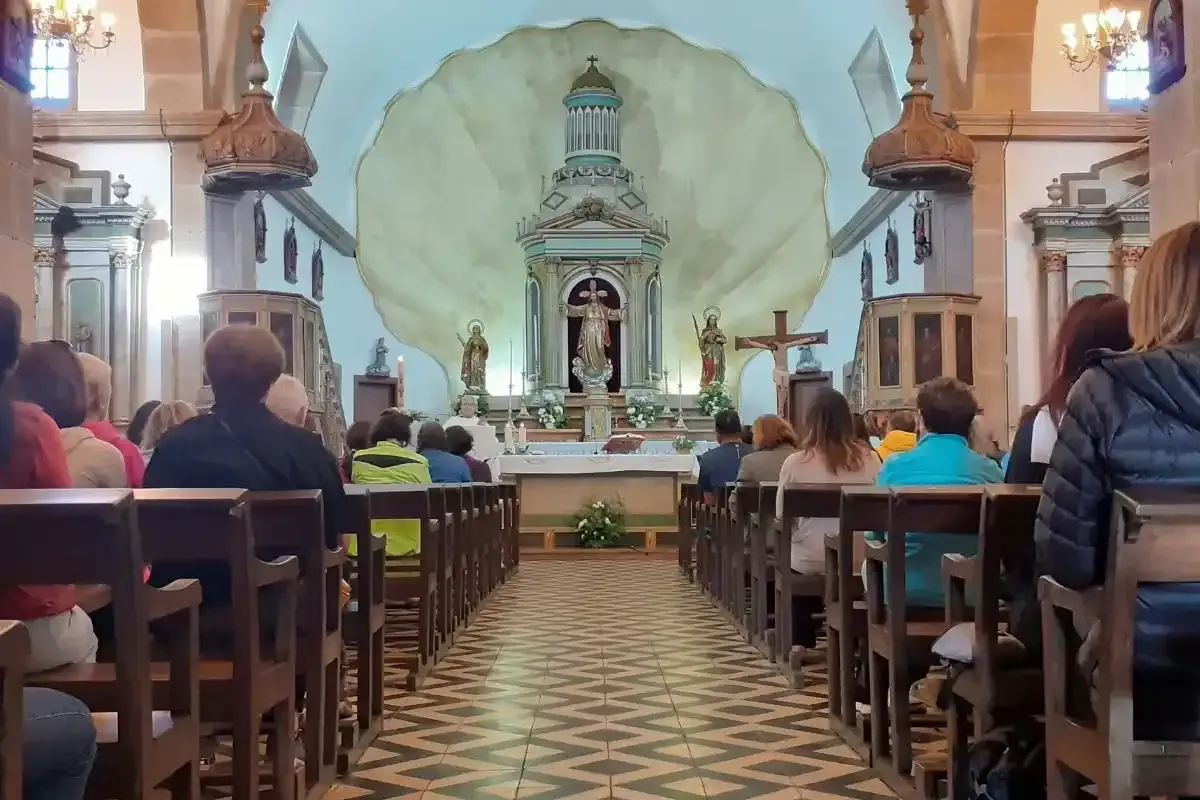
As you approach O Pedrouzo, the main route crosses a road; many prefer to turn left to enter the village, rest, and continue the next day. In the Church of Santa Eulalia, the shell-shaped apse stands out, and you can stamp your credential with the feeling that Santiago is now just around the corner.
Forks on this stage (Alternative Camino):
Km 22.745: to the left, go through the underpass beneath the N-547 road to see the chapel of Santa Irene (almost always closed). No difference in distance.
Km 20.145: not an official detour, but if you want to reach the center of O Pedrouzo to end the stage and stay overnight, you need to leave the Camino to the right and take the road (with a shoulder) to the left into town. If you continue straight on the Camino, crossing the road, you’ll reach the public school area and then have to backtrack a bit into town to find accommodation.
Stage 6. O Pedrouzo - Santiago de Compostela | 19 km | Low difficulty | 5h.
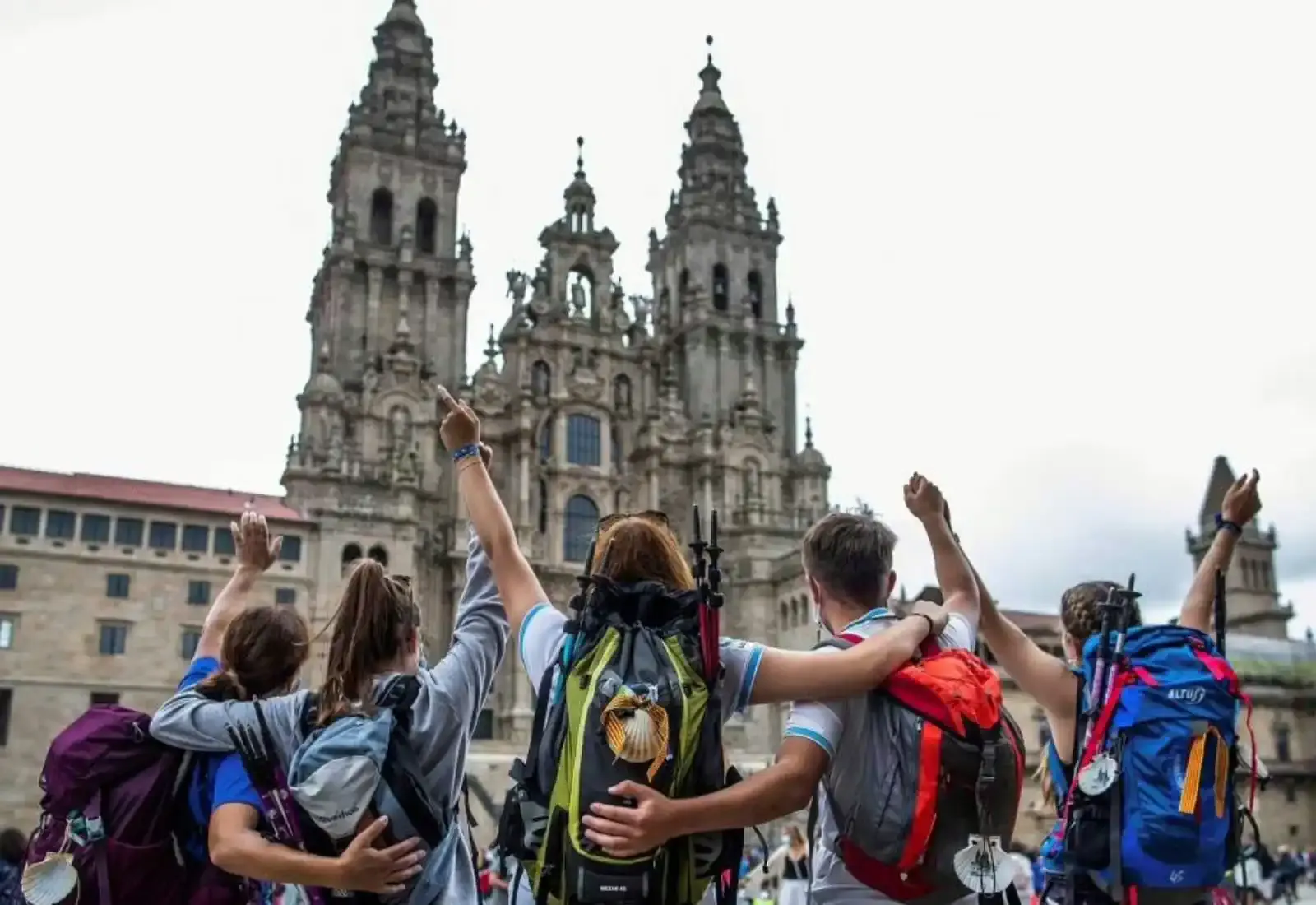
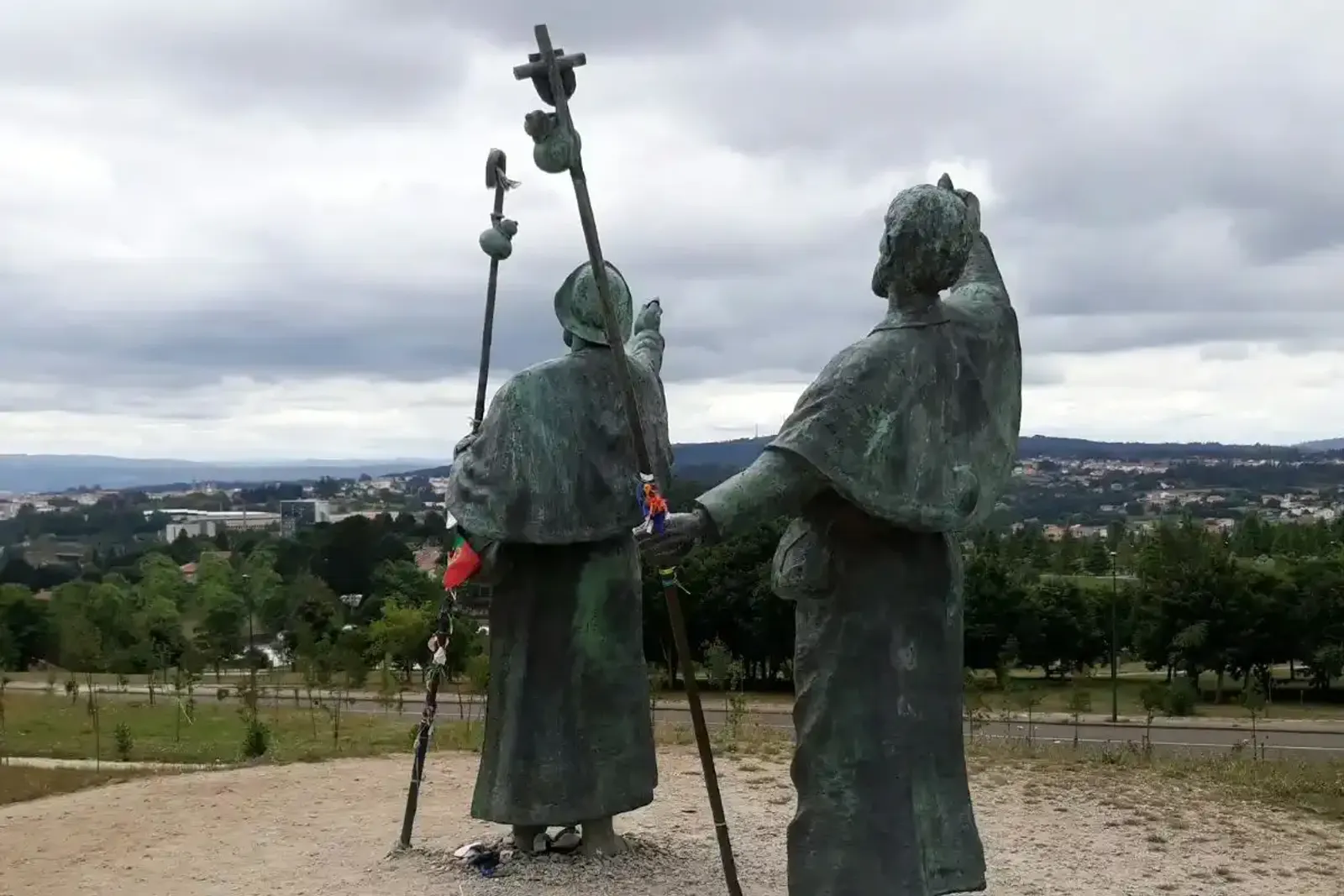
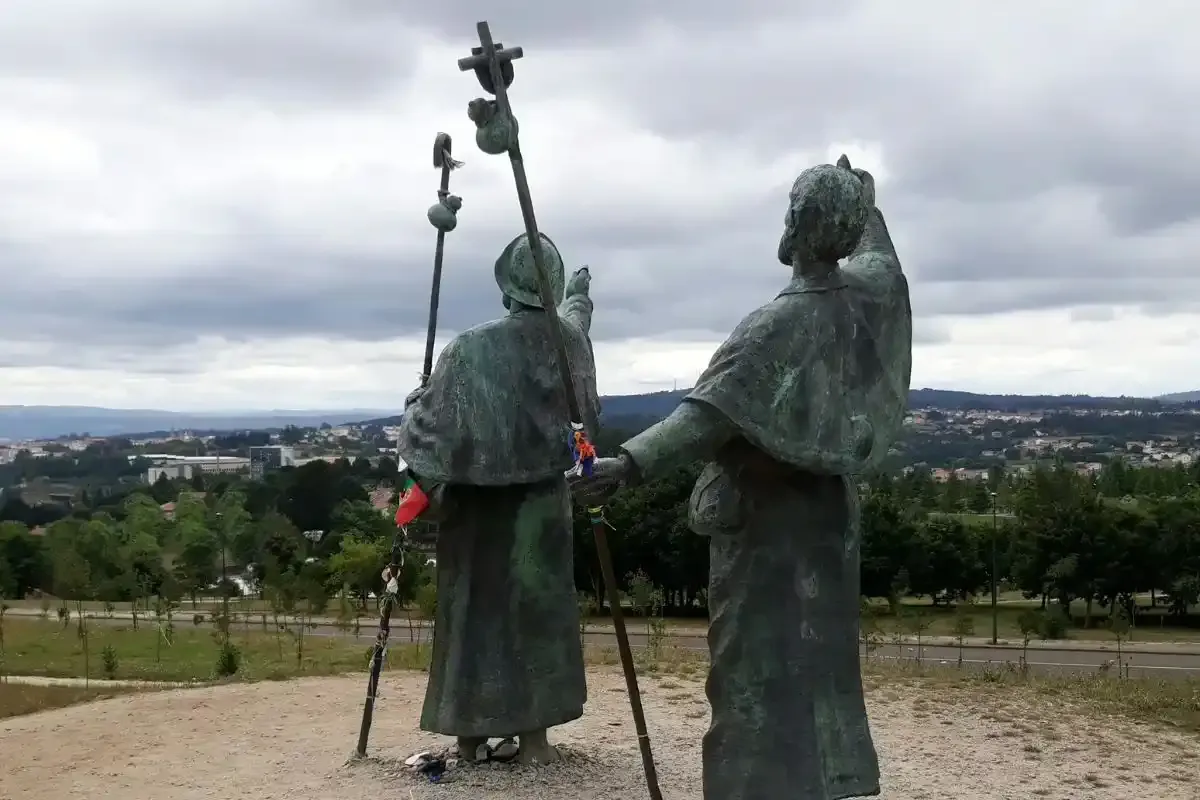
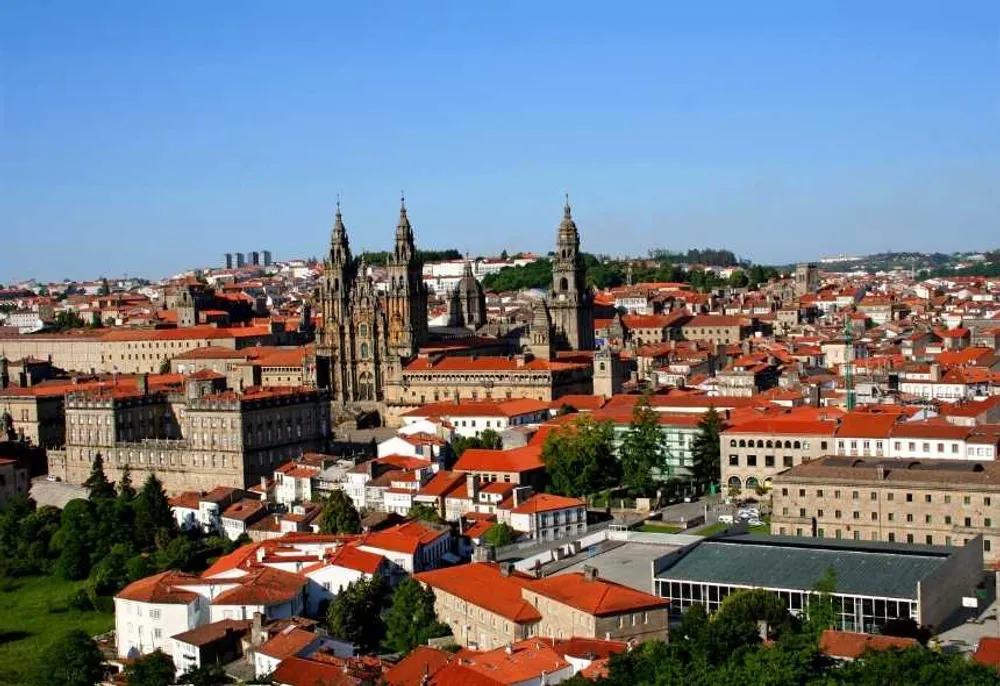
The final stage from O Pedrouzo smells of eucalyptus and of the finish line. The climb toward the airport is done at a steady pace, as if saving the song for the end. You pass San Paio and its chapel of Santa Lucía, cross Lavacolla, Vilarmaior, and San Marcos, and finally reach Monte do Gozo. It’s worth the short detour to see the pilgrim statues and spot the cathedral towers in the distance — a brief pause that lifts the spirit.
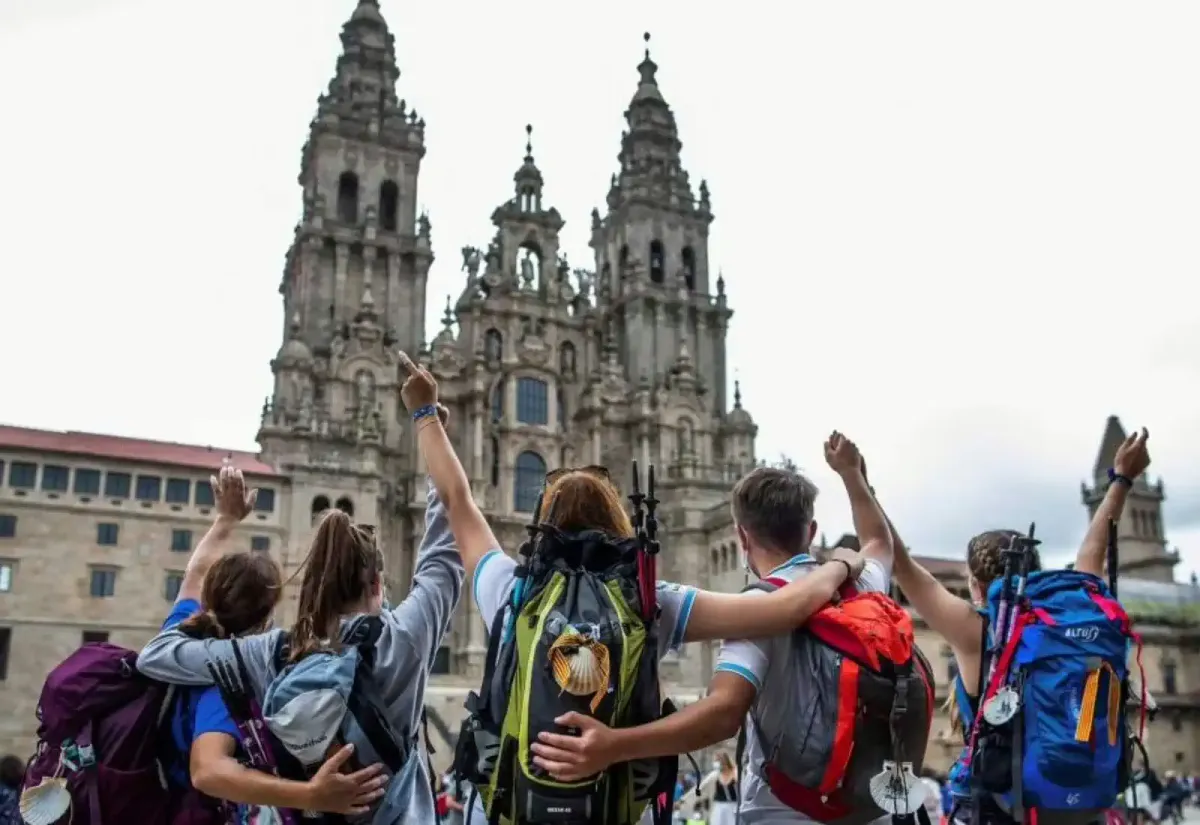
The entry into Santiago is meant to be savored without hurry: San Lázaro, Concheiros, Rúa de San Pedro, Casas Reais, Praza de Cervantes, and Rúa da Azabachería. Crossing the arch and stepping into the Praza do Obradoiro, often with a bagpiper playing in the background, brings the true definition of reward.
Afterward, approaching the Cathedral, descending to the tomb, embracing the Apostle, and collecting the Compostela at the Pilgrim’s Office completes the rite, with that mix of fatigue and happiness that can only be understood by walking.
The final celebration usually takes place along the streets of Raíña or do Franco: long conversations, endless toasts, and the promise, once again, to return to walk to Santiago de Compostela.
And at this moment everything makes sense, and you understand what the Camino teaches.
The Camino from Sarria to Santiago is not just a sum of kilometers: it is a choreography of landscapes, emotions, sensations, new companions, and simple decisions — left, right, stop here, focus on walking there — that lead you to an ending that always moves you.
Photos of the Camino de Santiago from Sarria
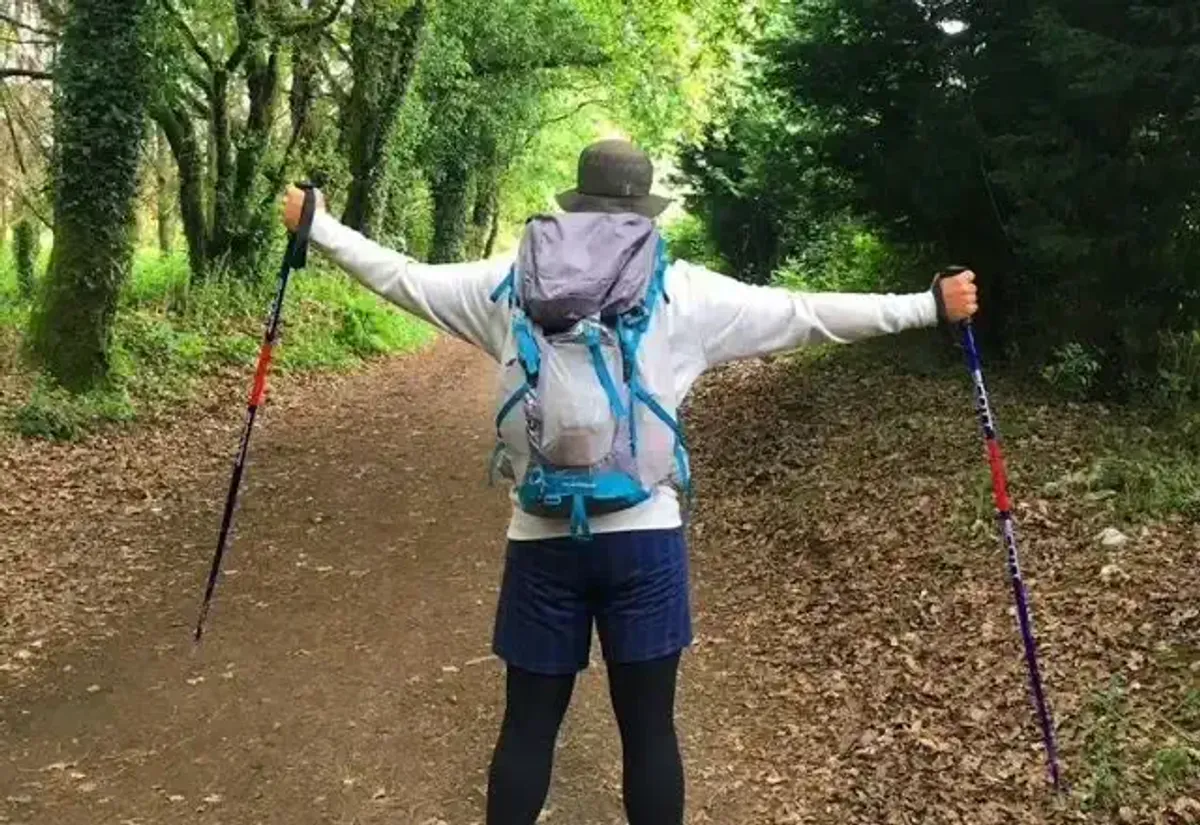
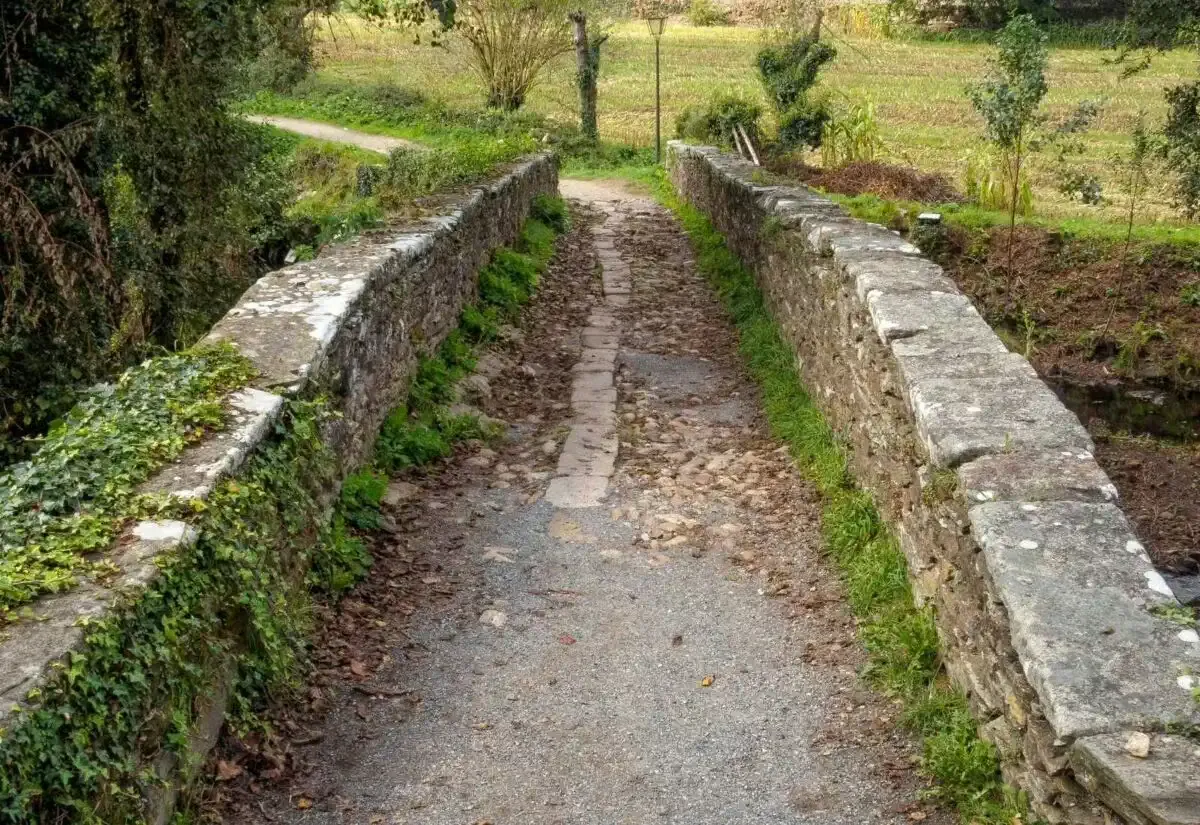
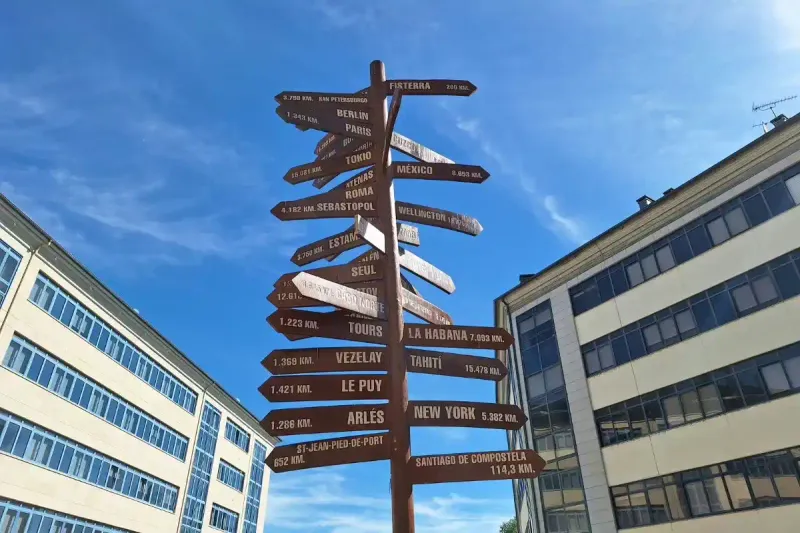
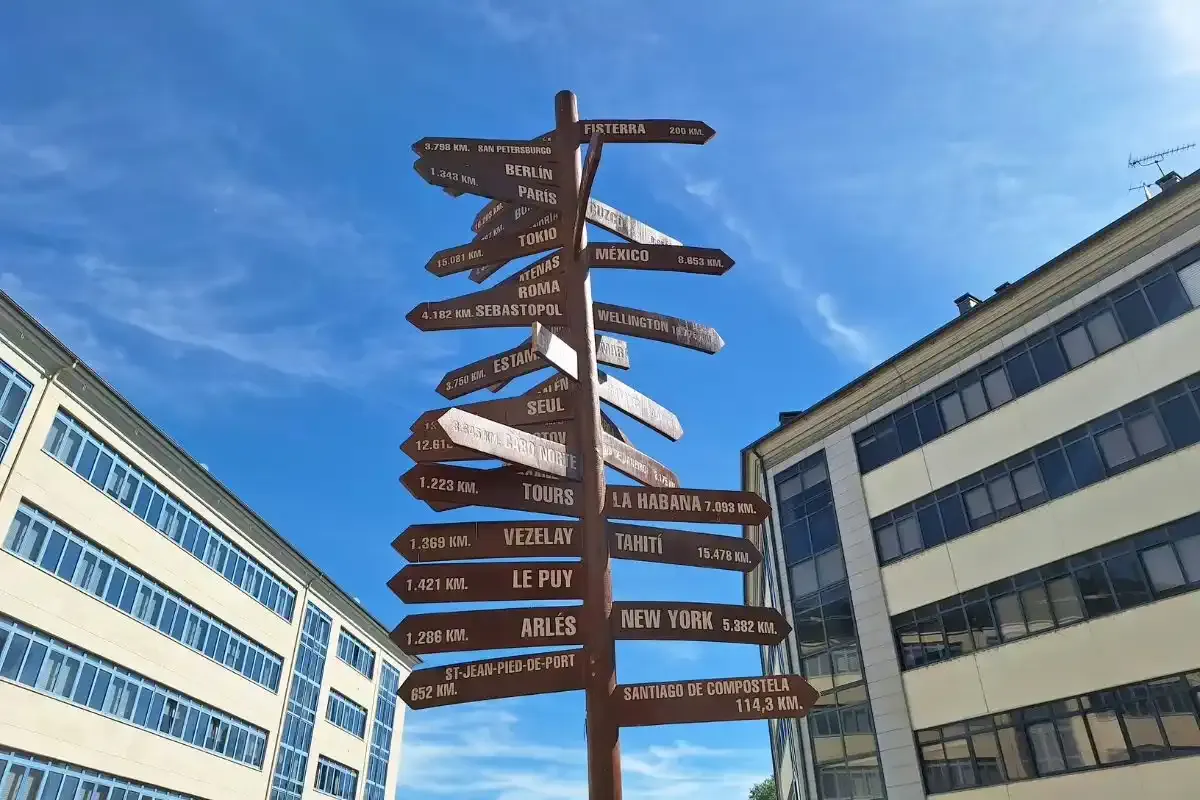
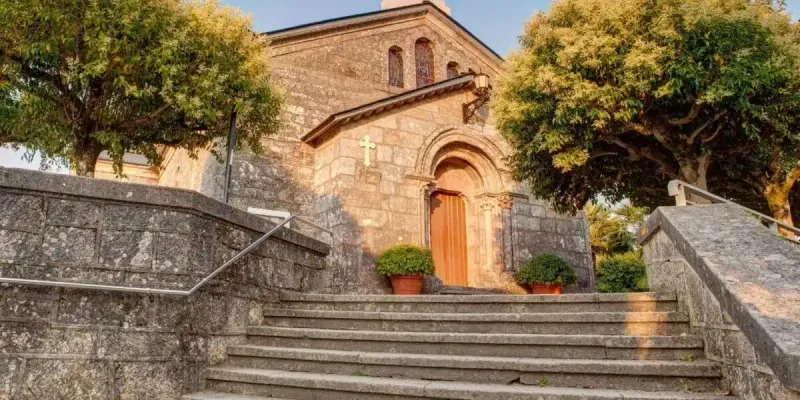
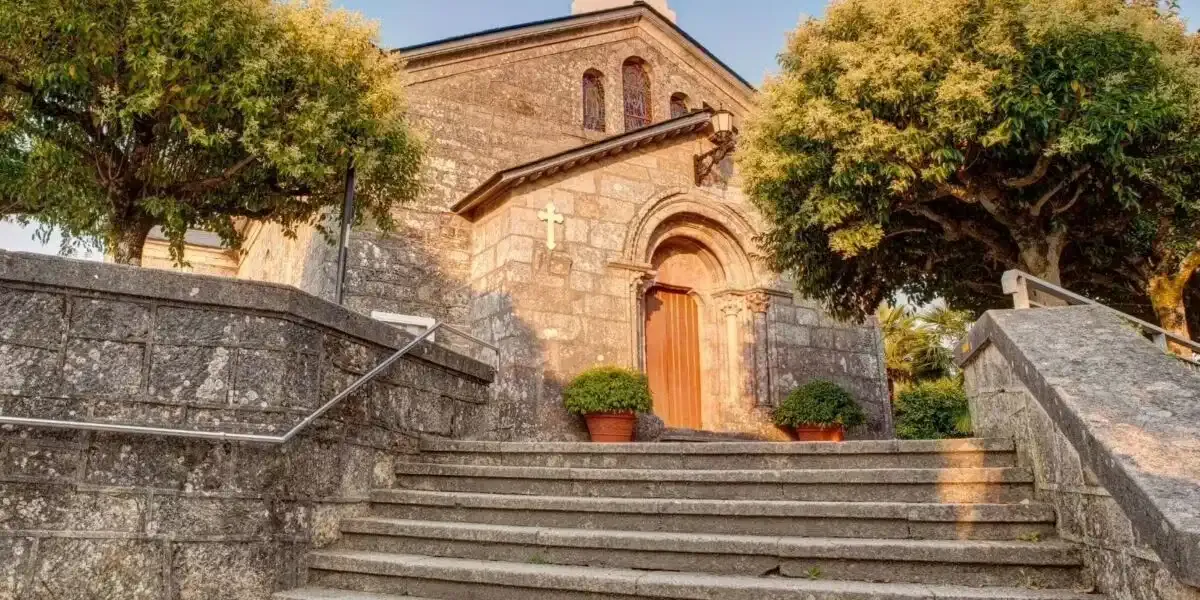
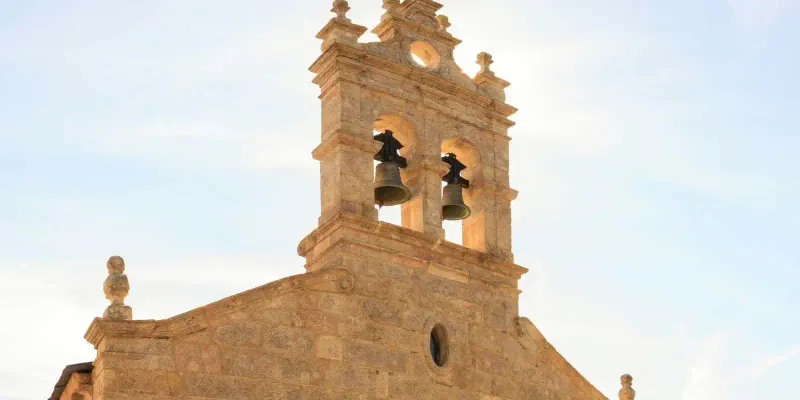
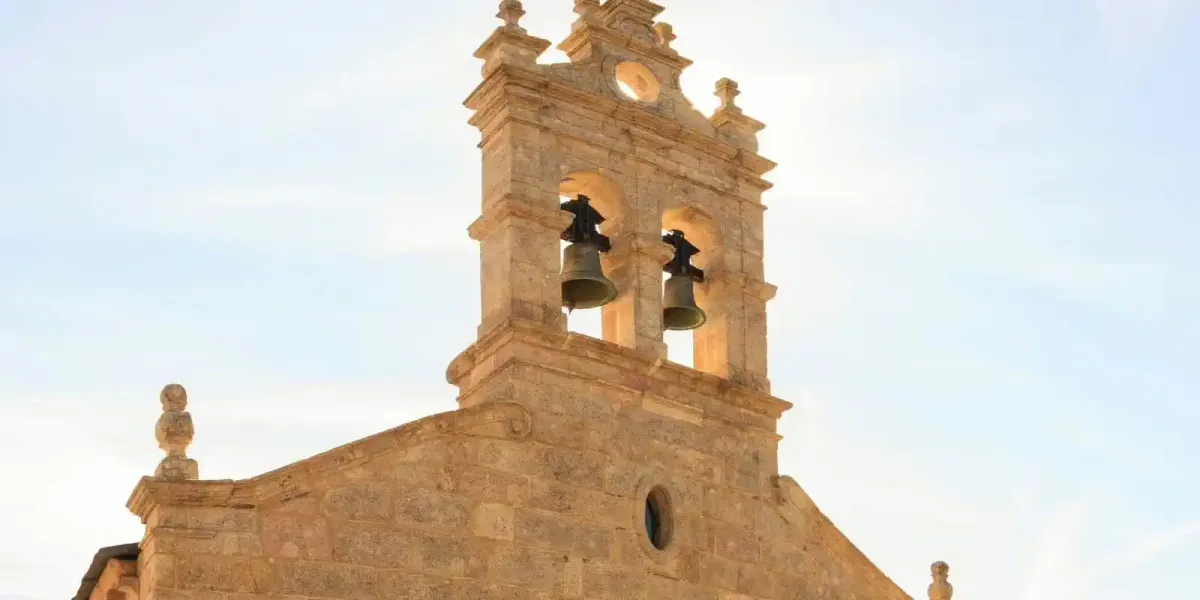
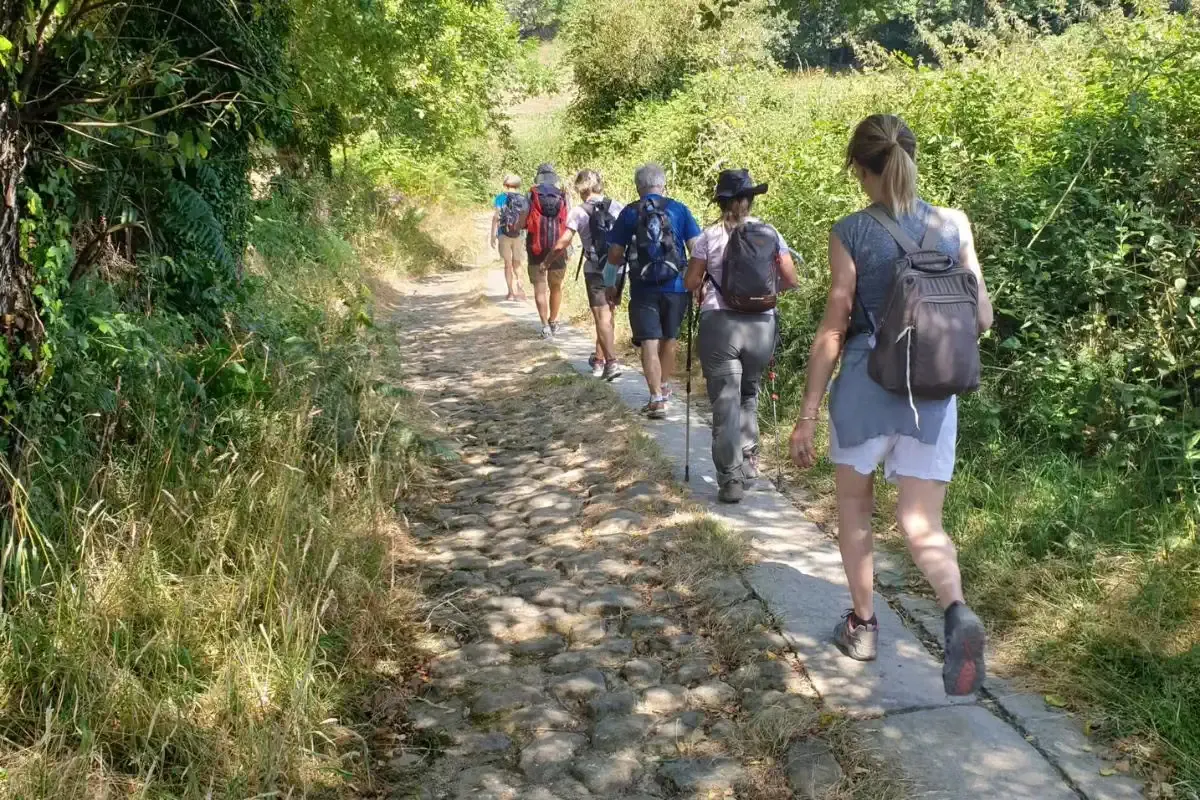
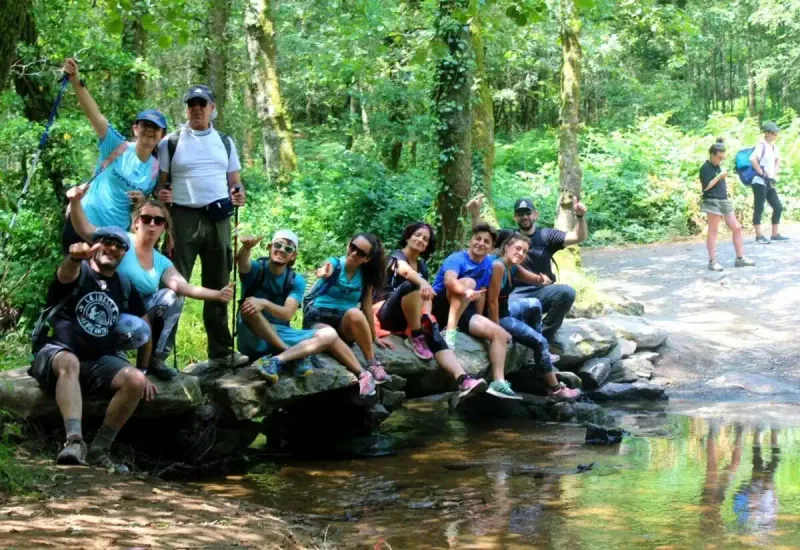
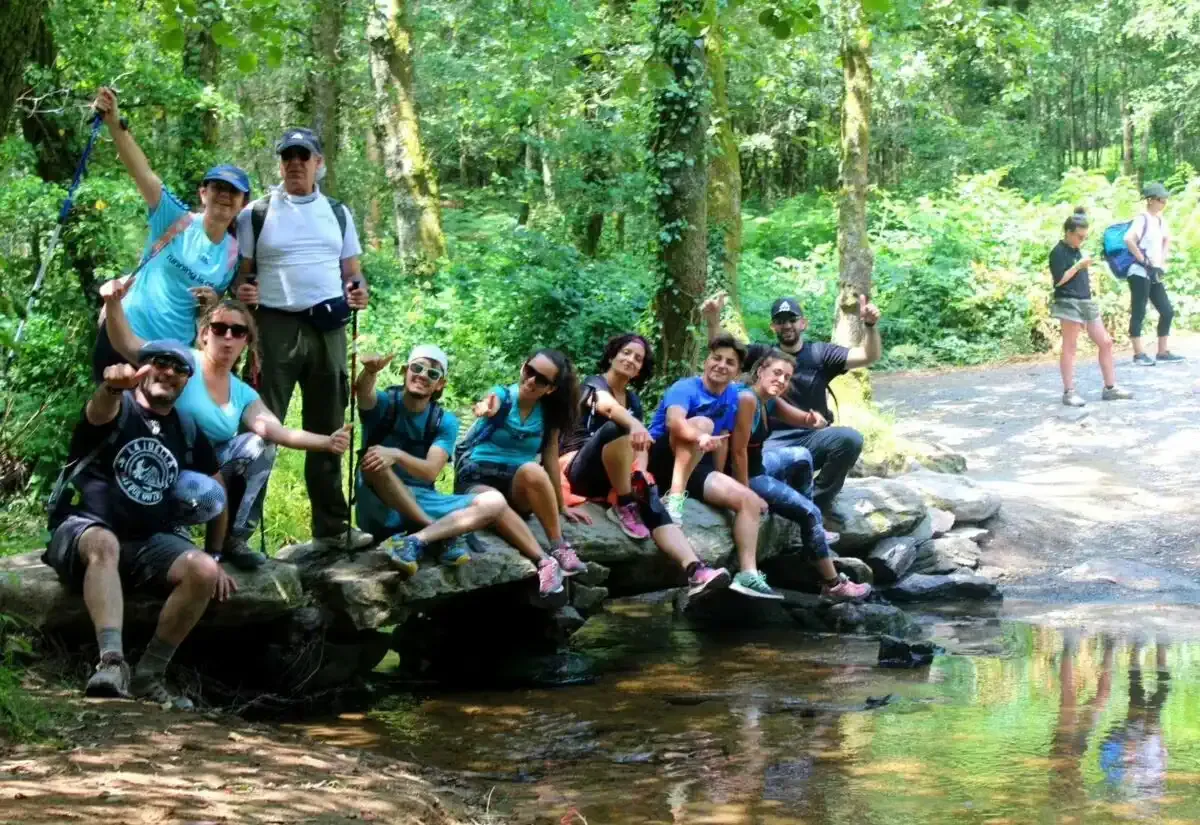
This is the Camino de Santiago from Sarria through the eyes of our pilgrims. Thank you for sharing your photos!




Frequently Asked Questions about the route
-
What options are there to organise the Camino de Santiago with children?
To organise the Camino de Santiago with children, choose short and accessible routes, with not very long stages, such as the last 100 kilometres of the French Way from Sarria. Opt for packages that include comfortable accommodation, luggage transport and stops at places of interest, to keep children entertained. Also, be sure to plan frequent breaks during the stages for a safe and enjoyable experience. Let them be the ones to affix the stamps on the Pilgrim's Credential, act as guides looking for the yellow arrows and interact with the rural and natural environment of the Camino. -
Which stages of the Camino de Santiago are suitable for school groups?
The most suitable stages for school groups on the Camino de Santiago are undoubtedly the last 100 kilometres of the French Way from Sarria to Santiago de Compostela. These stages are of moderate difficulty, with accessible distances and good services along the route. In addition, they offer a safe environment, ideal for students, combining nature, history and culture, which makes them an excellent option for educational trips. -
How can I get to the start of the Camino de Santiago route?
Depending on the route and starting location you choose, you will have some options or others. Often it will be a combination of plane, bus, train and even taxi. Of course, you can also arrive in your private car. If you are going to do the Camino de Santiago with us and want to know how to get to Sarria, how to get to Tui, or how to get to Roncesvalles, among other starting points, contact us and we will help you start your adventure. -
What are the most important towns on the French Way?
The French Way of Santiago passes through a series of towns and cities rich in history, culture, and unique landscapes. Some of the most important towns and cities along the French Way are:- Saint-Jean-Pied-de-Port (France): The starting point of the French Camino, this picturesque town at the foot of the Pyrenees is known for its cobbled streets and the impressive Santiago Gate.
- Roncesvalles: After crossing the Pyrenees, Roncesvalles marks the entry into Spain. Its collegiate church and historical significance make it a key spiritual stop for pilgrims.
- Pamplona: Famous for its San Fermín running of the bulls, Pamplona is a vibrant city with rich medieval heritage, highlighted by its cathedral and city walls.
- Logroño: The capital of La Rioja, known for its wines and delicious gastronomy. Logroño is an excellent place to enjoy tapas on the famous Laurel Street.
- Burgos: Burgos boasts one of the most impressive Gothic cathedrals in Spain, a UNESCO World Heritage Site. Its historic center is also a must-see on the Camino.
- Carrión de los Condes: This small town in the province of Palencia stands out for its rich medieval history and Romanesque churches, offering a more intimate experience on the Camino.
- León: With a majestic Gothic cathedral, the Convent of San Marcos, and vibrant urban life, León is one of the most important cities along the route, ideal for taking an extended break.
- Astorga: This city features the Episcopal Palace designed by Gaudí and a beautiful cathedral, serving as a crossroads between the French Camino and the Via de la Plata.
- Ponferrada: Famous for its Templar castle, Ponferrada is the gateway to the El Bierzo region and an important stop before tackling the mountains of Galicia.
- O Cebreiro: This charming mountain village is one of the most iconic stops on the Camino, known for its traditional palloza houses and its connection to the Holy Grail.
- Sarria: A starting point for many pilgrims who wish to complete the final 100 kilometers required to earn the Compostela. Sarria is an essential stop.
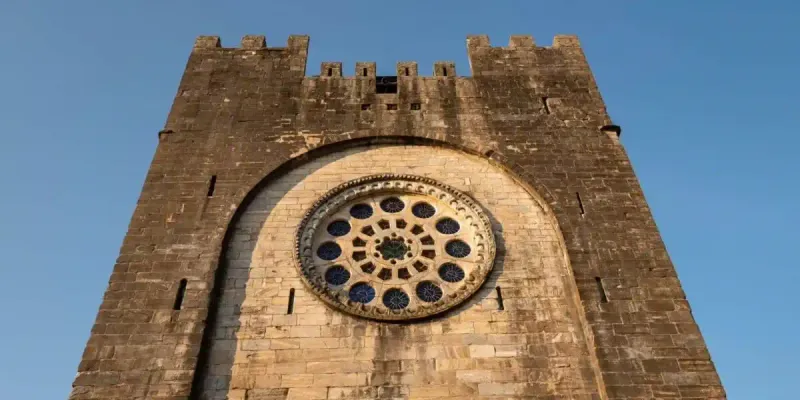
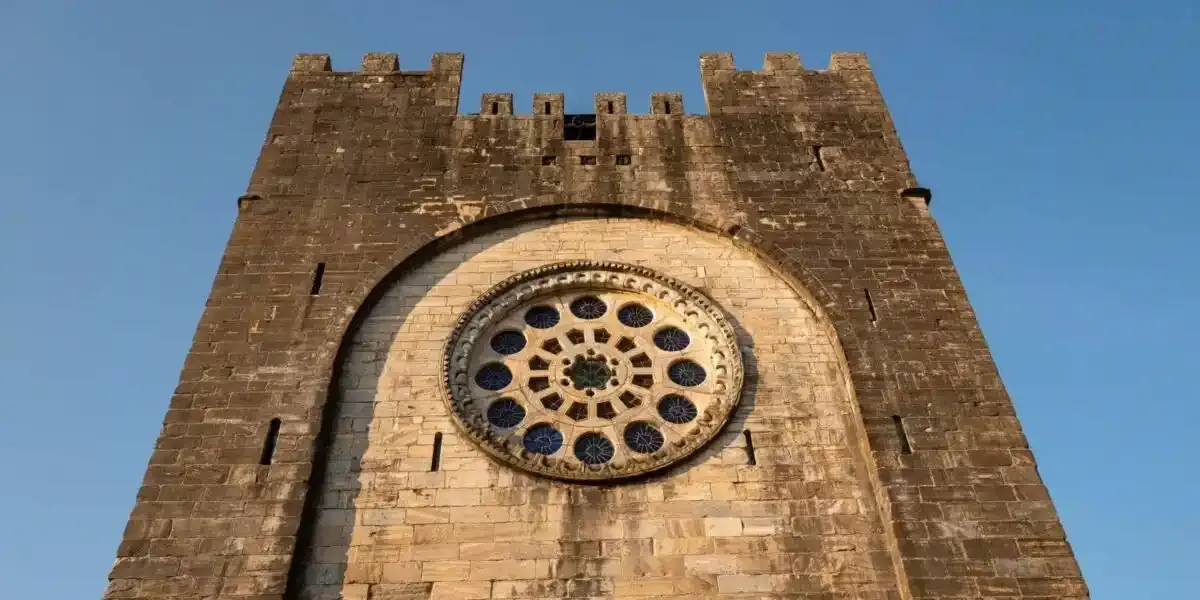
- Portomarín: This town is notable for its unique history, having been relocated stone by stone after the construction of the Belesar reservoir. Its fortress-like church of San Nicolás and its location by the Miño River make it a special stop before reaching Santiago.
-
Is the French Way of Santiago difficult?
The French Way of Santiago is the most popular and traveled route of the Camino, but its difficulty level can vary depending on the section and the pilgrim's preparation. While the total route covers approximately 768 kilometers from Saint-Jean-Pied-de-Port in France to Santiago de Compostela, it is divided into stages that allow the journey to be adapted to each person's abilities. Here are the main factors that determine its difficulty:- Elevations and terrain: The early stages, particularly the crossing of the Pyrenees from Saint-Jean-Pied-de-Port to Roncesvalles, are among the most challenging, with significant elevation changes and mountainous terrain. However, other sections, such as the Meseta of Castile, are much flatter and more accessible.
- Climate: The weather can greatly impact the difficulty. In summer, the heat in the Meseta can be exhausting, while in spring and autumn, rain and mud can complicate the journey. In winter, some mountainous stages can be tougher due to snow.
- Duration: The duration of the Camino is another factor. Completing the full route can take between 30 and 35 days, requiring good physical stamina. However, many pilgrims choose to walk only the final stages, especially from Sarria, covering the last 100 kilometers in about 5 days.
Based on the pilgrim's experience, we can recommend the following sections:- For experienced pilgrims: They will find a challenge in mountainous stages like the Pyrenees or the ascent to O Cebreiro, but will be rewarded with breathtaking scenery.
- For beginners: While the full Camino may be demanding, it's possible to walk only more accessible sections, such as the last 100 kilometers from Sarria, without facing major difficulties.
-
What are the stages of the French Way?
Along its approximately 768 kilometers, the French Way is divided into the following 33 stages:- Saint-Jean-Pied-de-Port - Roncesvalles (24 km)
- Roncesvalles - Zubiri (21.4 km)
- Zubiri - Pamplona (20.4 km)
- Pamplona - Puente la Reina (23.9 km)
- Puente la Reina - Estella (21.6 km)
- Estella - Los Arcos (21.3 km)
- Los Arcos - Logroño (27.6 km)
- Logroño - Nájera (29 km)
- Nájera - Santo Domingo de la Calzada (20.7 km)
- Santo Domingo de la Calzada - Belorado (22 km)
- Belorado - San Juan de Ortega (23.9 km)
- San Juan de Ortega - Burgos (25.8 km)
- Burgos - Hornillos del Camino (21 km)
- Hornillos del Camino - Castrojeriz (19.9 km)
- Castrojeriz - Frómista (24.7 km)
- Frómista - Carrión de los Condes (18.8 km)
- Carrión de los Condes - Terradillos de los Templarios (26.3 km)
- Terradillos de los Templarios - Bercianos del Real Camino (23.2 km)
- Bercianos del Real Camino - Mansilla de las Mulas (26.3 km)
- Mansilla de las Mulas - León (18.5 km)
- León - Villadangos de Páramo (20.4 km)
- Villadangos de Páramo - Astorga (27.9 km)
- Astorga - Rabanal del Camino (20.2 km)
- Rabanal del Camino - Molinaseca (24.7 km)
- Molinaseca - Villafranca del Bierzo (31.9 km)
- Villafranca del Bierzo - O Cebreiro (27.8 km)
- O Cebreiro - Triacastela (20.8 km)
- Triacastela - Sarria (17.9 km / 25 km via Samos)
- Sarria - Portomarín (22 km)
- Portomarín - Palas de Rei (25 km)
- Palas de Rei - Arzúa (29 km)
- Arzúa - Pedrouzo (19 km)
- Pedrouzo - Santiago de Compostela (19 km)
This division can be adjusted according to individual preferences and possibilities, always keeping in mind the need for a place to stay overnight. Among these stages, the main or most notable ones for pilgrims are:- Saint-Jean-Pied-de-Port to Roncesvalles (24 km): This is the initial stage, crossing the impressive Pyrenees and marking the beginning of the journey in Spanish lands.
- Pamplona to Puente la Reina (23.9 km): Known for the famous city of Pamplona, this stage offers a route rich in history and the opportunity to visit the Crucifix Church in Puente la Reina.
- Logroño to Nájera (29 km): This stage enters the wine region of La Rioja, with vineyards accompanying the pilgrim for much of the way.
- Burgos to Hornillos del Camino (21 km): This stage is notable for passing by the Burgos Cathedral, a gem of Spanish Gothic architecture.
- León to Hospital de Órbigo (32 km): León is one of the largest and most significant cities on the French Way, with its Gothic cathedral and the historic Parador of San Marcos.
- O Cebreiro to Triacastela (17.8 km via San Xil or 25 km via Samos): After the ascent to O Cebreiro, one of the most challenging and rewarding points, with panoramic views and the famous village with its pallozas a beautiful stage with two alternatives presents itself.
- Sarria to Portomarín (22 km): Sarria is the most popular starting point for those looking to cover the last 100 km and obtain the Compostela.
- Palas de Rei to Arzúa (29 km): In this stage, the Camino crosses typical rural landscapes of Galicia, with forests, rivers, and picturesque villages. Halfway through, you reach Melide, where you can taste some of the best octopus in Galicia.
- Arzúa to Santiago de Compostela (40 km): The final stretch of the French Way culminates in reaching Monte do Gozo and then arriving at the Plaza del Obradoiro and the iconic Cathedral of Santiago de Compostela, the ultimate goal for all pilgrims.
-
What are the most beautiful stages of the French Way?
Some stages of the French Way stand out for their natural beauty, historical richness, and cultural significance. Here is a selection of the most beautiful stages of the French Way:- Saint-Jean-Pied-de-Port - Roncesvalles
- Burgos - Hontanas
- León - Hospital de Órbigo
- Rabanal del Camino - Cruz de Ferro - Ponferrada
- Ponferrada - Villafranca del Bierzo
- O Cebreiro - Triacastela
- Triacastela - Sarria
- Sarria - Portomarín
- Mystical Landscapes: O Cebreiro, a small mountain village, is known for its traditional "palloza" architecture and its almost magical atmosphere, especially when enveloped in mist. From here, the Camino winds through mountains and valleys, offering spectacular views of the Sierra de O Courel.
- Culture and Tradition: O Cebreiro is a place of great historical significance on the Camino. It is home to the Church of Santa María la Real, dating back to the 9th century, known for housing the legendary miracle of the Holy Grail. This village is also the entry point into Galicia, a region rich in Jacobean traditions and culture.
- Variety of Landscapes: As the path descends towards Triacastela, pilgrims transition from mountains to valleys, crossing lush forests, small streams, and charming Galician villages. The diversity of landscapes in a single stage is what makes it so special.
- Spiritual Experience: Many pilgrims describe this stage as one of the most spiritual on the Camino, thanks to its tranquility, natural beauty, and connection with ancient Galician traditions.
-
Can I do any route in a group?
The organized group options we offer are:- The French Way from Sarria to Santiago in 5 stages.
- Depending on the season, other routes like the Way to Finisterre from Santiago or the Portuguese Way from Tui.
-
Which routes are most suitable for doing with dogs?
Our experience tells us that the most suitable routes are the French Way from Sarria and the Portuguese Way from Tui. Over the years, we've found that along these sections, dogs are welcomed as another pilgrim, treated with care, and you'll also find a good network of services available for them: dog-friendly accommodations, transportation, veterinarians, etc. -
What does the car rental service consist of?
VEHICLE RENTAL: We will deliver the vehicle in Santiago de Compostela (airport, train station or bus station) so you can move to the starting point of your route. The price is for vehicles up to 6 people, includes full insurance, 24 hours assistance and must be delivered with the same level of fuel with which it was picked up. The prices are as follows:
- From Santiago to Sarria: 130€.
- From Santiago to Tui: 135€.
- From Santiago to O Cebreiro: 150€.
- From Santiago to Finisterre: 130€.
Videos of the Camino de Santiago from Sarria
Useful Links about Sarria
Jorge Severo Medina Martín
Travel Writer and Camino de Santiago Guide
For years I thought that “the Camino gives you what you need” was just a pretty, meaningless phrase… but all it took was setting out to walk to understand it…
The Camino from Sarria taught me that life falls into place step by step. I didn’t need a big answer, but small gestures repeated with care: traveling light, opening up to others, walking one more kilometer, breathing patience, and paying attention to those humble signs that appear when you quiet the noise.
On all my Caminos there were small signs that brought inner order: a liberating natural environment, a silence that finally makes space, a light cutting through the forest as if it knew the exact moment.
What is it about the Camino de Santiago from Sarria? Every pilgrim will speak wonders of this very special Camino, but they will also tell you that to truly understand it, you must walk it, live it, and feel it.
Related Articles about the French Way of the Camino de Santiago from Sarria
- French Way
- Portuguese Way
- Portuguese Way along the coast
- Portuguese Way: spiritual variant
- Finisterre and Muxía Way
- Northern Way
- Primitive Way
- English Way
- Sanabrian Way
- Silver Route
- Winter Way
- Father Sarmiento Way
- Way of the Lighthouses